
grape 'Spetchley Red'
Also known as: Information to be completed
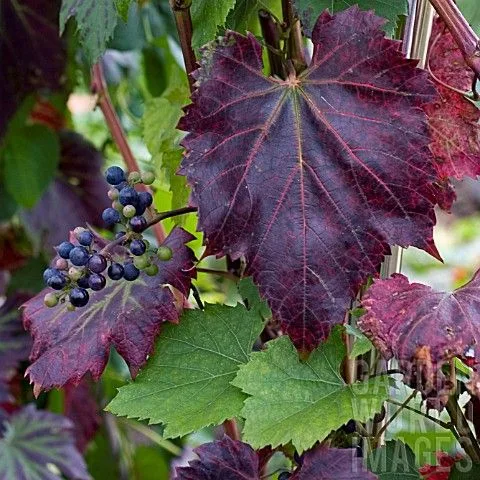
A disease-resistant, dessert grape, producing pale green flowers in early summer, followed by clusters of small, sweet dark blue-black fruits which are suitable for both eating fresh from the vine and wine making. Green summer leaves turn beautiful shades of glowing red in the autumn
Scientific classification
- Species
- grape 'Spetchley Red' (Vitis vinifera 'Spetchley Red')
- Genus
- Vitis
- Family
- Vitaceae
- Information to be completed
- Toxicity
- Fruit Edible
- Plant type
- 4-8 metres
- Height
- 2.5-4 metres
- Spread
- Deciduous
- Foliage
- Climbing
- Habit
- Autumn · Spring · Summer
- Season of interest
- Full sun
- Sunlight
- Information to be completed
- Ideal temperature









grape 'Spetchley Red' pictures
Distribution of grape 'Spetchley Red'
Distribution map
Information to be completed
Information to be completed
Culture
Information to be completed
Toxicity
Information to be completed
Quick identification of grape 'Spetchley Red'
Information to be completed
grape 'Spetchley Red' care guide
- Moderate regular watering, allowing brief slight drying between soakings
- Watering
- Full sun
- Sunlight
- Information to be completed
- Ideal temperature

Watering
Moderate regular watering, allowing brief slight drying between soakings
Fertilizing
 Fertilizing
Balanced perennial feed every four weeks from spring through summer
Pruning
 Pruning
 is required to encourage flowering and fruiting, and to increase air circulation and so reduce the risk of disease: see grape pruning and training
Propagation
 Propagation
Propagate by hardwood cuttings in late autumn or winter, or by softwood cuttings or semi-ripe cuttings from late spring to midsummer or grafting onto Phylloxera resistant rootstocks
Growing
 Growing
Grow outdoors in full sun, in well-drained, humus-rich soil, preferably neutral to slightly alkaline, mulch to keep soil moist, and provide support; for more advice, see outdoor grape cultivation
People also ask
Information to be completed
Common pests and diseases
Diseases
May be susceptible to Powdery mildews, grey moulds, honey fungus and virus diseases. For further advice see grapevine diseases
Pests
May be susceptible to grapevine blister mite, glasshouse red spider mite, brown scale, woolly vine scale and spotted wing drosophila (fruit fly) and may be susceptible to mealybugs under glass
Explore the plant health library →




