
auricula 'Tony'
Also known as: Information to be completed
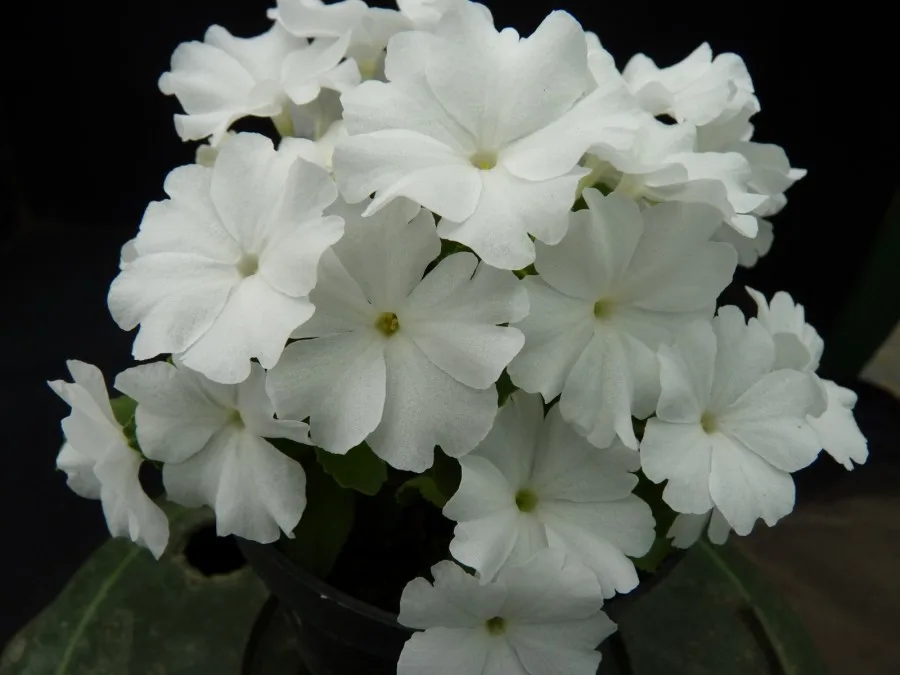
A vigorous, compact, rosette-forming, evergreen perennial up to 8cm high with obovate, toothed, mid-green leaves, up to 4cm long, and abundant clear white flowers, to 3cm across, either singly or in umbels, from late winter to early spring
Scientific classification
- Species
- auricula 'Tony' (Primula 'Tony')
- Genus
- Primula
- Family
- Primulaceae
- Information to be completed
- Toxicity
- Alpine Rockery
- Plant type
- Up to 10 cm
- Height
- 0-0.1 metre
- Spread
- Evergreen
- Foliage
- Clump forming
- Habit
- Spring · Summer · Autumn · Winter
- Season of interest
- Full sun · Partial shade
- Sunlight
- Information to be completed
- Ideal temperature









auricula 'Tony' pictures
Distribution of auricula 'Tony'
Distribution map
Information to be completed
Information to be completed
Culture
Information to be completed
Toxicity
Information to be completed
Quick identification of auricula 'Tony'
Information to be completed
auricula 'Tony' care guide
- Keep soil evenly moist and cool, never fully dry
- Watering
- Full sun · Partial shade
- Sunlight
- Information to be completed
- Ideal temperature

Watering
Keep soil evenly moist and cool, never fully dry
Fertilizing
 Fertilizing
Weak balanced feed during spring growing season
Pruning
 Pruning
No pruning required, but removing dead leaves will reduce the risk of grey moulds
Propagation
 Propagation
Propagate by division of offsets between autumn and early spring, by basal softwood cuttings in autumn or early spring, or by root cuttings when dormant in winter
Growing
 Growing
Grow in an alpine house or bulb frame, in a well-drained mix of equal parts of loam-based compost such as John Innes No. 2, leafmould, and grit; avoid wetting the leaves
People also ask
Information to be completed
Common pests and diseases
Diseases
May be affected by primula brown core, grey moulds, primula leaf spots, and virus diseases
Pests
May be affected by aphids, bryobia mites, caterpillars, glasshouse leafhoppers, glasshouse red spider mite, slugs, and vine weevils
Explore the plant health library →




