
Geranium pratense var. stewartianum 'Elizabeth Yeo'
Also known as: Information to be completed
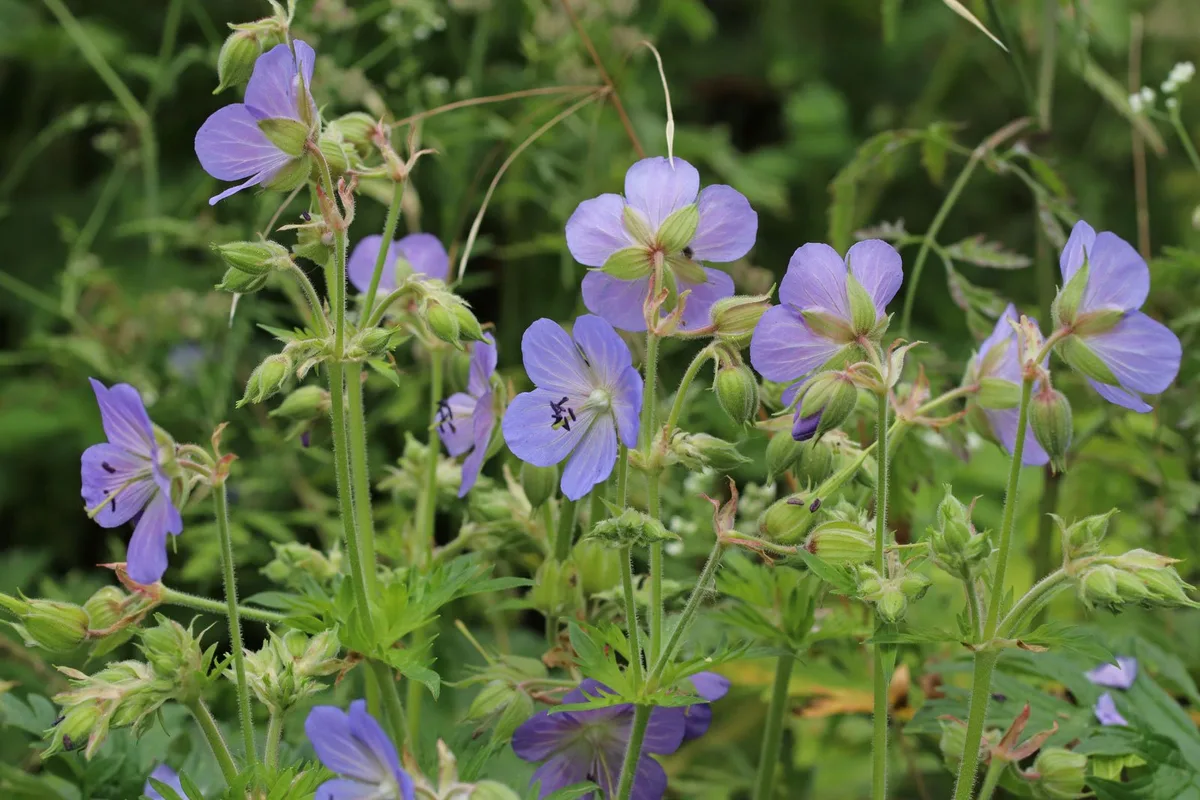
Mound-forming, deciduous, herbaceous perennial, bearing glossy, mid-green, deeply divided, lobed leaves on stems to 80cm in height. From late spring to summer, many single, deep pink, saucer-shaped flowers with purple veins are produced
Scientific classification
- Species
- Geranium pratense var. stewartianum 'Elizabeth Yeo' (Geranium pratense var. stewartianum 'Elizabeth Yeo')
- Genus
- Geranium
- Family
- Geraniaceae
- Order
- Geraniales
- Class
- Magnoliopsida
- Phylum
- Tracheophyta
- Information to be completed
- Toxicity
- Herbaceous Perennial
- Plant type
- 0.5-1 metres
- Height
- 0.5-1 metres
- Spread
- Deciduous
- Foliage
- Clump forming
- Habit
- Spring · Summer · Autumn
- Season of interest
- Full sun · Partial shade
- Sunlight
- Information to be completed
- Ideal temperature









Geranium pratense var. stewartianum 'Elizabeth Yeo' pictures
Distribution of Geranium pratense var. stewartianum 'Elizabeth Yeo'
Distribution map
- Native
- Introduced
- Cultivated
Source:WCVP v16 · Royal Botanic Gardens, Kew · CC BY 3.0 · Boundaries:WGSRPD / TDWG
Geranium pratense var. stewartianum 'Elizabeth Yeo' care guide
- Moderate regular watering, allowing brief slight drying between soakings
- Watering
- Full sun · Partial shade
- Sunlight

Watering
Moderate regular watering, allowing brief slight drying between soakings
Fertilizing
 Fertilizing
Balanced perennial feed every four weeks from spring through summer
Pruning
 Pruning
Cut back after flowering to encourage the production of fresh leaves and flowers. Remove old dead foliage in spring before growth commences
Propagation
 Propagation
Propagate by division in spring, or take basal cuttings in early to mid spring and root with bottom heat.
Growing
 Growing
Grow in any moderately fertile soil apart from waterlogged soils. Full sun or partial shade is best. Full shade is tolerated but may reduce flowering
Common pests and diseases
Diseases
May be susceptible to Powdery mildews, downy mildews and a virus
Pests
May be susceptible to vine weevil, geranium sawfly, slugs and snails
Explore the plant health library →




