
Pseudopanax 'Trident'
Also known as: Information to be completed
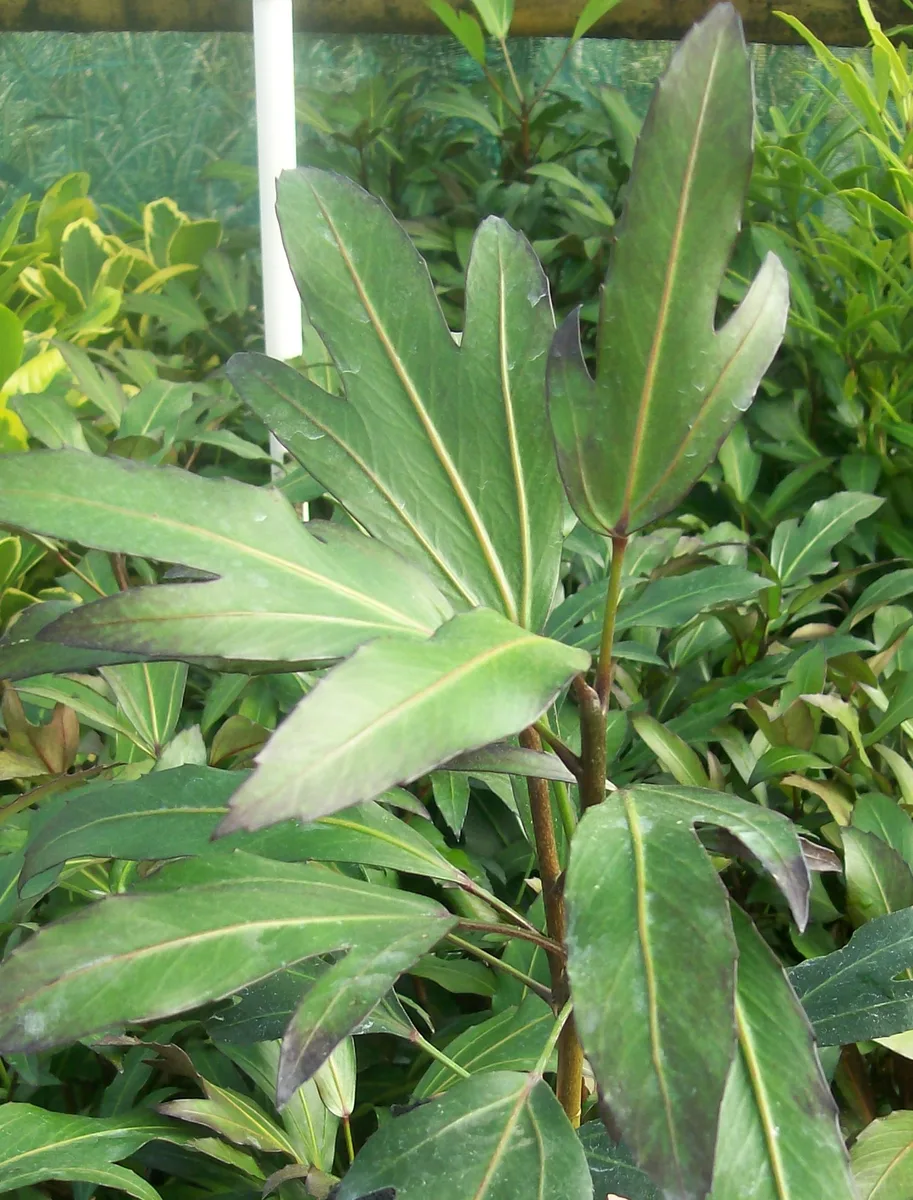
A half-hardy evergreen shrub to 5m high, with upright stems and dense foliage of glossy, dark green leaves, which may be simple or lobed on the same plant. Produces clusters of small, green flowers in winter which may be followed by small, purple-black fruits on female plants
Scientific classification
- Species
- Pseudopanax 'Trident' (Pseudopanax 'Trident')
- Genus
- Pseudopanax
- Family
- Araliaceae
- Information to be completed
- Toxicity
- Shrubs
- Plant type
- 4-8 metres
- Height
- 1.5-2.5 metres
- Spread
- Evergreen
- Foliage
- Columnar upright · Bushy
- Habit
- Spring · Summer · Autumn · Winter
- Season of interest
- Full sun
- Sunlight
- Information to be completed
- Ideal temperature









Pseudopanax 'Trident' pictures
Distribution of Pseudopanax 'Trident'
Distribution map
Information to be completed
Information to be completed
Culture
Information to be completed
Toxicity
Information to be completed
Quick identification of Pseudopanax 'Trident'
Information to be completed
Pseudopanax 'Trident' care guide
- Allow potting mix to partially dry between full watering sessions
- Watering
- Full sun
- Sunlight
- Information to be completed
- Ideal temperature

Watering
Allow potting mix to partially dry between full watering sessions
Fertilizing
 Fertilizing
General houseplant diluted feed monthly in warm growth months
Pruning
 Pruning
Little pruning is needed. Remove diseased, damaged, crowded or crossing shoots and unwanted growth. Timing depends on the plant: generally late winter or early spring; plants prone to bleeding and deciduous magnolias need different timing, and deciduous azaleas and lilacs are pruned after flowering.
Propagation
 Propagation
Propagate by semi-hardwood cuttings in summer, or by air layering
Growing
 Growing
Under glass, or as a houseplant, grow in loam-based compost with added sharp sand in bright, filtered light. Containers can be placed outside in summer and moved into a cool greenhouse over winter. In mild areas grow outdoors in fertile, well-drained soil in sun or partial shade. Will tolerate dry soil. Shelter from cold, drying winds
People also ask
Information to be completed
Common pests and diseases
Diseases
Generally disease-free
Pests
Generally pest-free
Explore the plant health library →




