
Rock's tree peony
Also known as: Information to be completed
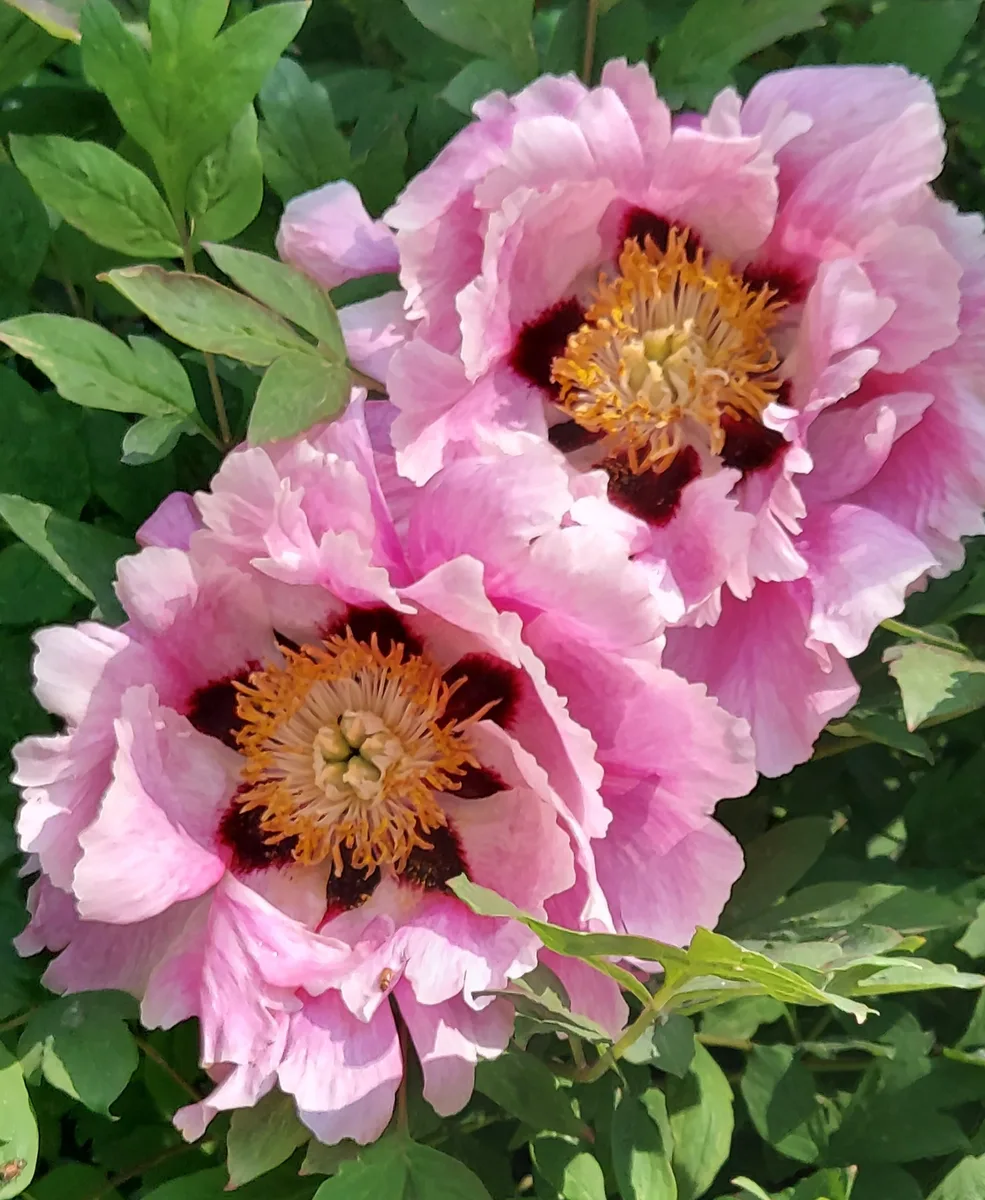
a lax deciduous shrub to 2m tall and wide, with dark green, divided foliage and semi-double white flowers 25cm across in late spring and early summer, each petal with a bold deep maroon blotch at the base
Scientific classification
- Species
- Rock's tree peony (Paeonia rockii)
- Genus
- Paeonia
- Family
- Paeoniaceae
- Order
- Saxifragales
- Class
- Magnoliopsida
- Phylum
- Magnoliophyta
- Information to be completed
- Toxicity
- Shrubs
- Plant type
- 1.5-2.5 metres
- Height
- 1.5-2.5 metres
- Spread
- Deciduous
- Foliage
- Bushy
- Habit
- Spring · Summer
- Season of interest
- Full sun · Partial shade
- Sunlight
- Information to be completed
- Ideal temperature









Rock's tree peony pictures
Distribution of Rock's tree peony
Distribution map
- Native
- Introduced
- Cultivated
Source:WCVP v16 · Royal Botanic Gardens, Kew · CC BY 3.0 · Boundaries:WGSRPD / TDWG
Rock's tree peony care guide
- Deep moderate watering, avoid wet crowns in winter
- Watering
- Full sun · Partial shade
- Sunlight

Watering
Deep moderate watering, avoid wet crowns in winter
Fertilizing
 Fertilizing
Feed in spring and lightly after flowering
Pruning
 Pruning
Little pruning is needed. Remove diseased, damaged, crowded or crossing shoots and unwanted growth. Timing depends on the plant: generally late winter or early spring; plants prone to bleeding and deciduous magnolias need different timing, and deciduous azaleas and lilacs are pruned after flowering.
Propagation
 Propagation
Propagate by seed, seeds are doubly dormant needing two winters to germinate. There is a good chance that the young plants will be true to type or similar. Propagate by grafting, from semi-ripe cutting or try layering
Growing
 Growing
Best grown in neutral, humus rich soils, but slightly acid or slightly alkaline soils are tolerated. Good drainage is essential. Ideally, plant in a sunny position. Can be grown in light shade, but the plants may become straggly. Fully hardy, but young foliage and flowers can be damaged by late frost. See tree peony cultivation for further information.
Common pests and diseases
Diseases
May be susceptible to a virus, honey fungus, Verticillium wilt, peony leaf blotch and peony wilt
Pests
May be susceptible to leaf and bud eelworm and soil-dwelling swift moth larvae
Explore the plant health library →




