
fuchsia 'Dorothy Hanley'
Also known as: Information to be completed
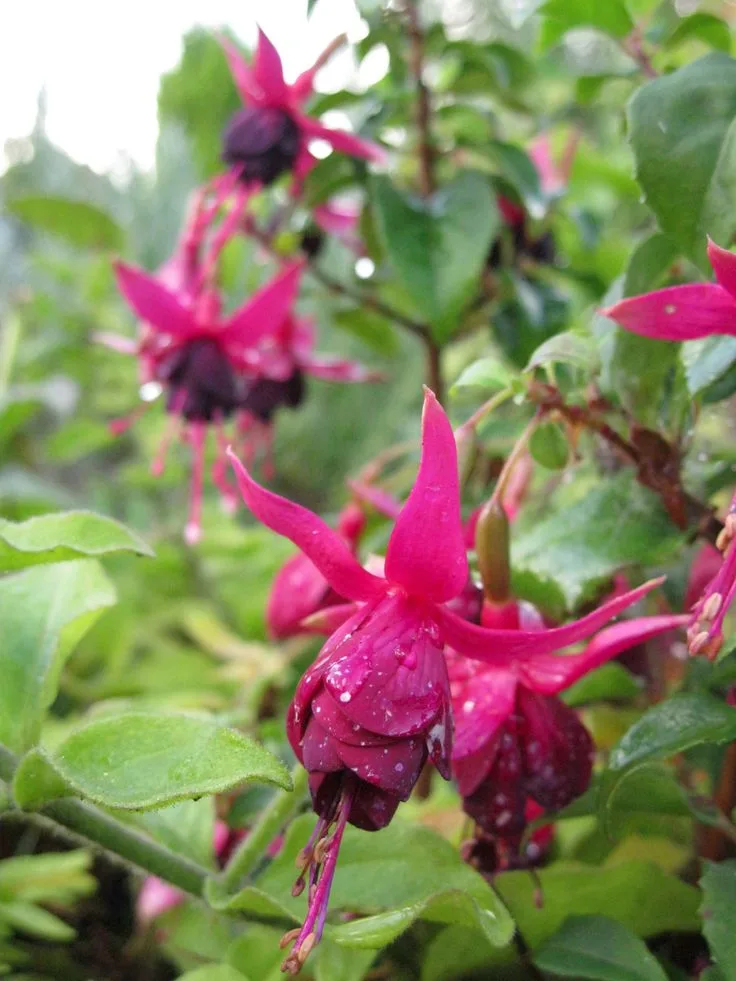
Dorothy Hanley' is an upright, branching, deciduous shrub to 1.2m tall and wide with mid-green leaves. Semi-double flowers with dark pinkish-red sepals and deep aubergine-purple to maroon-red petals are borne from summer into autumn
Scientific classification
- Species
- fuchsia 'Dorothy Hanley' (Fuchsia 'Dorothy Hanley')
- Genus
- Fuchsia
- Family
- Onagraceae
- Order
- Myrtales
- Class
- Magnoliopsida
- Phylum
- Tracheophyta
- Fruit are ornamental - not to be eaten. Wear gloves and other protective equipment when handling
- Toxicity
- Shrubs
- Plant type
- 1-1.5 metres
- Height
- 1-1.5 metres
- Spread
- Deciduous
- Foliage
- Bushy
- Habit
- Spring · Summer · Autumn
- Season of interest
- Full sun · Partial shade
- Sunlight
- Information to be completed
- Ideal temperature









fuchsia 'Dorothy Hanley' pictures
Toxicity
Fruit are ornamental - not to be eaten. Wear gloves and other protective equipment when handling
fuchsia 'Dorothy Hanley' care guide
- Evenly moist potting mix growth season, cut watering cold winter rest
- Watering
- Full sun · Partial shade
- Sunlight

Watering
Evenly moist potting mix growth season, cut watering cold winter rest
Fertilizing
 Fertilizing
Weak fuchsia flowering feed biweekly spring through summer blooming months
Pruning
 Pruning
Shorten last year's flowering stems to one or two buds from the older woody framework. Remove thin, weak and dead shoots. Prune in early to mid-spring as growth resumes; avoid winter pruning that exposes new shoots to frost.
Propagation
 Propagation
Propagate by softwood or semi-hardwood cuttings
Growing
 Growing
Grow in moist, fertile soil in sun or light shade in a sheltered position. Plant the base of the stem 5cm below the soil surface. In cold areas, provide a deep winter mulch and shelter from cold drying winds. See hardy fuchsia cultivation for further information
Common pests and diseases
Diseases
May be susceptible to fuchsia rust, grey moulds and honey fungus (rarely)
Pests
May be susceptible to aphids, fuchsia gall mite, capsid bug and vine weevil
Explore the plant health library →




