
bar-room plant 'Milky Way'
Also known as: Information to be completed
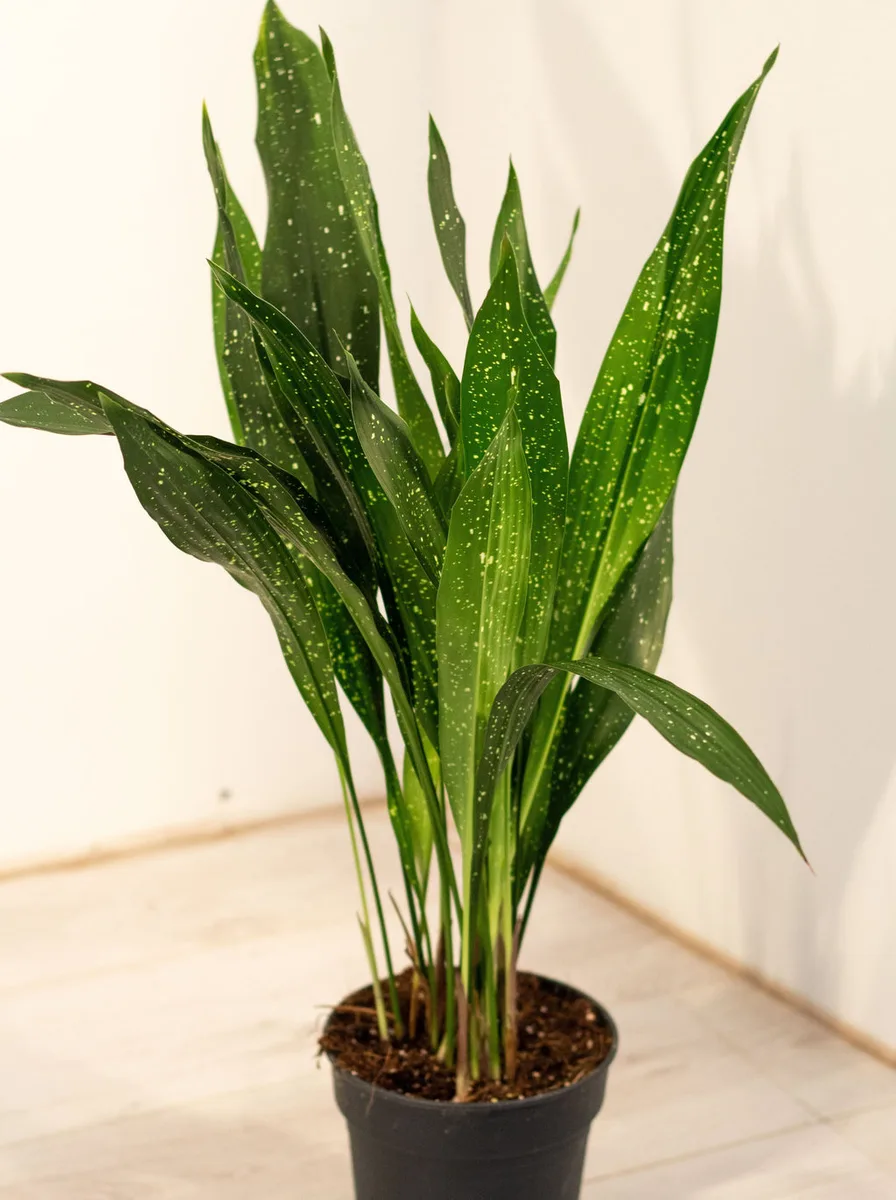
A clump-forming, evergreen perennial, prized for its 50cm long, broadly lance-shaped leaves, which are dark green with small white dots. Although most often grown as a houseplant, it is also a useful garden plant in mild areas, and is tolerant of shade
Scientific classification
- Species
- bar-room plant 'Milky Way' (Aspidistra elatior 'Milky Way')
- Genus
- Aspidistra
- Family
- Asparagaceae
- Order
- Asparagales
- Class
- Liliopsida
- Phylum
- Magnoliophyta
- Information to be completed
- Toxicity
- Houseplants
- Plant type
- 0.5-1 metres
- Height
- 0.1-0.5 metres
- Spread
- Evergreen
- Foliage
- Clump forming
- Habit
- Spring · Summer · Autumn · Winter
- Season of interest
- Full shade · Partial shade
- Sunlight
- Information to be completed
- Ideal temperature









bar-room plant 'Milky Way' pictures
Distribution of bar-room plant 'Milky Way'
Distribution map
- Native
- Introduced
- Cultivated
Source:WCVP v16 · Royal Botanic Gardens, Kew · CC BY 3.0 · Boundaries:WGSRPD / TDWG
bar-room plant 'Milky Way' care guide
- Keep soil evenly moist with warmth and humidity
- Watering
- Full shade · Partial shade
- Sunlight

Watering
Keep soil evenly moist with warmth and humidity
Fertilizing
 Fertilizing
Balanced feed every few weeks in active growth
Pruning
 Pruning
No pruning required
Propagation
 Propagation
Propagate by division
Growing
 Growing
As a houseplant, grow in large pots of loam-based compost. Although tolerant of deep shade, growth is best in bright, filtered light with a minimum temperature of 7°C. Water moderately in growth and apply a balanced liquid feed 2-3 times during the growing season; variegated cultivars revert to green if overfed. Outdoors grow in moist but well-drained, fertile, sandy loam with added leaf mould, in a sheltered site with full or partial shade. See houseplants advice profile for further information
Common pests and diseases
Diseases
Generally disease-free
Pests
May be susceptible to mealybugs, glasshouse red spider mite, scale insects and vine weevil larvae
Explore the plant health library →




