
purple moor-grass 'Skyracer'
Also known as: Information to be completed
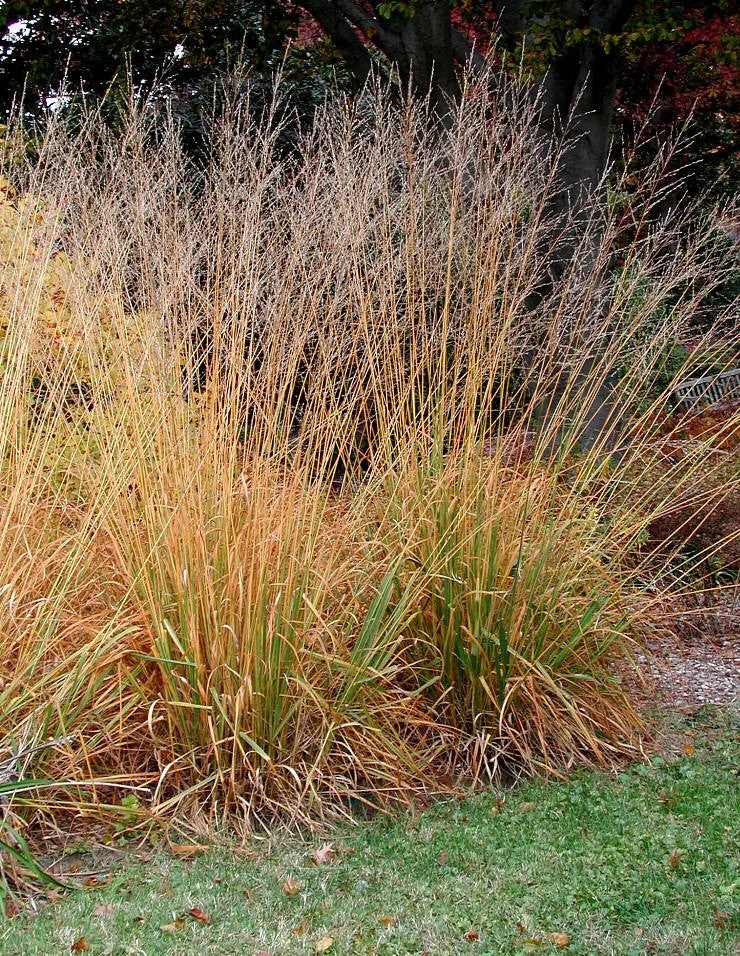
Clump-forming deciduous grass 2.1- 2.4m in height with narrow, linear grey-green leaves. Slender airy plumes of tiny dark purple flowers, on strongly upright yellow-tinted stems, are held high above the foliage from summer to autumn, the stems and leaves turn golden-yellow by late autumn
Scientific classification
- Species
- purple moor-grass 'Skyracer' (Molinia caerulea subsp. arundinacea 'Skyracer')
- Genus
- Molinia
- Family
- Poaceae
- Order
- Poales
- Class
- Liliopsida
- Phylum
- Magnoliophyta
- Information to be completed
- Toxicity
- Grass Like
- Plant type
- 1.5-2.5 metres
- Height
- 1-1.5 metres
- Spread
- Deciduous
- Foliage
- Clump forming · Tufted
- Habit
- Autumn · Spring · Summer
- Season of interest
- Full sun · Partial shade
- Sunlight
- Information to be completed
- Ideal temperature









purple moor-grass 'Skyracer' pictures
Distribution of purple moor-grass 'Skyracer'
Distribution map
- Native
- Introduced
- Cultivated
Source:WCVP v16 · Royal Botanic Gardens, Kew · CC BY 3.0 · Boundaries:WGSRPD / TDWG
purple moor-grass 'Skyracer' care guide
- Drought resistant once established, water deeply only in prolonged dry spells
- Watering
- Full sun · Partial shade
- Sunlight

Watering
Drought resistant once established, water deeply only in prolonged dry spells
Fertilizing
 Fertilizing
Light slow-release grass feed once annually in early spring
Pruning
 Pruning
Cut down dead foliage and old flowered stems, just before growth commences in spring
Propagation
 Propagation
Propagate by division in spring. Pot up until established
Growing
 Growing
Will grow in full sun or part shade in any moderately fertile, moist but well-drained soil, but prefers neutral to acidic soil. See ornamental grasses cultivation
Common pests and diseases
Diseases
May be susceptible to Verticillium wilt, Acer leaf scorch and honey fungus
Pests
May be susceptible to Acer gall mite, aphids, caterpillars and horse chestnut scale
Explore the plant health library →




