
Japanese poinsettia
Also known as: devil's backbone; redbird cactus; redbird flower; ribbon cactus; slipper flower; slipper plant
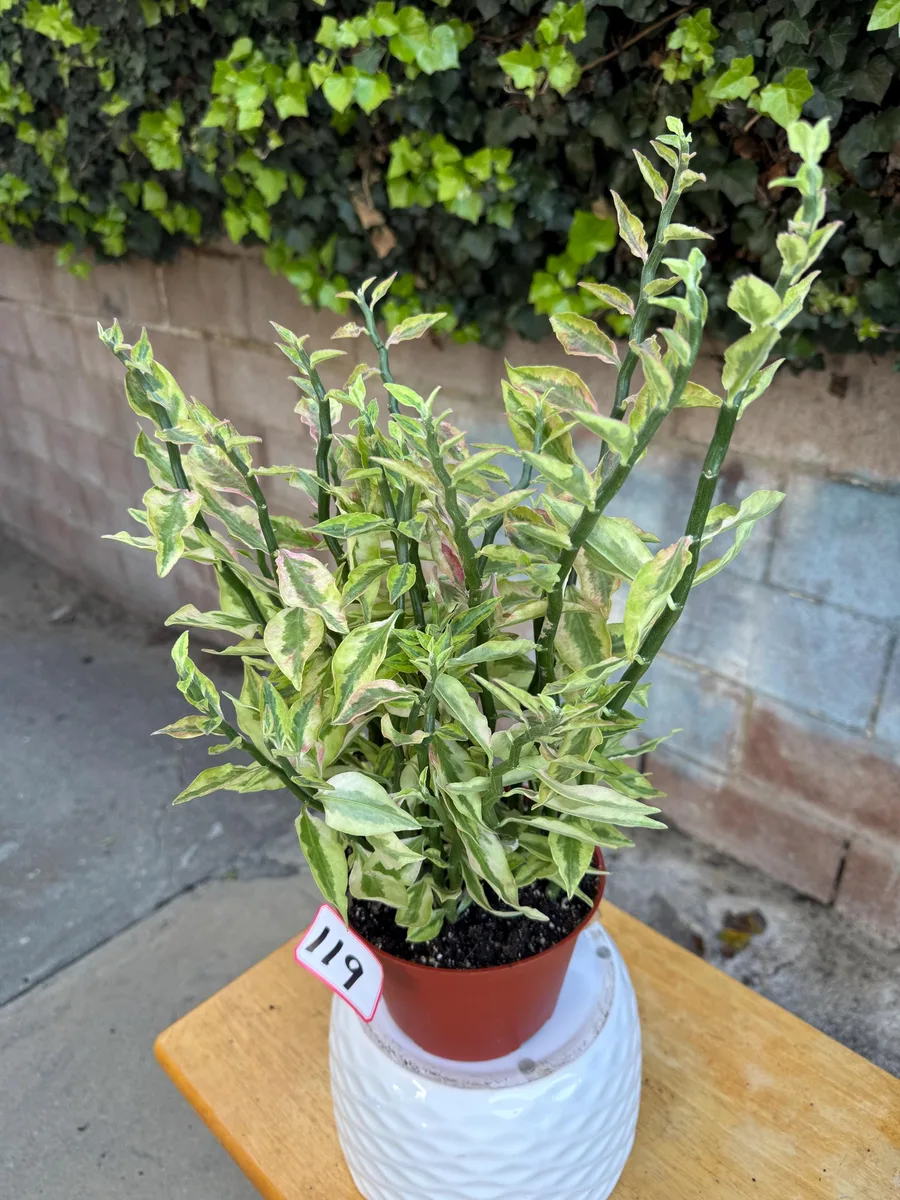
A bushy succulent shrub of upright growth, with fleshy green stems and narrowly elliptic, light green leaves to 15cm in length, edged with white or light pink
Scientific classification
- Species
- Japanese poinsettia (Pedilanthus tithymaloides 'Variegatus')
- Genus
- Pedilanthus
- Family
- Euphorbiaceae
- Order
- Malpighiales
- Class
- Magnoliopsida
- Phylum
- Magnoliophyta
- IRRITANT to skin/eye, harmful if eaten. Wear gloves and other protective equipment when handling]
- Toxicity
- Cactus Succulent · Houseplants
- Plant type
- 0.5-1 metres
- Height
- 0.1-0.5 metres
- Spread
- Deciduous
- Foliage
- Bushy
- Habit
- Information to be completed
- Season of interest
- Full sun
- Sunlight
- Information to be completed
- Ideal temperature









Japanese poinsettia pictures
Distribution of Japanese poinsettia
Distribution map
- Native
- Introduced
- Cultivated
Source:WCVP v16 · Royal Botanic Gardens, Kew · CC BY 3.0 · Boundaries:WGSRPD / TDWG
Toxicity
IRRITANT to skin/eye, harmful if eaten. Wear gloves and other protective equipment when handling]
Japanese poinsettia care guide
- Moderate regular watering, allowing brief slight drying between soakings
- Watering
- Full sun
- Sunlight

Watering
Moderate regular watering, allowing brief slight drying between soakings
Fertilizing
 Fertilizing
Balanced perennial feed every four weeks from spring through summer
Pruning
 Pruning
No pruning required
Propagation
 Propagation
Propagate by seed or stem tip cuttings
Growing
 Growing
Grow under glass in a loam-based potting compost with added organic matter and sharp sand, in full light. Water moderately in spring and summer and apply a balanced liquid fertilzer monthly. Keep barely moist in autumn and winter
Common pests and diseases
Diseases
Generally disease- free
Pests
Generally pest-free
Explore the plant health library →




