
geranium 'Starlight Magic'
Also known as: Information to be completed
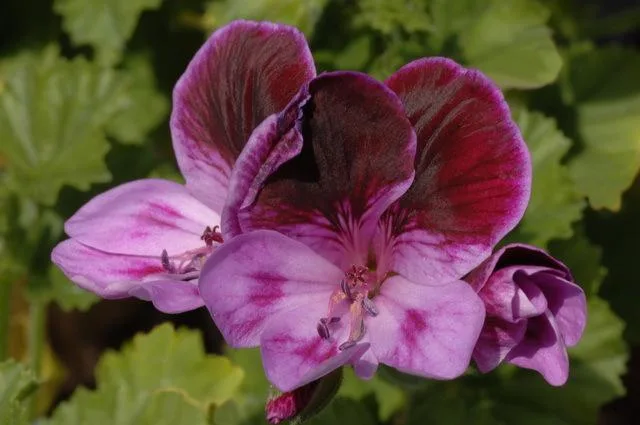
Starlight Magic' is a compact plant to 25cm with dense clusters of small flowers, upper petals deep red-purple with lighter edges, lower petals light purple
Scientific classification
- Species
- geranium 'Starlight Magic' (Pelargonium 'Starlight Magic')
- Genus
- Pelargonium
- Family
- Geraniaceae
- Information to be completed
- Toxicity
- Bedding · Houseplants
- Plant type
- 0.1-0.5 metres
- Height
- 0-0.1 metre
- Spread
- Evergreen
- Foliage
- Bushy
- Habit
- Spring · Summer · Autumn · Winter
- Season of interest
- Full sun
- Sunlight
- Information to be completed
- Ideal temperature









geranium 'Starlight Magic' pictures
Distribution of geranium 'Starlight Magic'
Distribution map
Information to be completed
Information to be completed
Culture
Information to be completed
Toxicity
Information to be completed
Quick identification of geranium 'Starlight Magic'
Information to be completed
geranium 'Starlight Magic' care guide
- Moderate regular watering, allowing brief slight drying between soakings
- Watering
- Full sun
- Sunlight
- Information to be completed
- Ideal temperature

Watering
Moderate regular watering, allowing brief slight drying between soakings
Fertilizing
 Fertilizing
Balanced perennial feed every four weeks from spring through summer
Pruning
 Pruning
Deadhead regularly
Propagation
 Propagation
Take softwood cuttings in summer and overwinter plants in frost free conditions or take softwood cuttings in spring
Growing
 Growing
Grow in fertile well-drained soil in full sun. Remove spent flowers. To overwinter, grow small plants in late summer from cuttings. See Pelargonium cultivation for further advice.
People also ask
Information to be completed
Common pests and diseases
Diseases
Foot and root rots can be a problem in wet soils. Grey moulds are often troublesome in wet conditions. A virus can often be a problem where cultivars are maintained by cuttings
Pests
vine weevil, leafhoppers, caterpillars, thrips, fungus gnats and Aphids can be troublesome. Aphids are generally more problematic on over-wintered plants
Explore the plant health library →




