
grape 'Seyval Blanc'
Also known as: Information to be completed
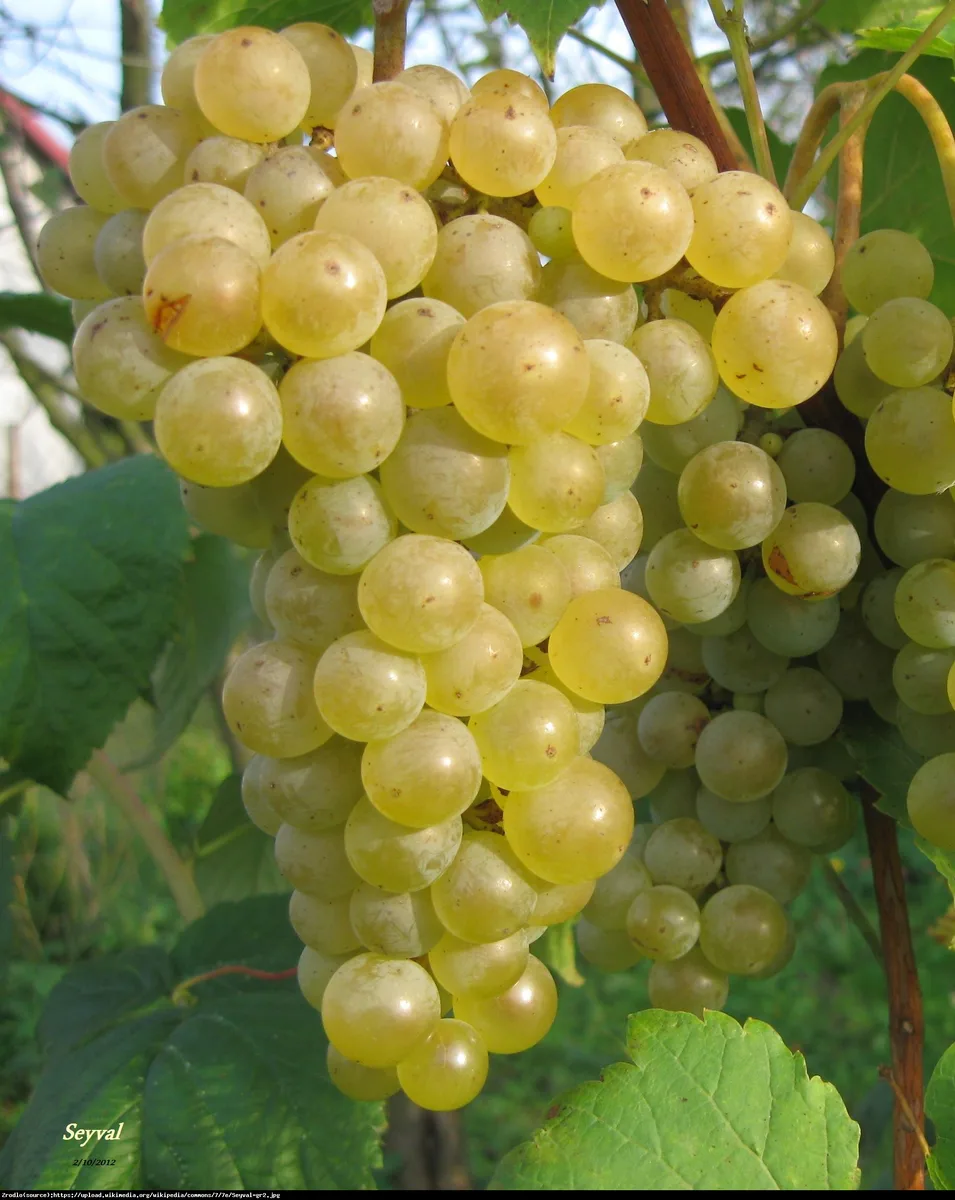
A woody deciduous climber, with shallowly lobed, toothed bright green leaves. A reliable, heavy cropping variety, usually used for wine-making, with small, fragrant greenish flowers in early summer followed by large bunches of white grapes in autumn. Suitable for outdoor cultivation in warmer regions
Scientific classification
- Species
- grape 'Seyval Blanc' (Vitis 'Seyval Blanc')
- Genus
- Vitis
- Family
- Vitaceae
- Information to be completed
- Toxicity
- Fruit Edible · Climber Wall Shrub
- Plant type
- 4-8 metres
- Height
- 2.5-4 metres
- Spread
- Deciduous
- Foliage
- Climbing
- Habit
- Autumn · Spring · Summer
- Season of interest
- Full sun
- Sunlight
- Information to be completed
- Ideal temperature









grape 'Seyval Blanc' pictures
Distribution of grape 'Seyval Blanc'
Distribution map
Information to be completed
Information to be completed
Culture
Information to be completed
Toxicity
Information to be completed
Quick identification of grape 'Seyval Blanc'
Information to be completed
grape 'Seyval Blanc' care guide
- Moderate regular watering, allowing brief slight drying between soakings
- Watering
- Full sun
- Sunlight
- Information to be completed
- Ideal temperature

Watering
Moderate regular watering, allowing brief slight drying between soakings
Fertilizing
 Fertilizing
Balanced perennial feed every four weeks from spring through summer
Pruning
 Pruning
Routine pruning is unnecessary; shorten overlong shoots to fit the available space. For last-year flowering growth, prune after flowering; for current-year flowering growth, prune in late winter or spring. This guidance is for established plants.
Propagation
 Propagation
Propagate by layering in autumn or hardwood cuttings in late winter
Growing
 Growing
Grow in full sun, in well-drained, humus-rich, preferably neutral to slightly alkaline soil. Keep watered in dry spells. See grape cultivation
People also ask
Information to be completed
Common pests and diseases
Diseases
May be susceptible to powdery mildews, grey moulds, honey fungus and virus diseases; see grapevine diseases
Pests
May be susceptible to grapevine blister mite, glasshouse red spider mite, brown scale, woolly vine scale and spotted wing drosophila (fruit fly)
Explore the plant health library →




