
shooting star
Also known as: common American cowslip; gentlemen and ladies; Indian chief; Johnny jump; lambs' noses; Mead's dodecatheon; prairie cyclamen; prairie pointer; pride of Ohio; American cowslip; compass plant
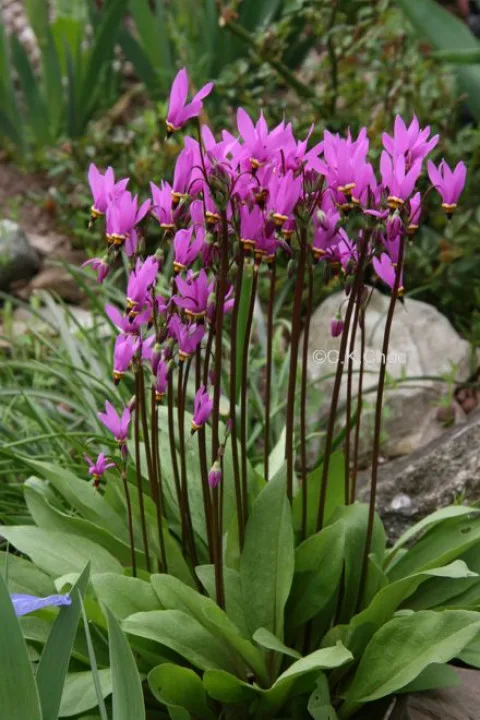
An herbaceous perennial to 45cm in height, with a rosette of lance-shaped leaves and erect stems bearing large umbels of nodding, rosy-lilac flowers 2cm in length
Scientific classification
- Species
- shooting star (Dodecatheon meadia)
- Genus
- Dodecatheon
- Family
- Primulaceae
- Information to be completed
- Toxicity
- Alpine Rockery · Herbaceous Perennial
- Plant type
- 0.1-0.5 metres
- Height
- 0.1-0.5 metres
- Spread
- Deciduous
- Foliage
- Clump forming
- Habit
- Spring · Summer · Autumn
- Season of interest
- Full sun · Partial shade
- Sunlight
- Information to be completed
- Ideal temperature









shooting star pictures
Distribution of shooting star
Distribution map
Eastern North America
Information to be completed
Culture
Information to be completed
Toxicity
Information to be completed
Quick identification of shooting star
Information to be completed
shooting star care guide
- Moderate regular watering, allowing brief slight drying between soakings
- Watering
- Full sun · Partial shade
- Sunlight
- Information to be completed
- Ideal temperature

Watering
Moderate regular watering, allowing brief slight drying between soakings
Fertilizing
 Fertilizing
Balanced perennial feed every four weeks from spring through summer
Pruning
 Pruning
No pruning required
Propagation
 Propagation
Propagate by seed in pots in an open frame as soon as seed is ripe; seed needs exposure to cold before it will germinate or propagate by division in spring
Growing
 Growing
Grow in a moist but well-drained, humus-rich soil in full sun or partial shade. Suitable for woodland or rock garden
People also ask
Information to be completed
Common pests and diseases
Diseases
Generally disease free
Pests
May be damaged by slugs and snails
Explore the plant health library →




