
Canary Island flat giant houseleek
Also known as: Information to be completed
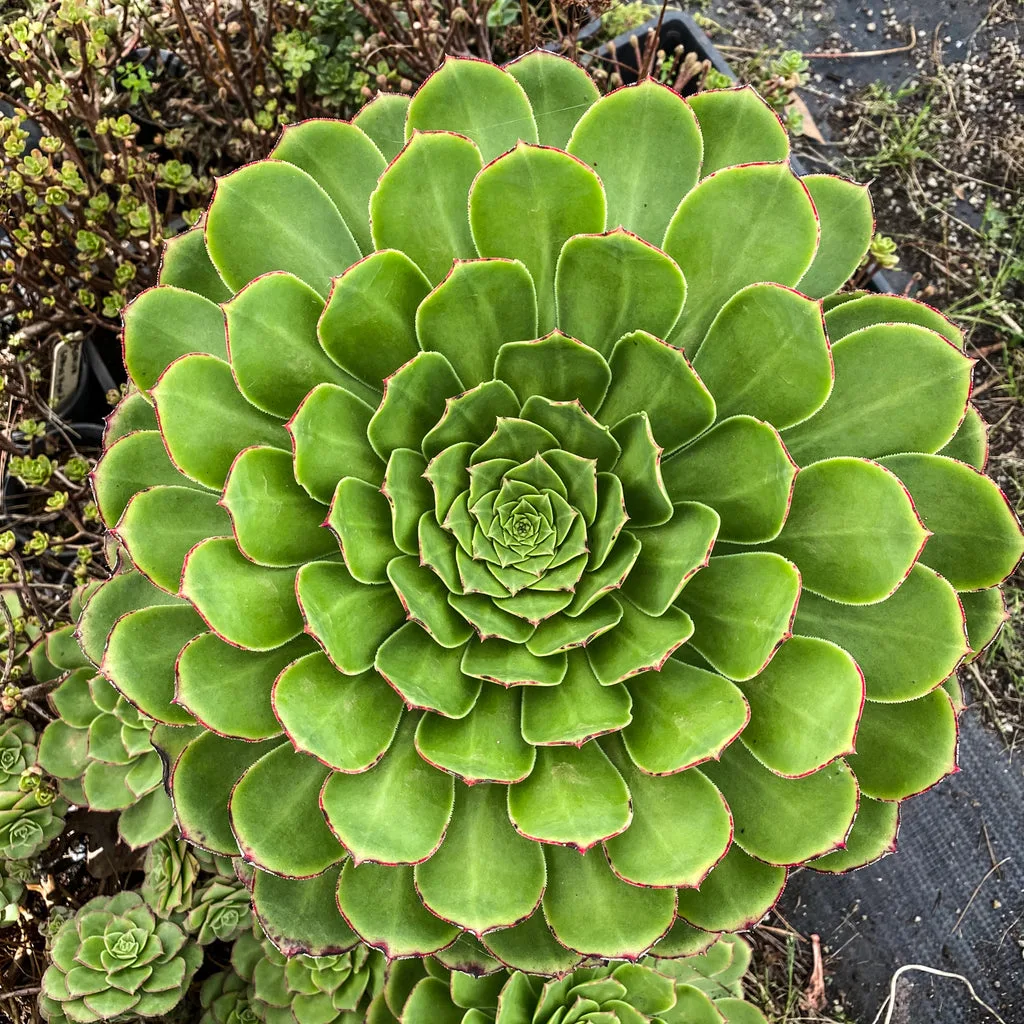
A succulent, to around 30cm tall, that forms cupped rosettes of glossy, light green, rounded leaves, tinged pink in dry or cold situations. Flowers can be produced in spring; a pale yellow flower spike emerging from the centre of a rosette. This rosette will then die, but will have formed offsets at its base to grow on
Scientific classification
- Species
- Canary Island flat giant houseleek (Aeonium canariense var. subplanum)
- Genus
- Aeonium
- Family
- Crassulaceae
- Order
- Saxifragales
- Class
- Magnoliopsida
- Phylum
- Magnoliophyta
- Information to be completed
- Toxicity
- Cactus Succulent · Conservatory Greenhouse
- Plant type
- 0.1-0.5 metres
- Height
- 0.1-0.5 metres
- Spread
- Evergreen
- Foliage
- Tufted
- Habit
- Spring · Summer · Autumn · Winter
- Season of interest
- Full sun
- Sunlight
- Information to be completed
- Ideal temperature









Canary Island flat giant houseleek pictures
Distribution of Canary Island flat giant houseleek
Distribution map
- Native
- Introduced
- Cultivated
Source:WCVP v16 · Royal Botanic Gardens, Kew · CC BY 3.0 · Boundaries:WGSRPD / TDWG
Canary Island flat giant houseleek care guide
- Let gritty soil dry fully before each thorough watering cycle
- Watering
- Full sun
- Sunlight

Watering
Let gritty soil dry fully before each thorough watering cycle
Fertilizing
 Fertilizing
Very dilute low-nitrogen succulent feed monthly in warm growth
Pruning
 Pruning
No pruning required
Propagation
 Propagation
Propagate by rooting offsets
Growing
 Growing
Grow under glass in a standard cactus compost, in bright, filtered light. grow outdoors in summer or very mild coastal locations. When in growth water moderately and feed every two or three weeks with a balanced liquid feed. Keep almost dry in the winter. See further houseplant cacti and succulent cultivation advice
Common pests and diseases
Diseases
Generally disease-free
Pests
May be susceptible to aphids and mealybugs
Explore the plant health library →




