
clematis 'Princess Diana'
Also known as: Information to be completed
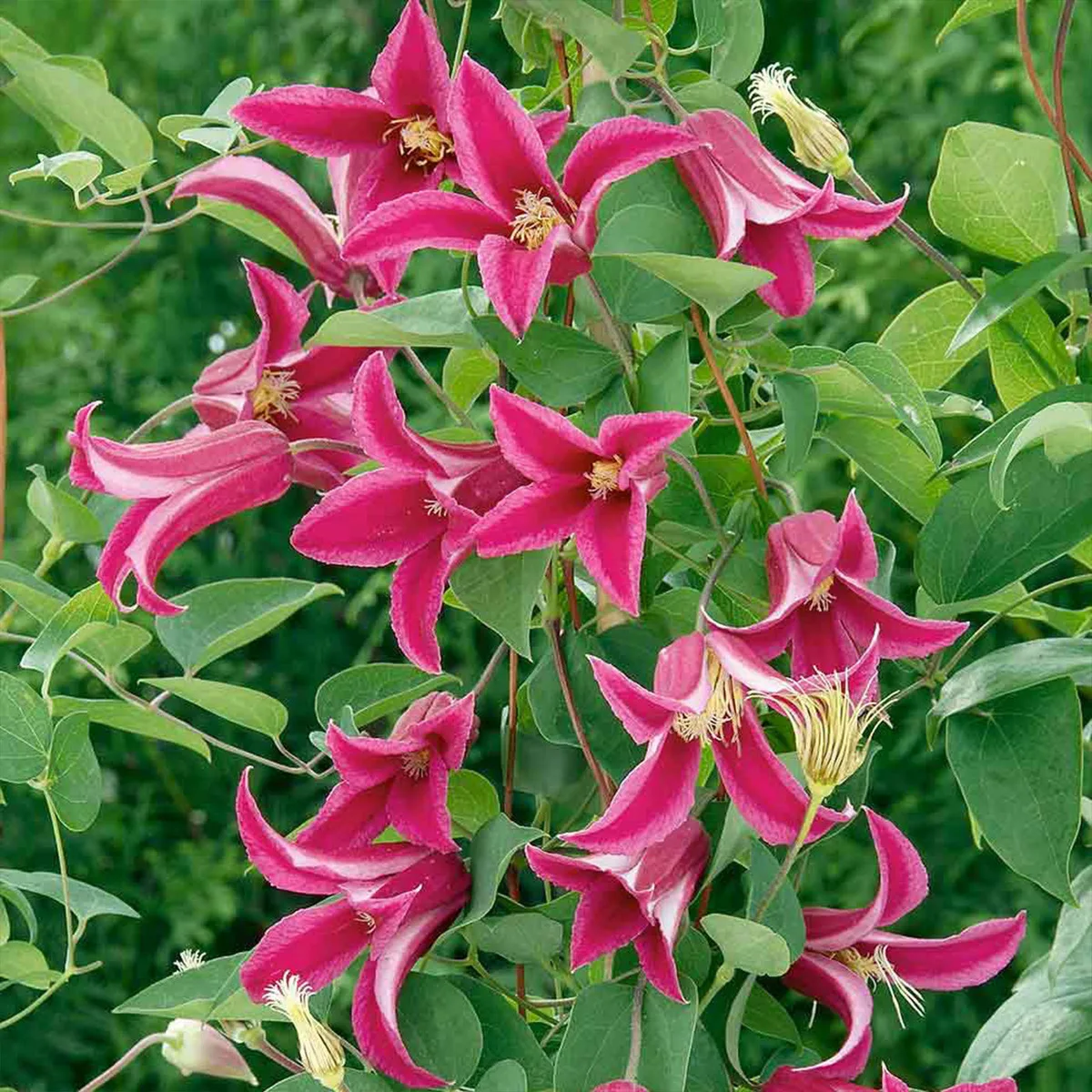
A deciduous climber of herbaceous habit with profuse flowers once established. Single tulip-shaped luminous reddish-pink flowers to 6cm in length are brighter pink at the margins with cream and maroon stamens, mid summer to early autumn
Scientific classification
- Species
- clematis 'Princess Diana' (Clematis 'Princess Diana')
- Genus
- Clematis
- Family
- Ranunculaceae
- Order
- Ranunculales
- Class
- Magnoliopsida
- Phylum
- Tracheophyta
- Skin irritant. Wear gloves and other protective equipment when handling
- Toxicity
- Climber Wall Shrub
- Plant type
- 2.5-4 metres
- Height
- 0.5-1 metres
- Spread
- Deciduous
- Foliage
- Climbing
- Habit
- Spring · Summer · Autumn
- Season of interest
- Full sun · Partial shade
- Sunlight
- Information to be completed
- Ideal temperature









clematis 'Princess Diana' pictures
Toxicity
Skin irritant. Wear gloves and other protective equipment when handling
clematis 'Princess Diana' care guide
- Deep regular watering, keeping roots cool and never chronically dry
- Watering
- Full sun · Partial shade
- Sunlight

Watering
Deep regular watering, keeping roots cool and never chronically dry
Fertilizing
 Fertilizing
Balanced clematis feed monthly in spring, higher potash before bloom
Pruning
 Pruning
Clematis pruning: group three
Propagation
 Propagation
Propagate by layering or semi-hardwood cuttings
Growing
 Growing
Plant in a moisture-retentive, well-drained soil, with the roots and base of the plant kept cool and shaded by other plants or a layer of pebbles at the base. Plant with the crown 5-8cm (2-3in) deep to encourage new shoots to grow from below ground level. Suitable for a large container, at least 45cm (18in) deep and wide in a soil based potting compost. See clematis cultivation for more advice
Common pests and diseases
Diseases
May be susceptible to honey fungus (rarely), clematis wilt and clematis slime flux
Pests
May be susceptible to aphids, snails and caterpillars; petals may be eaten by earwigs
Explore the plant health library →




