
Japanese wisteria 'Lawrence'
Also known as: Information to be completed
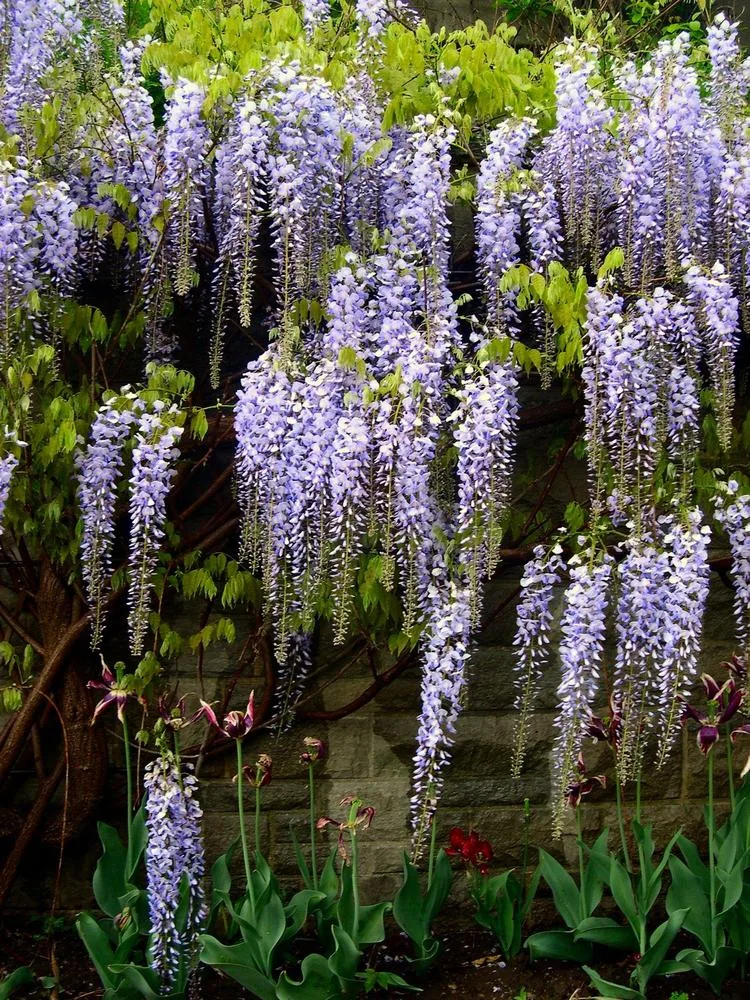
Lawrence' is a clockwise-twining cultivar. The scented flowers are pale violet-blue, with a deeper violet-purple keel and wings, produced in long, dense, hanging racemes in early summer. The foliage is pale green in spring and yellow in autumn
Scientific classification
- Species
- Japanese wisteria 'Lawrence' (Wisteria floribunda 'Lawrence')
- Genus
- Wisteria
- Family
- Fabaceae
- Order
- Fabales
- Class
- Magnoliopsida
- Phylum
- Tracheophyta
- Harmful if eaten. Wear gloves and other protective equipment when handling
- Toxicity
- Climber Wall Shrub
- Plant type
- 8-12 metres
- Height
- wider than 8 metres
- Spread
- Deciduous
- Foliage
- Climbing
- Habit
- Autumn · Spring · Summer · Winter
- Season of interest
- Full sun · Partial shade
- Sunlight
- Information to be completed
- Ideal temperature









Japanese wisteria 'Lawrence' pictures
Distribution of Japanese wisteria 'Lawrence'
Distribution map
- Native
- Introduced
- Cultivated
Source:WCVP v16 · Royal Botanic Gardens, Kew · CC BY 3.0 · Boundaries:WGSRPD / TDWG
Toxicity
Harmful if eaten. Wear gloves and other protective equipment when handling
Japanese wisteria 'Lawrence' care guide
- Deep water during establishment and in prolonged drought
- Watering
- Full sun · Partial shade
- Sunlight

Watering
Deep water during establishment and in prolonged drought
Fertilizing
 Fertilizing
Feed lightly in spring, avoid excessive nitrogen
Pruning
 Pruning
See pruning wisteria
Propagation
 Propagation
Propagate by layering, softwood cuttings, hardwood cuttings or grafting
Growing
 Growing
Grow in a fertile, moist, well-drained soil in sun or semi shade. May be trained into a large tree, on a wall, arch or pergola, or as a free-standing half standard. See wisteria growing guide for more advice
Common pests and diseases
Diseases
May be susceptible to honey fungus (rarely), phytophthora root rot, fungal leaf spot, virus diseases, and powdery mildews
Pests
May be susceptible to aphids, glasshouse red spider mite, scale insects and wisteria scale
Explore the plant health library →




