
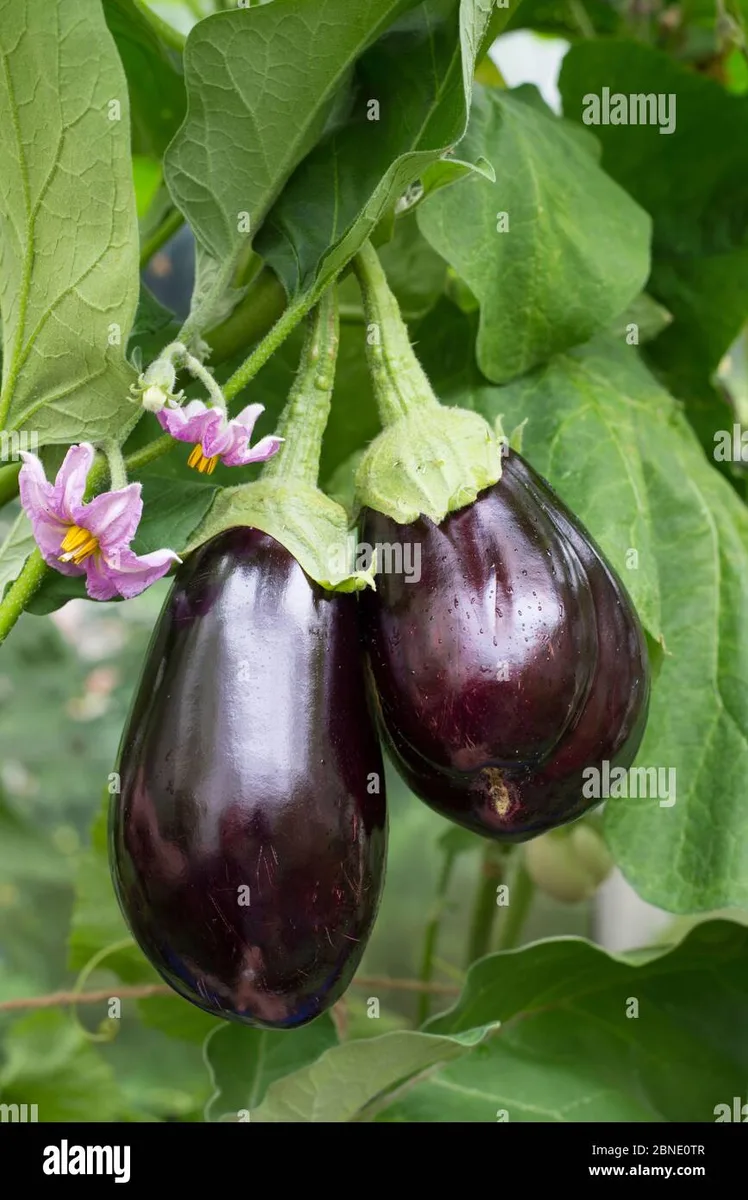
aubergine 'Bonica'
Also known as: Information to be completed
A variety of aubergine, a tropical perennial grown as an annual, with grey-green, downy foliage. It reaches about 1.2m, has small, pale purple flowers, and produces good quality, large, glossy, deep purple fruit from late summer into autumn
Scientific classification
- Species
- aubergine 'Bonica' (Solanum melongena 'Bonica')
- Genus
- Solanum
- Family
- Solanaceae
- Order
- Solanales
- Class
- Magnoliopsida
- Phylum
- Magnoliophyta
- Information to be completed
- Toxicity
- Annual Biennial
- Plant type
- 1-1.5 metres
- Height
- 0.5-1 metres
- Spread
- Deciduous
- Foliage
- Bushy
- Habit
- Spring · Summer · Autumn
- Season of interest
- Full sun
- Sunlight
- Information to be completed
- Ideal temperature









aubergine 'Bonica' pictures
aubergine 'Bonica' care guide
- Water deeply when topsoil dries, consistent mild moisture for fruiting
- Watering
- Full sun
- Sunlight

Watering
Water deeply when topsoil dries, consistent mild moisture for fruiting
Fertilizing
 Fertilizing
High-potassium vegetable feed biweekly flowering and fruiting stage
Pruning
 Pruning
Pinch out the growing tip when the plant has reached about 30cm high to encourage branching
Propagation
 Propagation
Propagate by seed. See sowing vegetable seeds or sowing seeds indoors for further advice
Growing
 Growing
Can be grown outdoors in a sunny, sheltered position in mild areas, but is better grown in a greenhouse or tall growing-frame. Start from seed or buy as small plants and grow on in a heated greenhouse or on a warm windowsill. Move to an unheated greenhouse or outside once all risk of frost has passed. Water regularly and feed every 10-14 days with a balanced liquid fertiliser, switching to a high potassium liquid feed once the first fruits have set. See Aubergines (Grow your own)
Common pests and diseases
Diseases
May be susceptible to honey fungus (rarely), tomato leaf mould and tomato viruses
Pests
May be susceptible to glasshouse whitefly, aphids and glasshouse red spider mite
Explore the plant health library →




