
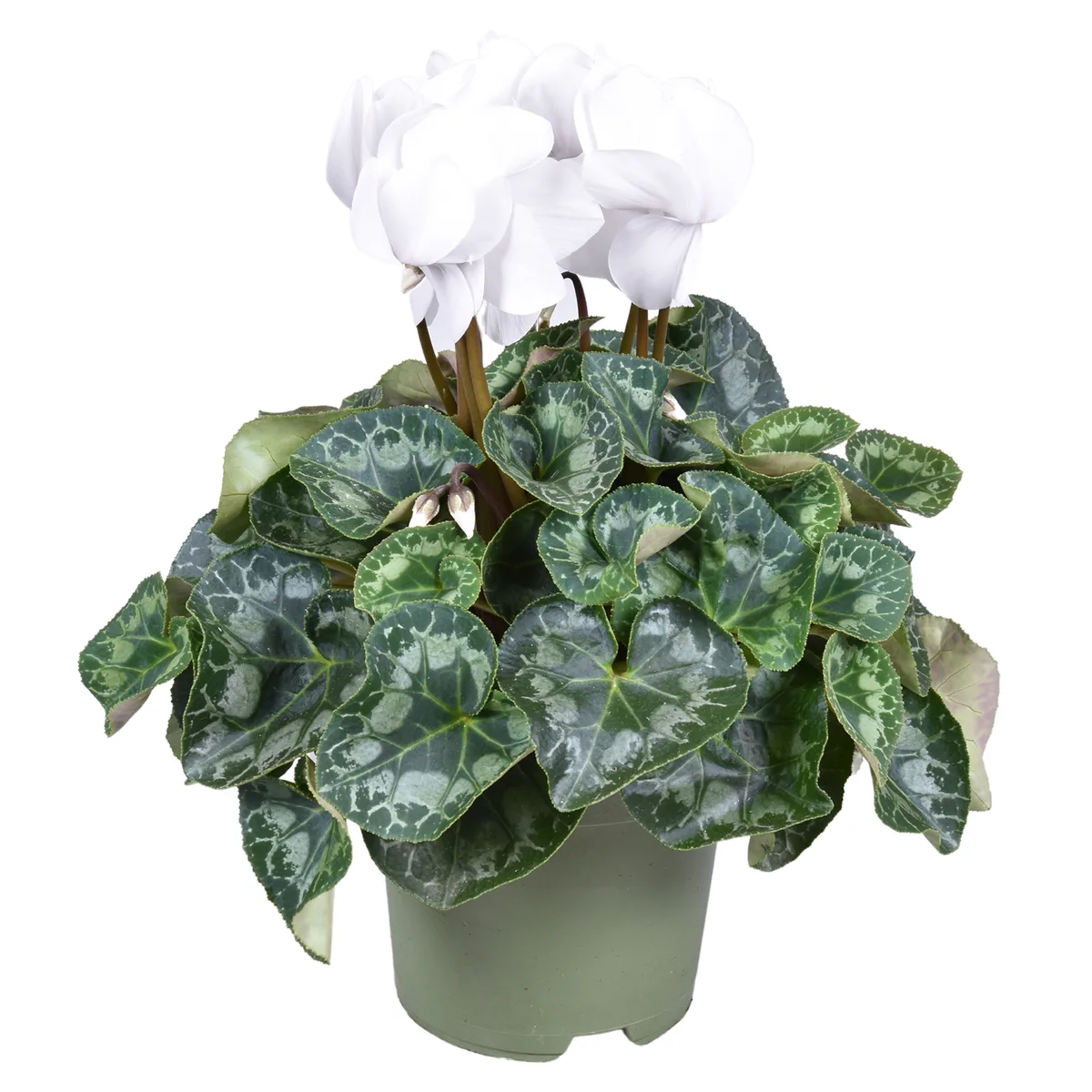
cyclamen 'Halios White'
Also known as: Information to be completed
Halios White' is a tuberous perennial to 30cm, with marbled foliage and pure white flowers in early winter
Scientific classification
- Species
- cyclamen 'Halios White' (Cyclamen persicum 'Halios White')
- Genus
- Cyclamen
- Family
- Primulaceae
- Order
- Ericales
- Class
- Magnoliopsida
- Phylum
- Magnoliophyta
- Ornamental bulbs, not to be eaten. Wear gloves and other protective equipment when handling
- Toxicity
- Bulbs · Conservatory Greenhouse · Houseplants
- Plant type
- 0.1-0.5 metres
- Height
- 0.1-0.5 metres
- Spread
- Deciduous
- Foliage
- Tufted
- Habit
- Winter
- Season of interest
- Partial shade
- Sunlight
- Information to be completed
- Ideal temperature









cyclamen 'Halios White' pictures
Distribution of cyclamen 'Halios White'
Distribution map
- Native
- Introduced
- Cultivated
Source:WCVP v16 · Royal Botanic Gardens, Kew · CC BY 3.0 · Boundaries:WGSRPD / TDWG
Toxicity
Ornamental bulbs, not to be eaten. Wear gloves and other protective equipment when handling
cyclamen 'Halios White' care guide
- Moderate regular watering, allowing brief slight drying between soakings
- Watering
- Partial shade
- Sunlight

Watering
Moderate regular watering, allowing brief slight drying between soakings
Fertilizing
 Fertilizing
Balanced perennial feed every four weeks from spring through summer
Pruning
 Pruning
No pruning required
Propagation
 Propagation
Propagate by seed, in darkness as soon as ripe at 12 to 15°C. Can be beneficial to soak seed for 10 hours prior to sowing
Growing
 Growing
Grow indoors or under glass in containers of loam-based compost with the tops of the tubers just above the soil surface. Maintain bright filtered light with moderate humidity and a minimum winter temperature of 13 to 16°C. Avoid draughts and hot dry air. When in growth water moderately and apply a low nitrogen liquid fertiliser fortnightly. Reduce water after flowering and keep dry when dormant
Common pests and diseases
Diseases
Generally disease free except under glass
Pests
Mice and squirrels may be a problem
Explore the plant health library →




