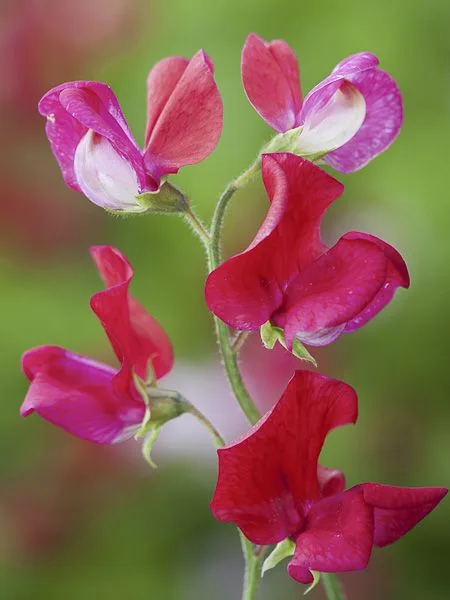
sweet pea 'King Edward VII'
Also known as: Information to be completed
King Edward VII' is an annual climber with fragrant, crimson flowers in summer and early autumn
Scientific classification
- Species
- sweet pea 'King Edward VII' (Lathyrus odoratus 'King Edward VII')
- Genus
- Lathyrus
- Family
- Fabaceae
- Order
- Fabales
- Class
- Magnoliopsida
- Phylum
- Magnoliophyta
- Pods and seeds are not edible. Wear gloves and other protective equipment when handling
- Toxicity
- Climber Wall Shrub · Annual Biennial
- Plant type
- 1-1.5 metres
- Height
- 0.1-0.5 metres
- Spread
- Deciduous
- Foliage
- Climbing
- Habit
- Summer · Autumn
- Season of interest
- Full sun
- Sunlight
- Information to be completed
- Ideal temperature









sweet pea 'King Edward VII' pictures
Distribution of sweet pea 'King Edward VII'
Distribution map
- Native
- Introduced
- Cultivated
Source:WCVP v16 · Royal Botanic Gardens, Kew · CC BY 3.0 · Boundaries:WGSRPD / TDWG
Toxicity
Pods and seeds are not edible. Wear gloves and other protective equipment when handling
sweet pea 'King Edward VII' care guide
- Water regularly in growth, keeping roots cool and evenly moist
- Watering
- Full sun
- Sunlight

Watering
Water regularly in growth, keeping roots cool and evenly moist
Fertilizing
 Fertilizing
High-potash sweet pea feed every two weeks through flowering season
Pruning
 Pruning
Remove after flowering
Propagation
 Propagation
Propagate by seed sown in-situ in mid-spring. Germination may be improved by pre-soaking or chipping before sowing. See sowing seeds indoors for further advice
Growing
 Growing
Grow in a fertile, humus-rich, well-drained soil in full sun or partial shade. Incorporate organic matter into the soil before planting and feed with a balanced, liquid fertiliser once a month when in growth. Deadhead regularly to prolong flowering. See sweetpea cultivation for further information
Common pests and diseases
Diseases
May be susceptible to powdery mildews, Fusarium wilt and sweet pea viruses
Pests
May be susceptible to aphids, slugs and snails
Explore the plant health library →