
celery 'Victoria'
Also known as: Information to be completed
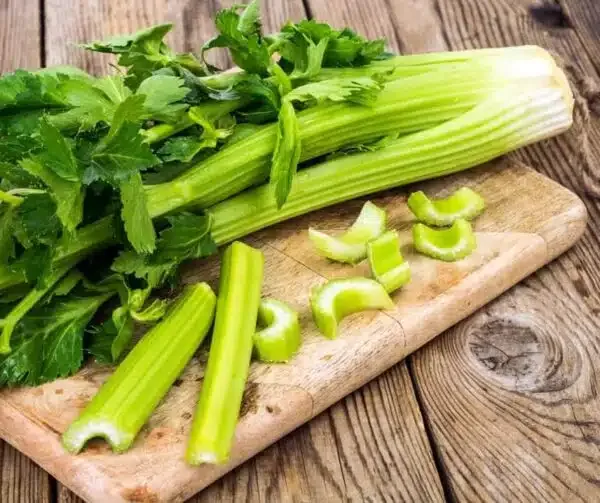
A vigorous, quick growing variety growing to 1m tall, producing well filled plants with bright green leaves and thick, upright stems. It is noted as one of the best flavoured celery varieties with a good nutty flavour and has a good standing ability. It performs well in difficult Spring conditions and is slow to bolt making it ideal for mid-season production
Scientific classification
- Species
- celery 'Victoria' (Apium graveolens var. dulce 'Victoria')
- Genus
- Apium
- Family
- Apiaceae
- Order
- Apiales
- Class
- Magnoliopsida
- Phylum
- Magnoliophyta
- Harmful to skin with sunlight. Wear gloves and other protective equipment when handling
- Toxicity
- Annual Biennial
- Plant type
- 0.5-1 metres
- Height
- 0.5-1 metres
- Spread
- Deciduous
- Foliage
- Columnar upright
- Habit
- Spring · Summer · Autumn
- Season of interest
- Full sun
- Sunlight
- Information to be completed
- Ideal temperature









celery 'Victoria' pictures
Distribution of celery 'Victoria'
Distribution map
- Native
- Introduced
- Cultivated
Source:WCVP v16 · Royal Botanic Gardens, Kew · CC BY 3.0 · Boundaries:WGSRPD / TDWG
Toxicity
Harmful to skin with sunlight. Wear gloves and other protective equipment when handling
celery 'Victoria' care guide
- Moderate regular watering, allowing brief slight drying between soakings
- Watering
- Full sun
- Sunlight

Watering
Moderate regular watering, allowing brief slight drying between soakings
Fertilizing
 Fertilizing
Balanced perennial feed every four weeks from spring through summer
Pruning
 Pruning
No pruning required
Propagation
 Propagation
Propagate by seed. See sowing vegetable seeds
Growing
 Growing
Grow in fertile, moist but well drained soil in full sun. Sow indoors between March and April in seed trays or modules and transplant out to final position when large enough to handle. Low temperatures can cause bolting. See celery cultivation
Common pests and diseases
Diseases
May be susceptible to bolting, celery leaf spot, celery heart rot, split stalks
Pests
May be susceptible to celery fly, slugs and snails
Explore the plant health library →




