
arenaceous crown cactus
Also known as: crown cactus
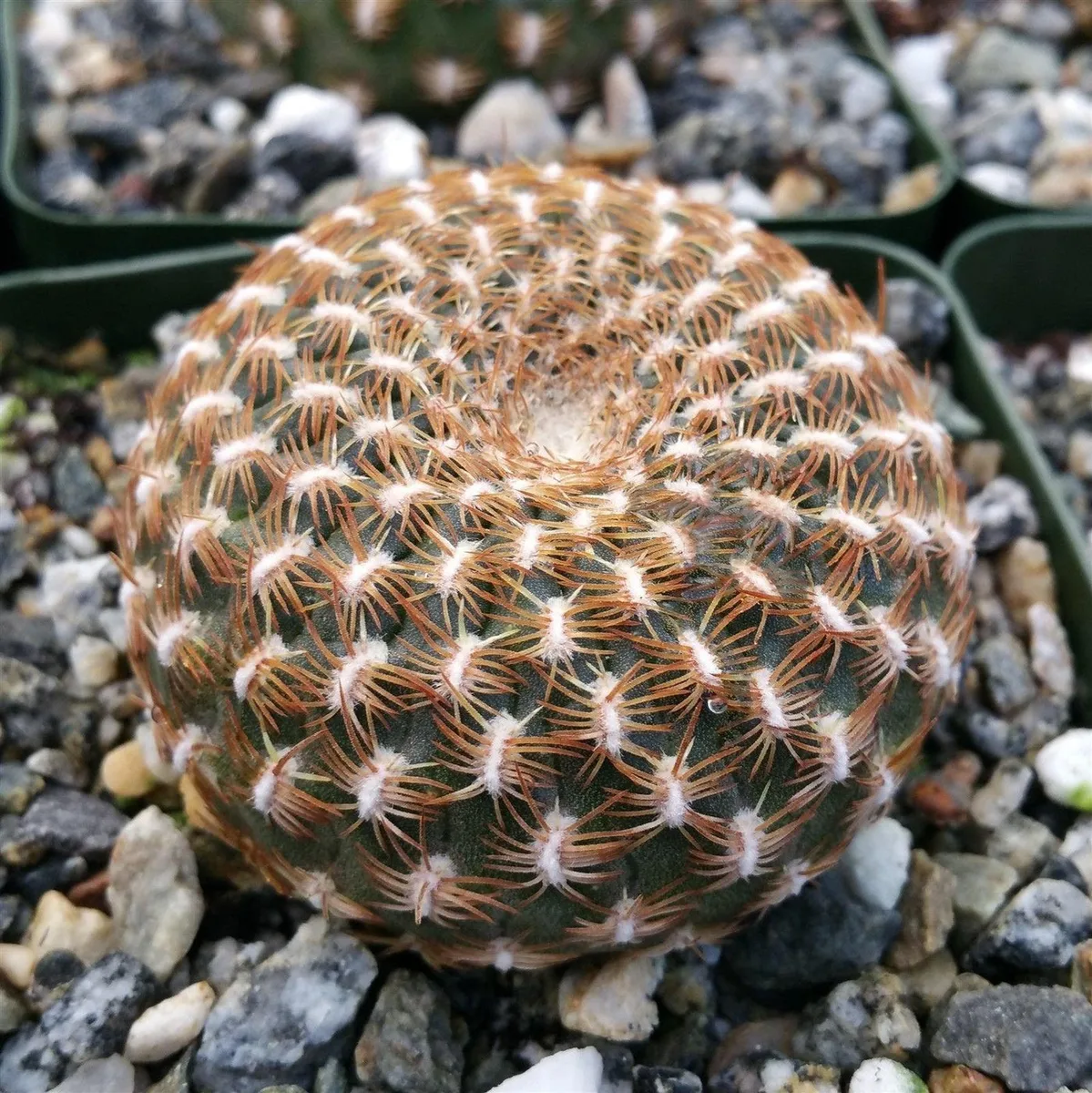
A cactus which forms globose, slightly flattened, green to brownish-green stems, 2-4cm high and 2-6cm wide. Very neat, symmetrical habit with small, light coloured spines radiating from the areoles. Stems solitary when young only clumping when mature. Flowers produced in quantity around the base of the stem, are deep yellow to orange and borne in spring
Scientific classification
- Species
- arenaceous crown cactus (Rebutia arenacea)
- Genus
- Rebutia
- Family
- Cactaceae
- Order
- Caryophyllales
- Class
- Magnoliopsida
- Phylum
- Magnoliophyta
- Information to be completed
- Toxicity
- Cactus Succulent · Conservatory Greenhouse · Houseplants
- Plant type
- Up to 10 cm
- Height
- 0-0.1 metre
- Spread
- Evergreen
- Foliage
- Bushy
- Habit
- Spring · Summer · Autumn · Winter
- Season of interest
- Full sun
- Sunlight
- Information to be completed
- Ideal temperature









arenaceous crown cactus pictures
Distribution of arenaceous crown cactus
Distribution map
- Native
- Introduced
- Cultivated
Source:WCVP v16 · Royal Botanic Gardens, Kew · CC BY 3.0 · Boundaries:WGSRPD / TDWG
arenaceous crown cactus care guide
- Water sparingly, allowing soil to dry completely between waterings; keep dry in winter.
- Watering
- Full sun
- Sunlight

Watering
Water sparingly, allowing soil to dry completely between waterings; keep dry in winter.
Fertilizing
 Fertilizing
Apply a high-potassium, low-nitrogen cactus fertilizer once in spring and summer.
Pruning
 Pruning
No pruning necessary
Propagation
 Propagation
Propagate by seed at 21°C (70°F) in early spring, or remove offsets in spring or summer
Growing
 Growing
Under glass, grow in standard cactus compost in full light with low humidity. From March to October, water only when compost approaches dryness and apply a balanced liquid fertiliser 3 or 4 times during the growing season. Keep frost free and completely dry late autumn and winter as the plant is extremely sensitive to excess water at the roots
Common pests and diseases
Diseases
Relatively disease resistant
Pests
Prone to mealybugs early in the season
Explore the plant health library →




