
mandevilla 'Alice du Pont'
Also known as: Information to be completed
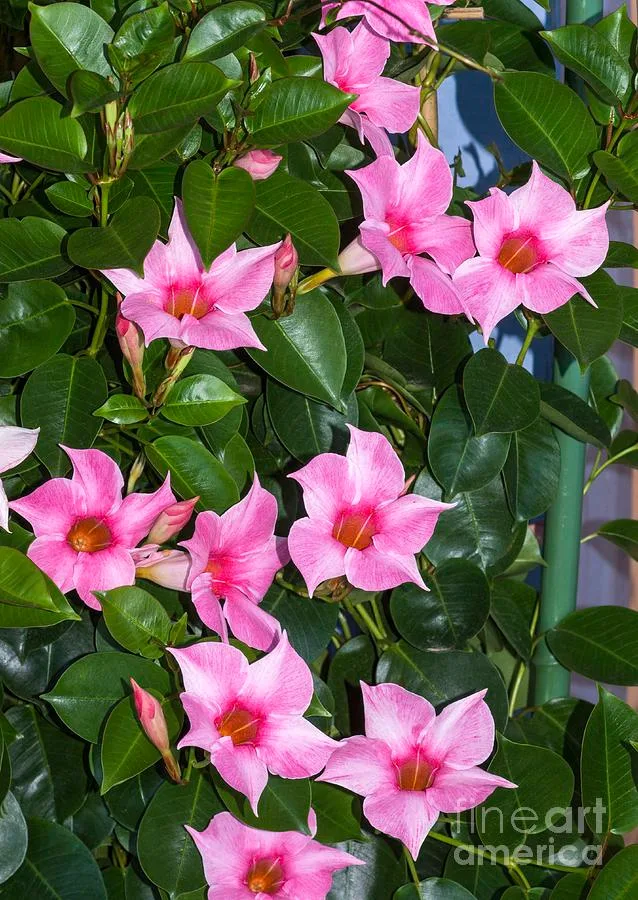
A woody-stemmed, twining climber with slightly wrinkled, evergreen, oval leaves 10-15cm long. In mid- to late summer it produces sprays of up to 20 tubular, bright pink flowers 8-10cm across
Scientific classification
- Species
- mandevilla 'Alice du Pont' (Mandevilla × amabilis 'Alice du Pont')
- Genus
- Mandevilla
- Family
- Apocynaceae
- Order
- Gentianales
- Class
- Magnoliopsida
- Phylum
- Magnoliophyta
- May cause mild stomach upset if eaten, sap may cause skin irritation. Wear gloves and other protective equipment when handling]
- Toxicity
- Climber Wall Shrub · Conservatory Greenhouse
- Plant type
- 4-8 metres
- Height
- 1-1.5 metres
- Spread
- Semi evergreen
- Foliage
- Climbing
- Habit
- Spring · Summer · Autumn · Winter
- Season of interest
- Full sun
- Sunlight
- Information to be completed
- Ideal temperature









mandevilla 'Alice du Pont' pictures
Toxicity
May cause mild stomach upset if eaten, sap may cause skin irritation. Wear gloves and other protective equipment when handling]
mandevilla 'Alice du Pont' care guide
- Maintain steady mild soil dampness, limit irrigation winter dormancy
- Watering
- Full sun
- Sunlight

Watering
Maintain steady mild soil dampness, limit irrigation winter dormancy
Fertilizing
 Fertilizing
Diluted tropical vine feed every two weeks spring summer bloom time
Pruning
 Pruning
On established plants, shorten sideshoots to three or four buds from the permanent framework; remove crowded or damaged shoots. Prune in late winter or early spring.
Propagation
 Propagation
Propagate by seed sown with heat in spring, or root softwood cuttings in late spring or semi-ripe cuttings in summer, with bottom heat
Growing
 Growing
Grow in a temperate or warm greenhouse or conservatory in loam-based compost in full light but with shade from hot sun. Young plants can be grown in pots to stand outside in summer. Usually evergreen, but will drop leaves if too cold in winter
Common pests and diseases
Diseases
Generally trouble free
Pests
Glasshouse red spider mite, glasshouse whitefly and mealybugs may be troublesome
Explore the plant health library →




