
blue anemone
Also known as: Apennine anemone
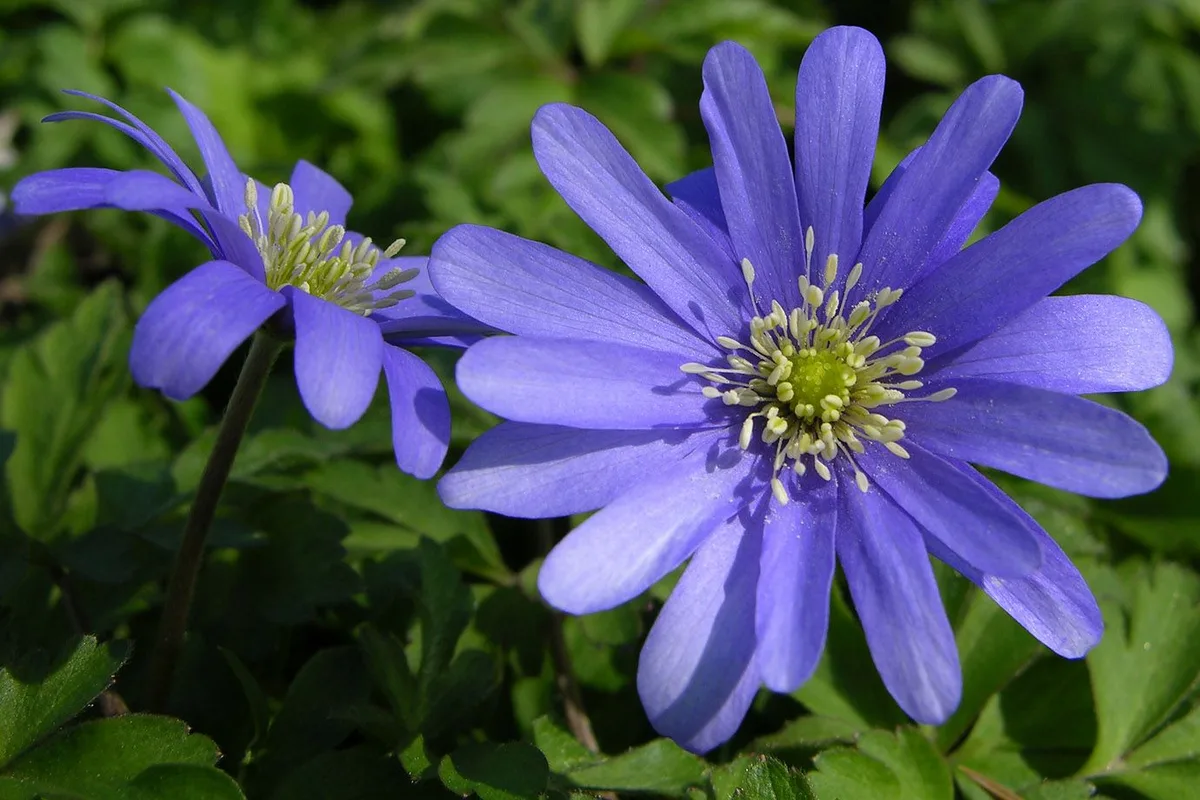
A rhizomatous perennial to 20cm tall; leaves divided into three toothed and lobed segments. Flowers solitary in early spring, to 3.5cm wide, with 10-15 narrowly oblong blue petals, above a whorl of three small stem leaves
Scientific classification
- Species
- blue anemone (Anemone apennina)
- Genus
- Anemone
- Family
- Ranunculaceae
- Order
- Ranunculales
- Class
- Magnoliopsida
- Phylum
- Magnoliophyta
- Contact with the sap may irritate skin. Wear gloves and other protective equipment when handling
- Toxicity
- Herbaceous Perennial
- Plant type
- 0.1-0.5 metres
- Height
- 0.1-0.5 metres
- Spread
- Deciduous
- Foliage
- Matforming
- Habit
- Spring
- Season of interest
- Full sun · Partial shade
- Sunlight
- Information to be completed
- Ideal temperature









blue anemone pictures
Distribution of blue anemone
Distribution map
Southern Europe
Toxicity
Contact with the sap may irritate skin. Wear gloves and other protective equipment when handling
blue anemone care guide
- Moderate regular watering, allowing slight drying between waterings
- Watering
- Full sun · Partial shade
- Sunlight

Watering
Moderate regular watering, allowing slight drying between waterings
Fertilizing
 Fertilizing
Balanced feed monthly during active growth season
Pruning
 Pruning
No pruning required
Propagation
 Propagation
Propagate by seed sown thinly as soon as they are ripe. Divide when dormant or as the leaves die down. Cut rhizomes into sections with at least one bud and replant immediately before they dry out.
Growing
 Growing
Grow in moist but well-drained humus-rich soil in sun or part shade. Drier conditions are tolerated in summer when dormant. Ideal for naturalising in a variety of situations.
Common pests and diseases
Diseases
Leaf spot and powdery mildews can be problematic
Pests
Prone to damage from caterpillars and slugs. Susceptible to leaf eelworms.
Explore the plant health library →




