
iris 'Black Gamecock'
Also known as: Information to be completed
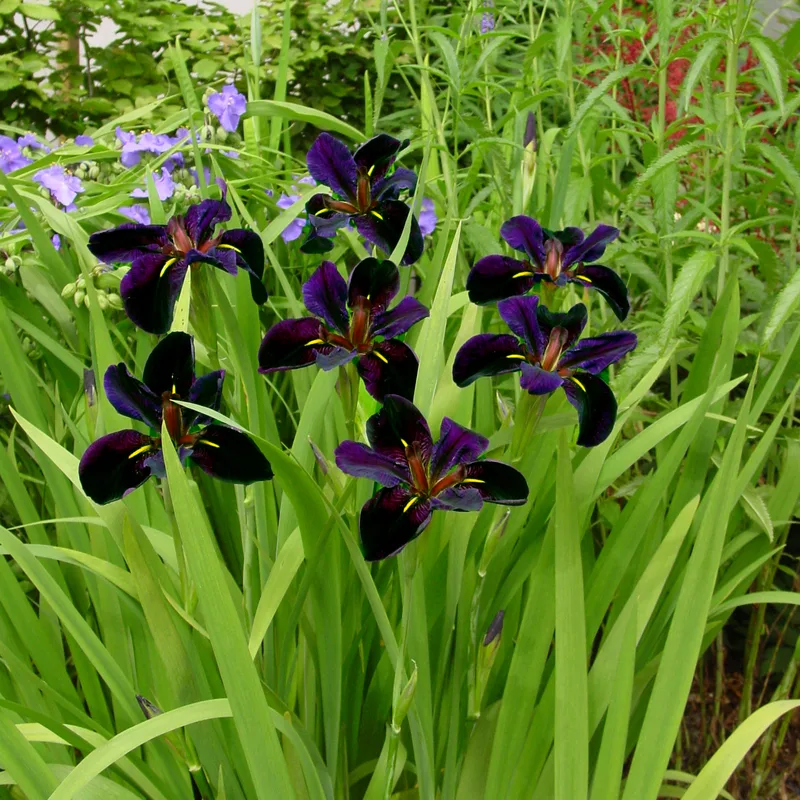
A moisture-loving plant that can be planted at the edges of a pond or streamside. It's bright green strap-like, sword shaped leaves persist in sheltered areas throught winter. In late spring/ early summer it produces stems, of up to 70cm, topped by velvety, deep purple flowers with a flash of golden yellow at the base of the petals
Scientific classification
- Species
- iris 'Black Gamecock' (Iris 'Black Gamecock')
- Genus
- Iris
- Family
- Iridaceae
- Order
- Asparagales
- Class
- Liliopsida
- Phylum
- Magnoliophyta
- Harmful if eaten. Wear gloves and other protective equipment when handling
- Toxicity
- Herbaceous Perennial · Bogs
- Plant type
- 0.5-1 metres
- Height
- 0.5-1 metres
- Spread
- Semi evergreen
- Foliage
- Clump forming
- Habit
- Spring · Summer · Autumn · Winter
- Season of interest
- Full sun · Partial shade
- Sunlight
- Information to be completed
- Ideal temperature









iris 'Black Gamecock' pictures
Toxicity
Harmful if eaten. Wear gloves and other protective equipment when handling
iris 'Black Gamecock' care guide
- Keep soil damp during growth, dry substrate once dormancy arrives fully
- Watering
- Full sun · Partial shade
- Sunlight

Watering
Keep soil damp during growth, dry substrate once dormancy arrives fully
Fertilizing
 Fertilizing
Diluted iris bulb feed monthly before flower stalks begin to emerge
Pruning
 Pruning
No pruning required. Cut back faded flower stems after flowering. Remove withered leaves in autumn
Propagation
 Propagation
Propagate by division in late summer after flowering. See dividing irises
Growing
 Growing
Grow in reliably damp soil that is rich in organic matter in a sun or partial shade. Can be grown as a marginal plant in ponds and along streamsides
Common pests and diseases
Diseases
May be susceptible to aphid-borne viruses, bacterial soft rot and grey moulds; see Iris diseases
Pests
May be susceptible to slugs, snails and thrips
Explore the plant health library →




