
Portuguese quince
Also known as: Information to be completed
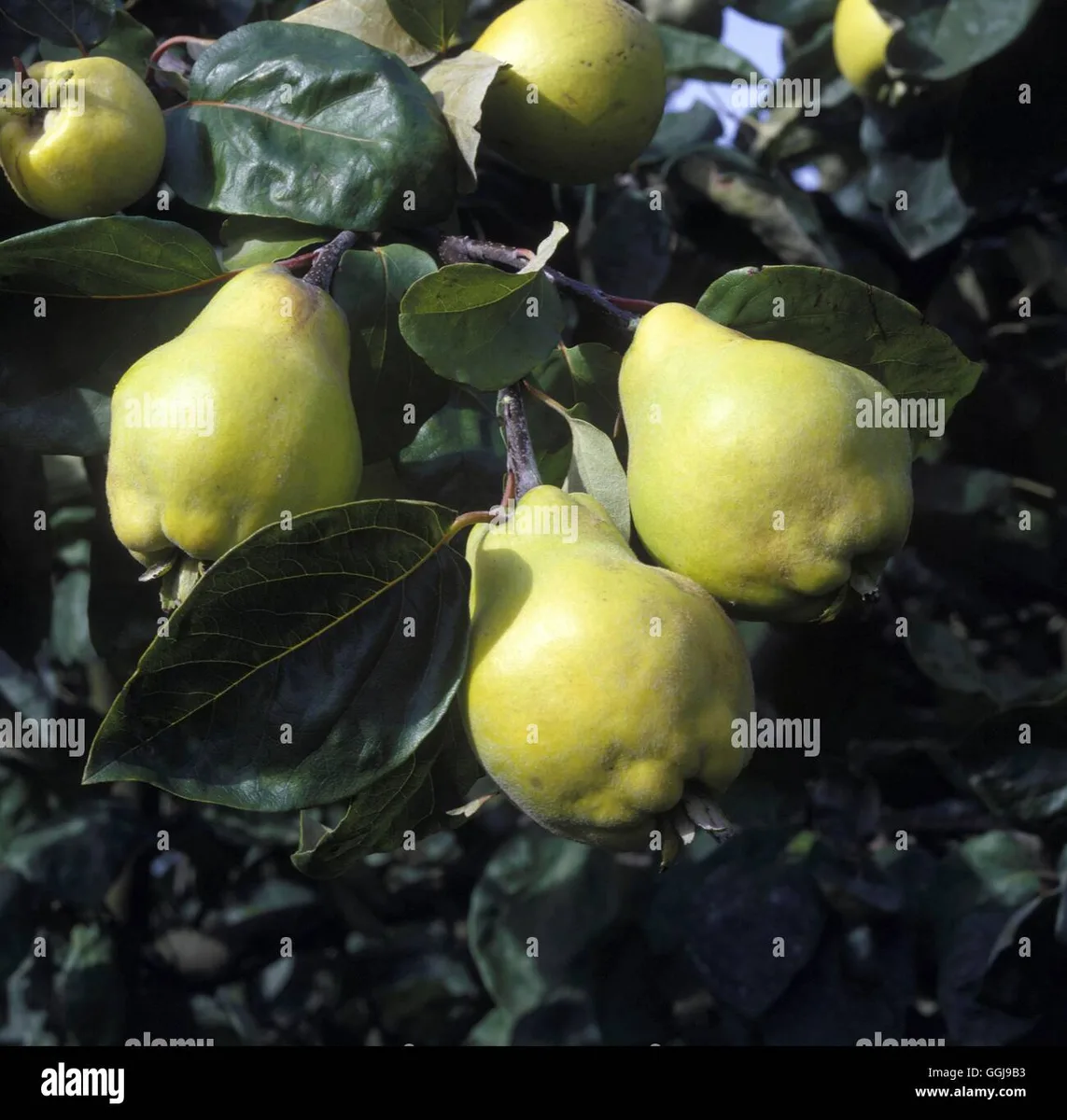
A small, rounded, deciduous tree, with solitary, pink and white flowers to 5cm wide. Large, pear-shaped, fragrant, deep yellow fruit follow in autumn. Both young foliage and fruit have a downy, silvery-grey coating
Scientific classification
- Species
- Portuguese quince (Cydonia oblonga 'Lusitanica')
- Genus
- Cydonia
- Family
- Rosaceae
- Order
- Rosales
- Class
- Magnoliopsida
- Phylum
- Magnoliophyta
- Information to be completed
- Toxicity
- Fruit Edible · Trees
- Plant type
- 2.5-4 metres
- Height
- 2.5-4 metres
- Spread
- Deciduous
- Foliage
- Bushy
- Habit
- Spring · Summer · Autumn
- Season of interest
- Full sun
- Sunlight
- Information to be completed
- Ideal temperature









Portuguese quince pictures
Distribution of Portuguese quince
Distribution map
- Native
- Introduced
- Cultivated
Locally extinct or doubtful records are excluded from native and introduced layers.
Source:WCVP v16 · Royal Botanic Gardens, Kew · CC BY 3.0 · Boundaries:WGSRPD / TDWG
Portuguese quince care guide
- Deep infrequent watering after root establishment, withstand mild drought
- Watering
- Full sun
- Sunlight

Watering
Deep infrequent watering after root establishment, withstand mild drought
Fertilizing
 Fertilizing
Balanced fruit shrub feed once annually early spring budding period
Pruning
 Pruning
Little pruning is needed. Remove diseased, damaged, crowded or crossing shoots and unwanted growth. Timing depends on the plant: generally late winter or early spring; plants prone to bleeding and deciduous magnolias need different timing, and deciduous azaleas and lilacs are pruned after flowering.
Propagation
 Propagation
It can be established on its own roots and propagated from semi-ripe cuttings in summer, but it is often propagated by grafting onto a clonal rootstock for fruit. The rootstock will determine the size of the plant
Growing
 Growing
Grow in a warm, sheltered spot as flowers are susceptible to frost and warm conditions are needed for the fruit to ripen well. Tolerant of a wide range of soils, but will do best where soil is deep and moisture retentive, so long as it is not prone to waterlogging. See quince cultivation
Common pests and diseases
Diseases
May be susceptible to quince leaf blight, brown rot, fireblight, powdery mildews and honey fungus
Pests
Can occasionally be affected by caterpillars and aphids
Explore the plant health library →




