
Icelandic poppy
Also known as: Arctic poppy; Iceland poppy; yellow Arctic poppy
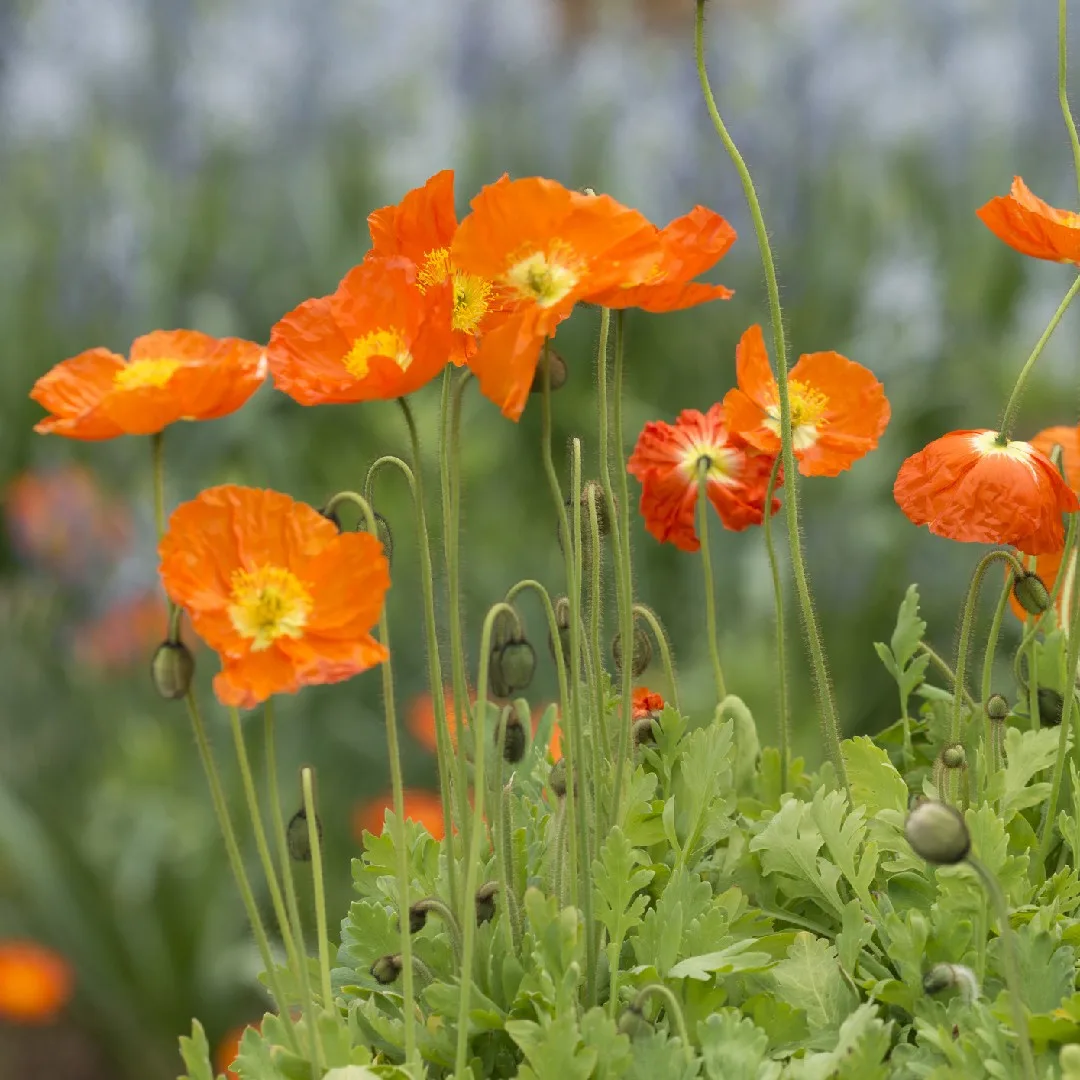
P. nudicaule is a perennial usually grown as an annual, with hairy, grey-green, pinnately lobed leaves and solitary, bowl-shaped, fragrant yellow, orange, reddish or white flowers, in summer
Scientific classification
- Species
- Icelandic poppy (Papaver nudicaule)
- Genus
- Papaver
- Family
- Papaveraceae
- Order
- Ranunculales
- Class
- Magnoliopsida
- Phylum
- Magnoliophyta
- Information to be completed
- Toxicity
- Annual Biennial
- Plant type
- 0.1-0.5 metres
- Height
- 0.1-0.5 metres
- Spread
- Deciduous
- Foliage
- Columnar upright
- Habit
- Spring · Summer
- Season of interest
- Full sun
- Sunlight
- Information to be completed
- Ideal temperature









Icelandic poppy pictures
Distribution of Icelandic poppy
Distribution map
- Native
- Introduced
- Cultivated
Source:WCVP v16 · Royal Botanic Gardens, Kew · CC BY 3.0 · Boundaries:WGSRPD / TDWG
Icelandic poppy care guide
- Water moderately when soil surface feels dry; drought-tolerant once established.
- Watering
- Full sun
- Sunlight

Watering
Water moderately when soil surface feels dry; drought-tolerant once established.
Fertilizing
 Fertilizing
Feed lightly with a balanced liquid fertilizer monthly during the spring flowering phase.
Pruning
 Pruning
Cut back after flowering
Propagation
 Propagation
Propagate by seed sown in spring
Growing
 Growing
Grow in a deep, fertile, well-drained soil in full sun. The photo shows Wonderland Series
Common pests and diseases
Diseases
May be susceptible to downy mildews, powdery mildews, fungal wilts and verticillium wilt
Pests
May be susceptible to aphids
Explore the plant health library →




