
chrysanthemum 'Tapestry Rose'
Also known as: Information to be completed
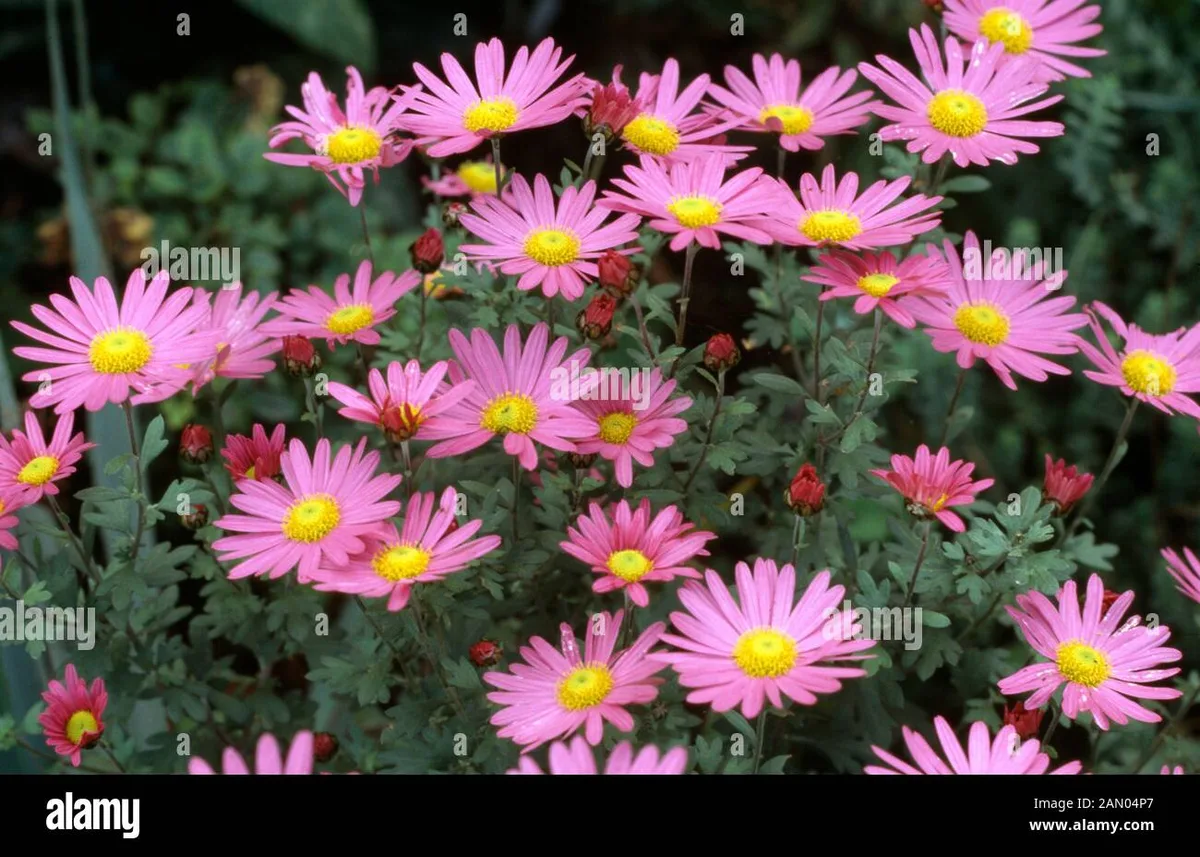
A bushy, deciduous perennial to around 80cm tall. Single, rich rose-pink flowerheads to 4cm in diameter with greenish-yellow centres are produced in autumn
Scientific classification
- Species
- chrysanthemum 'Tapestry Rose' (Chrysanthemum 'Tapestry Rose')
- Genus
- Chrysanthemum
- Family
- Asteraceae
- Order
- Asterales
- Class
- Magnoliopsida
- Phylum
- Tracheophyta
- Skin allergen. Wear gloves and other protective equipment when handling
- Toxicity
- Herbaceous Perennial
- Plant type
- 0.5-1 metres
- Height
- 0.5-1 metres
- Spread
- Deciduous
- Foliage
- Bushy
- Habit
- Spring · Summer · Autumn
- Season of interest
- Full sun
- Sunlight
- Information to be completed
- Ideal temperature









chrysanthemum 'Tapestry Rose' pictures
Toxicity
Skin allergen. Wear gloves and other protective equipment when handling
chrysanthemum 'Tapestry Rose' care guide
- Keep soil evenly moist during active growth and budding
- Watering
- Full sun
- Sunlight

Watering
Keep soil evenly moist during active growth and budding
Fertilizing
 Fertilizing
Regular balanced feed, switching to higher potash near bloom
Pruning
 Pruning
Cut down to 10cm after flowering
Propagation
 Propagation
Propagate by division or basal stem cuttings
Growing
 Growing
Does best in a well-drained, moderately-fertile soil in full sun. Pinch out the growing tip when the plants are 15-20cm tall to encourage free-flowering, bushy plants. See chrysanthemum cultivation for further information
Common pests and diseases
Diseases
May be susceptible to glasshouse grey mould, powdery mildews and chrysanthemum white rust
Pests
May be susceptible to chrysanthemum leaf miner, glasshouse whitefly and aphids
Explore the plant health library →




