
chrysanthemum 'Red Resilient'
Also known as: Information to be completed
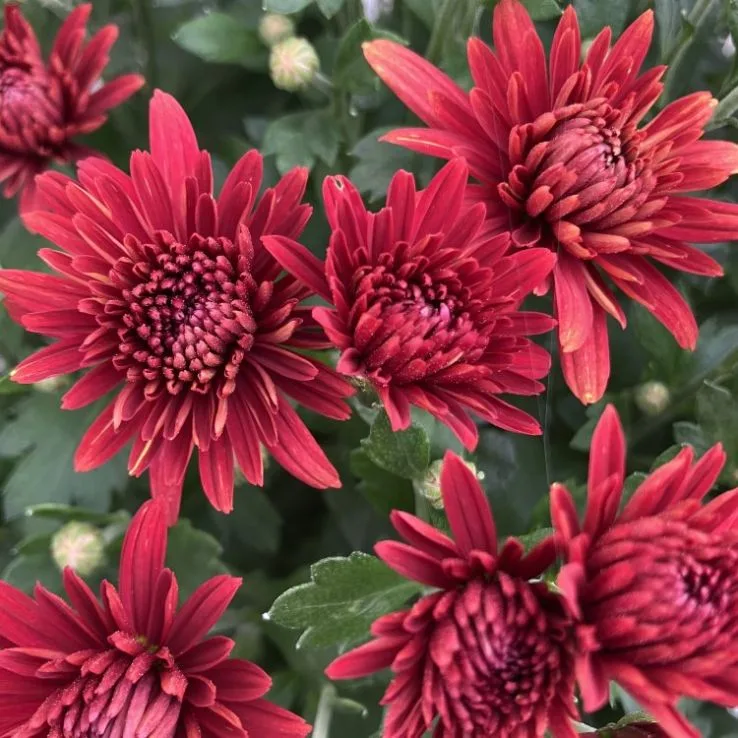
Red Resilient' is an upright perennial with orange-red flowers to 17cm across, pale yellowish-orange on the reverse
Scientific classification
- Species
- chrysanthemum 'Red Resilient' (Chrysanthemum 'Red Resilient')
- Genus
- Chrysanthemum
- Family
- Asteraceae
- Skin allergen. Wear gloves and other protective equipment when handling
- Toxicity
- Conservatory Greenhouse · Herbaceous Perennial
- Plant type
- 0.5-1 metres
- Height
- 0.1-0.5 metres
- Spread
- Deciduous
- Foliage
- Bushy
- Habit
- Spring · Summer · Autumn
- Season of interest
- Full sun
- Sunlight
- Information to be completed
- Ideal temperature









chrysanthemum 'Red Resilient' pictures
Distribution of chrysanthemum 'Red Resilient'
Distribution map
Information to be completed
Information to be completed
Culture
Information to be completed
Toxicity
Skin allergen. Wear gloves and other protective equipment when handling
Quick identification of chrysanthemum 'Red Resilient'
Information to be completed
chrysanthemum 'Red Resilient' care guide
- Moderate regular watering, allowing brief slight drying between soakings
- Watering
- Full sun
- Sunlight
- Information to be completed
- Ideal temperature

Watering
Moderate regular watering, allowing brief slight drying between soakings
Fertilizing
 Fertilizing
Balanced perennial feed every four weeks from spring through summer
Pruning
 Pruning
Pinch out growing tips and disbud as required
Propagation
 Propagation
Propagate by rooting softwood cuttings in loam-less potting compost at 16°C
Growing
 Growing
Grow in a cold frame in a loam-based potting compost and move into a warm glasshouse in early autumn. Provide bright filtered light with good ventilation and a minimum temperature of 10°C. During the growing season water moderately and apply a balanced liquid fertiliser weekly
People also ask
Information to be completed
Common pests and diseases
Diseases
May be susceptible to glasshouse grey mould, powdery mildews and chrysanthemum white rust
Pests
May be susceptible to leaf and bud eelworms, aphids, glasshouse whitefly, glasshouse red spider mite and capsid bug
Explore the plant health library →




