
clematis 'Early Sensation'
Also known as: Information to be completed
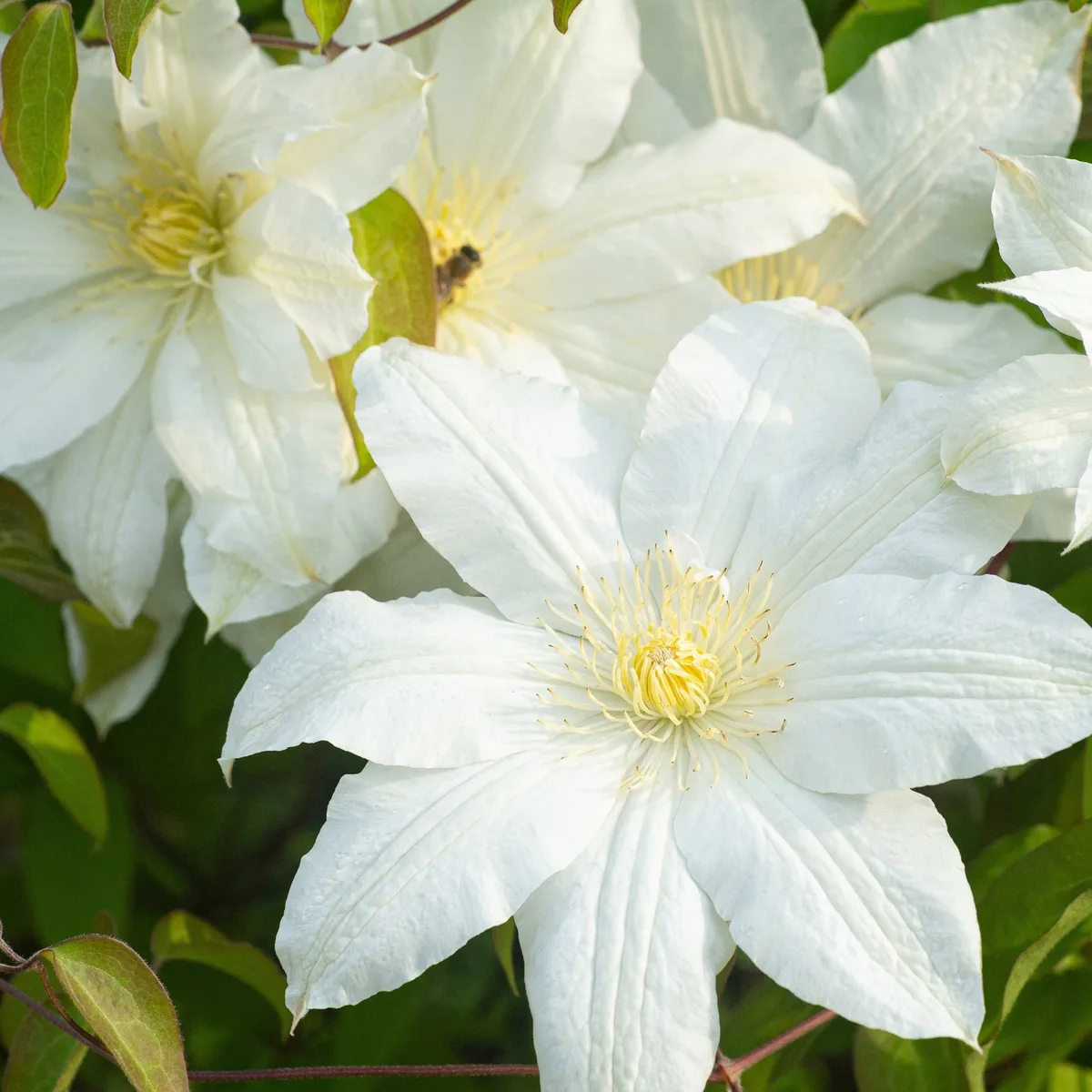
An evergreen clematis, growing up to 3m tall, with finely-divided leaves, bronze when young and maturing to a dark green. In spring, this cultivar bears a profusion of scented, white, bell to cup-shaped flowers, up to 7.5cm in diameter, each with a greenish-yellow centre
Scientific classification
- Species
- clematis 'Early Sensation' (Clematis 'Early Sensation')
- Genus
- Clematis
- Family
- Ranunculaceae
- Order
- Ranunculales
- Class
- Magnoliopsida
- Phylum
- Tracheophyta
- Skin irritant. Wear gloves and other protective equipment when handling
- Toxicity
- Climber Wall Shrub
- Plant type
- 2.5-4 metres
- Height
- 1-1.5 metres
- Spread
- Evergreen
- Foliage
- Trailing
- Habit
- Spring · Summer · Autumn · Winter
- Season of interest
- Full sun · Partial shade
- Sunlight
- Information to be completed
- Ideal temperature









clematis 'Early Sensation' pictures
Toxicity
Skin irritant. Wear gloves and other protective equipment when handling
clematis 'Early Sensation' care guide
- Cool damp root zone, water stems base only keep upper leaves dry
- Watering
- Full sun · Partial shade
- Sunlight

Watering
Cool damp root zone, water stems base only keep upper leaves dry
Fertilizing
 Fertilizing
Diluted clematis feed every thirty days spring through mid autumn time
Pruning
 Pruning
 (clematis) group 1
Propagation
 Propagation
Propagate by semi-ripe cuttings or layering
Growing
 Growing
Prefers well-drained gritty soil in full sun or part shade with shelter. Plant with the crown at soil level. Can be grown in a container in a cold greenhouse or conservatory. See clematis cultivation for further information
Common pests and diseases
Diseases
May be susceptible to honey fungus (rarely), clematis wilt and clematis slime flux
Pests
May be susceptible to aphids, snails and caterpillars; petals may be eaten by earwigs
Explore the plant health library →




