
riverside windflower
Also known as: Information to be completed
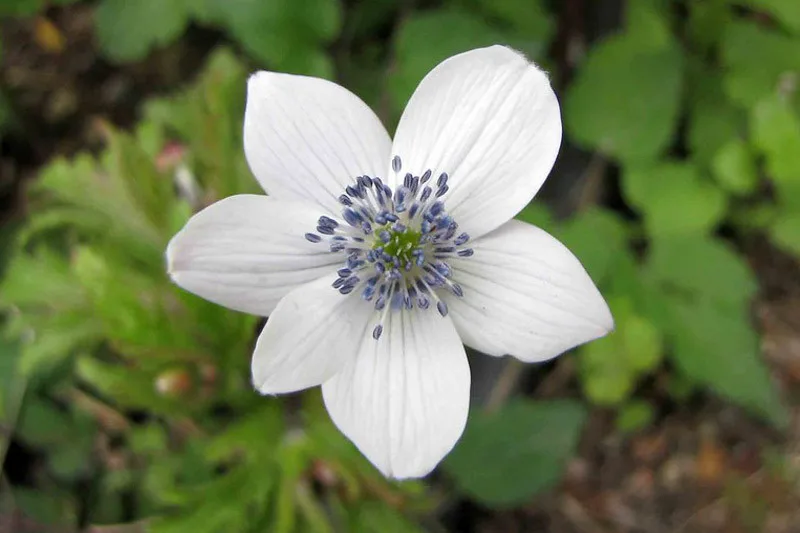
A clump-forming perennial with deeply 3-lobed leaves and erect, branched stems bearing umbels of saucer-shaped white flowers, tinged blue on the reverse, in late spring and early summer
Scientific classification
- Species
- riverside windflower (Anemone rivularis)
- Genus
- Anemone
- Family
- Ranunculaceae
- Ingestion may cause mild stomach upset, contact may irritate skin. Wear gloves and other protective equipment when handling]
- Toxicity
- Bogs · Herbaceous Perennial
- Plant type
- 0.5-1 metres
- Height
- 0.1-0.5 metres
- Spread
- Deciduous
- Foliage
- Clump forming
- Habit
- Spring · Summer
- Season of interest
- Full sun · Partial shade
- Sunlight
- Information to be completed
- Ideal temperature









riverside windflower pictures
Distribution of riverside windflower
Distribution map
Asia
Information to be completed
Culture
Information to be completed
Toxicity
Ingestion may cause mild stomach upset, contact may irritate skin. Wear gloves and other protective equipment when handling]
Quick identification of riverside windflower
Information to be completed
riverside windflower care guide
- Keep soil consistently moist during growth and bloom, reducing as plant goes dormant.
- Watering
- Full sun · Partial shade
- Sunlight
- Information to be completed
- Ideal temperature

Watering
Keep soil consistently moist during growth and bloom, reducing as plant goes dormant.
Fertilizing
 Fertilizing
Feed sparingly with a balanced liquid fertilizer monthly in spring only.
Pruning
 Pruning
Cut back after flowering
Propagation
 Propagation
Propagate by division in early spring
Growing
 Growing
Grow in moist but well-drained soil in full sun or partial shade.
People also ask
Information to be completed
Common pests and diseases
Diseases
Powdery mildews may be a problem
Pests
May be damaged by eelworms, slugs and caterpillars
Explore the plant health library →




