
Viburnum foetidum var. rectangulatum
Also known as: Information to be completed
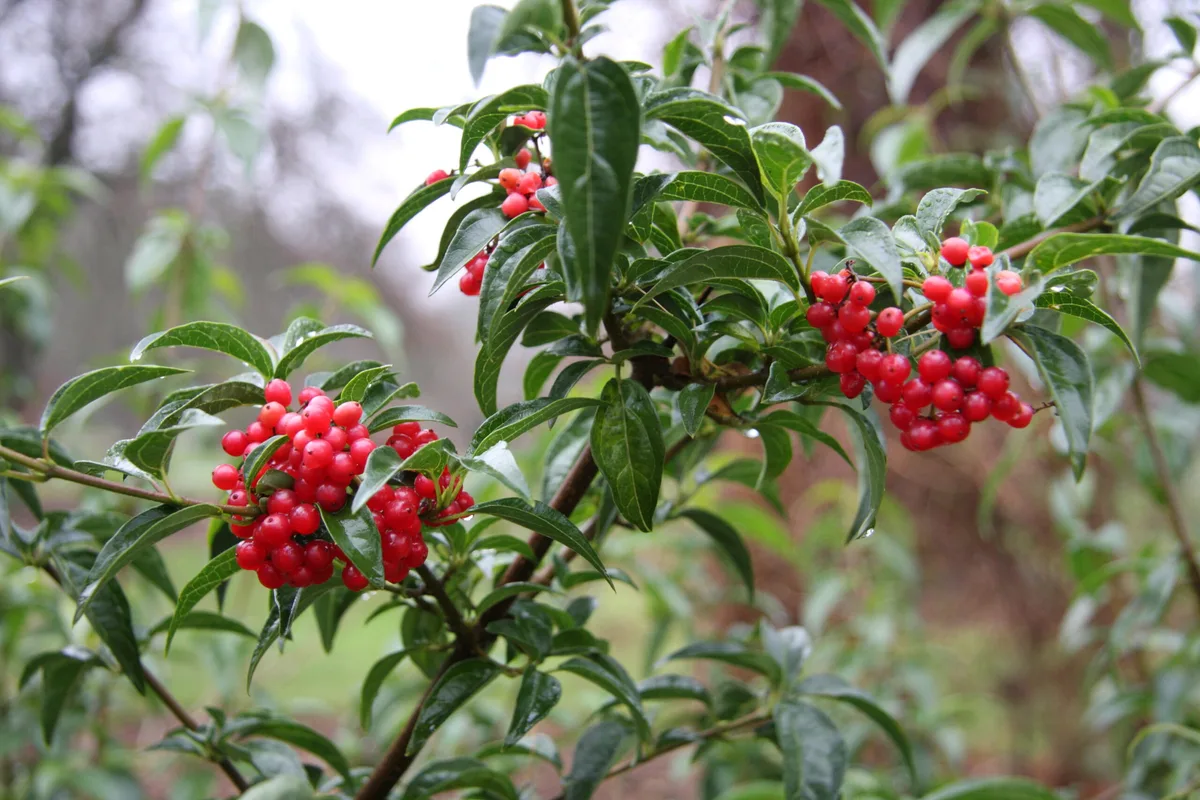
A semi-evergreen shrub to 3m high, with a spreading, branching habit and small, oval to oblong green leaves with slightly toothed margins. Produces small, rounded clusters of tiny white flowers, held on very short stems or sessile, in mid to late summer. These are followed by tight clusters of small oval-shaped red berries in autumn. Named for the unpleasant, strong smell of the leaves when crushed
Scientific classification
- Species
- Viburnum foetidum var. rectangulatum (Viburnum foetidum var. rectangulatum)
- Genus
- Viburnum
- Family
- Adoxaceae
- Order
- Dipsacales
- Class
- Magnoliopsida
- Phylum
- Magnoliophyta
- Fruit are ornamental - not to be eaten. Wear gloves and other protective equipment when handling
- Toxicity
- Shrubs
- Plant type
- 2.5-4 metres
- Height
- 2.5-4 metres
- Spread
- Semi evergreen
- Foliage
- Information to be completed
- Habit
- Spring · Summer · Autumn · Winter
- Season of interest
- Full sun · Partial shade
- Sunlight
- Information to be completed
- Ideal temperature









Viburnum foetidum var. rectangulatum pictures
Distribution of Viburnum foetidum var. rectangulatum
Distribution map
- Native
- Introduced
- Cultivated
Source:WCVP v16 · Royal Botanic Gardens, Kew · CC BY 3.0 · Boundaries:WGSRPD / TDWG
Toxicity
Fruit are ornamental - not to be eaten. Wear gloves and other protective equipment when handling
Viburnum foetidum var. rectangulatum care guide
- Moderate deep watering during dry periods, free drainage preferred
- Watering
- Full sun · Partial shade
- Sunlight

Watering
Moderate deep watering during dry periods, free drainage preferred
Fertilizing
 Fertilizing
Balanced shrub feed once in spring
Pruning
 Pruning
Minimal pruning required, if necessary prune immediately after flowering, though this will prevent development of berries
Propagation
 Propagation
Propagate by seed, sown in a cold frame in autumn, by semi-ripe cuttings in summer, or by grafting in late summer or winter
Growing
 Growing
Grow in any moderately fertile, moist but well-drained soil in full sun or part shade. May be deciduous in colder areas
Common pests and diseases
Diseases
May be susceptible to Phytophthora, honey fungus, grey moulds and leaf spot
Pests
May be susceptible to aphids and viburnum beetle
Explore the plant health library →




