
wild coffee 'Victoriae'
Also known as: lace aralia
A compact evergreen shrub with large, bipinnate leaves composed of white-margined, jaggedly-toothed leaflets
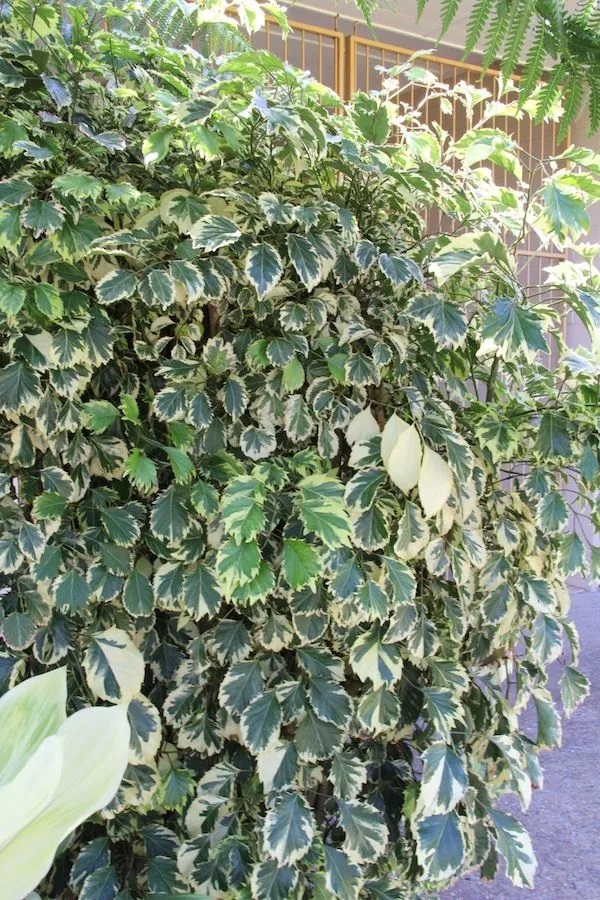
Scientific classification
- Species
- wild coffee 'Victoriae' (Polyscias guilfoylei 'Victoriae')
- Genus
- Polyscias
- Family
- Araliaceae
- Order
- Apiales
- Class
- Magnoliopsida
- Phylum
- Magnoliophyta
- Skin allergen. Wear gloves and other protective equipment when handling
- Toxicity
- Conservatory Greenhouse · Houseplants
- Plant type
- 1-1.5 metres
- Height
- 0.5-1 metres
- Spread
- Evergreen
- Foliage
- Bushy
- Habit
- Spring · Summer · Autumn · Winter
- Season of interest
- Partial shade
- Sunlight
- Information to be completed
- Ideal temperature









wild coffee 'Victoriae' pictures
Distribution of wild coffee 'Victoriae'
Distribution map
- Native
- Introduced
- Cultivated
Source:WCVP v16 · Royal Botanic Gardens, Kew · CC BY 3.0 · Boundaries:WGSRPD / TDWG
Toxicity
Skin allergen. Wear gloves and other protective equipment when handling
wild coffee 'Victoriae' care guide
- Moderate regular watering, avoid prolonged drought and stagnant waterlogging
- Watering
- Partial shade
- Sunlight

Watering
Moderate regular watering, avoid prolonged drought and stagnant waterlogging
Fertilizing
 Fertilizing
Balanced perennial feed every four weeks spring through summer growth
Pruning
 Pruning
Little pruning is needed. Remove diseased, damaged, crowded or crossing shoots and unwanted growth. Timing depends on the plant: generally late winter or early spring; plants prone to bleeding and deciduous magnolias need different timing, and deciduous azaleas and lilacs are pruned after flowering.
Propagation
 Propagation
Propagate by seed at 19-24°C (66-75°F) in spring. Take greenwood cuttings in early summer. Alternatively, root semi-ripe or ripe, leafless stem sections with bottom heat in summer
Growing
 Growing
Under glass grow in loam-based potting compost in full or bright, filtered light. In growth, water freely, mist daily and apply a balanced liquid feed every month. Water sparingly in winter
Common pests and diseases
Diseases
Generally disease-free
Pests
May be susceptible to glasshouse red spider mite and mealybugs
Explore the plant health library →




