
purple angelica
Also known as: Korean angelica
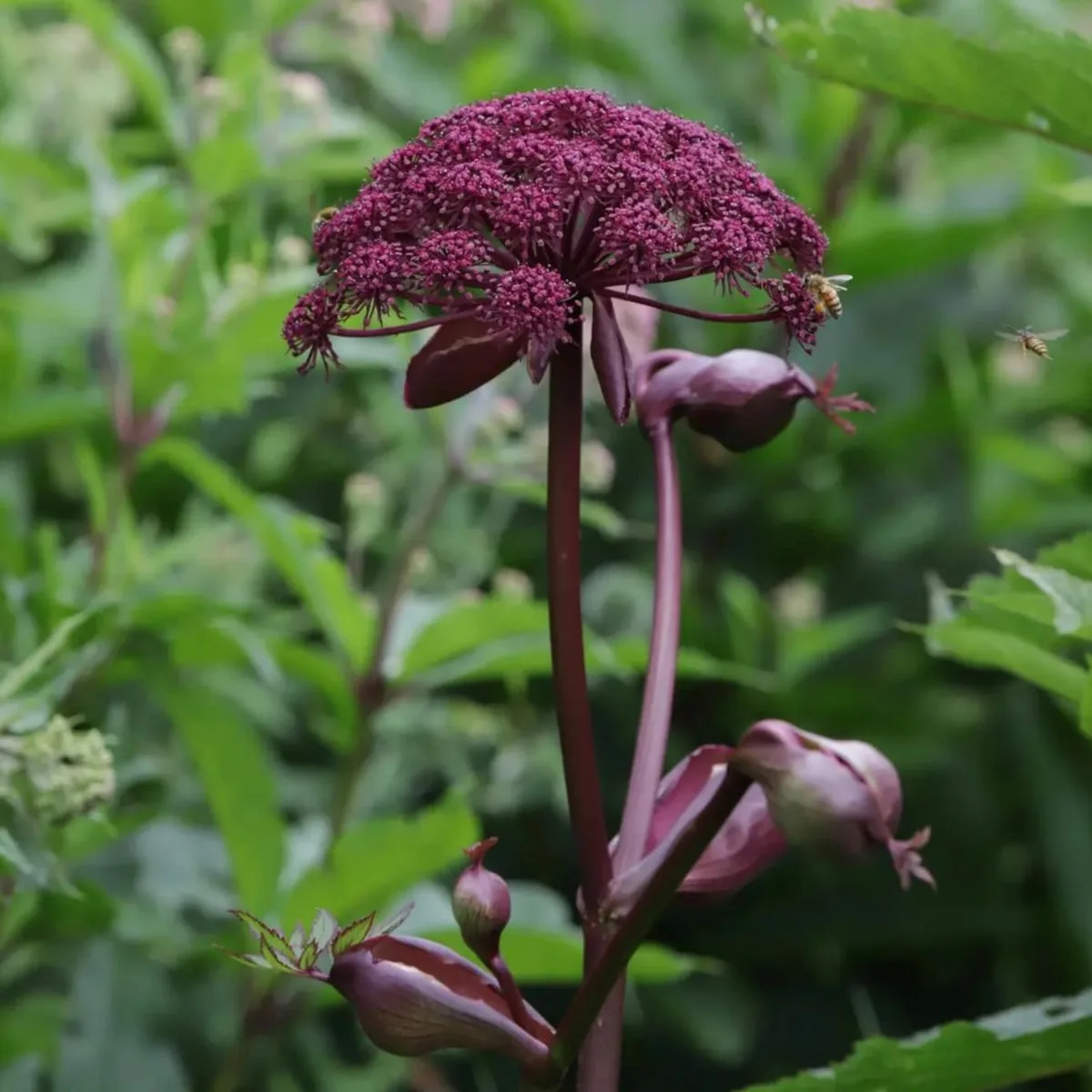
A robust biennial or short-lived perennial with pinnately divided leaves and erect, branched, purple stems bearing large umbels of deep purple flowers in late summer and early autumn
Scientific classification
- Species
- purple angelica (Angelica gigas)
- Genus
- Angelica
- Family
- Apiaceae
- Order
- Apiales
- Class
- Magnoliopsida
- Phylum
- Magnoliophyta
- Information to be completed
- Toxicity
- Herbaceous Perennial · Annual Biennial
- Plant type
- 1.5-2.5 metres
- Height
- 1-1.5 metres
- Spread
- Deciduous
- Foliage
- Columnar upright
- Habit
- Spring · Summer · Autumn
- Season of interest
- Full shade · Full sun · Partial shade
- Sunlight
- Information to be completed
- Ideal temperature









purple angelica pictures
Distribution of purple angelica
Distribution map
- Native
- Introduced
- Cultivated
Source:WCVP v16 · Royal Botanic Gardens, Kew · CC BY 3.0 · Boundaries:WGSRPD / TDWG
purple angelica care guide
- Moderate regular watering, allowing slight drying between waterings
- Watering
- Full shade · Full sun · Partial shade
- Sunlight

Watering
Moderate regular watering, allowing slight drying between waterings
Fertilizing
 Fertilizing
Balanced feed monthly during active growth season
Pruning
 Pruning
Cut back after flowering
Propagation
 Propagation
Propagate by seed sown in a cold frame with good light, as soon as ripe.Exposure to light is required for germination. Move seedlings when young as older plants resent disturbance
Growing
 Growing
The ideal position is a deep, moist, loamy soil in full or partial shade but it can tolerate drier conditions if mulched. A short-lived perennial.
Common pests and diseases
Diseases
Susceptible to powdery mildews
Pests
Prone to slugs, snails, leaf miners and aphids
Explore the plant health library →




