
dragon spruce
Also known as: Information to be completed
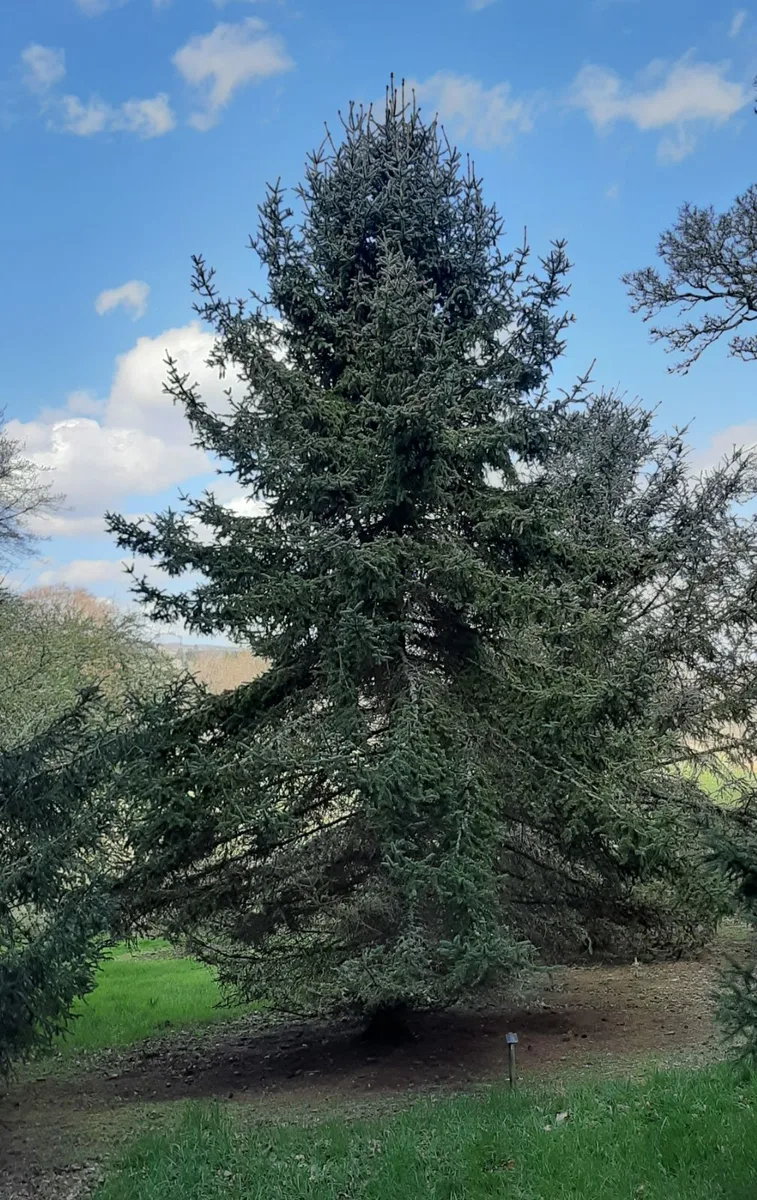
P. asperata is a conical or columnar coniferous tree to 25m. The needle-like leaves are dark green or blue-green about 2cm long, stiff and upward pointing. The green then light brown, cylindrical, female cones can be up to 15cm long
Scientific classification
- Species
- dragon spruce (Picea asperata)
- Genus
- Picea
- Family
- Pinaceae
- Information to be completed
- Toxicity
- Conifers · Trees
- Plant type
- Higher than 12 metres
- Height
- 4-8 metres
- Spread
- Evergreen
- Foliage
- Columnar upright
- Habit
- Spring · Summer · Autumn · Winter
- Season of interest
- Full sun
- Sunlight
- Information to be completed
- Ideal temperature









dragon spruce pictures
Distribution of dragon spruce
Distribution map
Western China
Information to be completed
Culture
Information to be completed
Toxicity
Information to be completed
Quick identification of dragon spruce
Information to be completed
dragon spruce care guide
- Average watering, mild dryness tolerated between watering cycles
- Watering
- Full sun
- Sunlight
- Information to be completed
- Ideal temperature

Watering
Average watering, mild dryness tolerated between watering cycles
Fertilizing
 Fertilizing
Conifer slow-release feed applied once each early spring
Pruning
 Pruning
No pruning required
Propagation
 Propagation
Propagate by seed or semi-hardwood cuttings
Growing
 Growing
Grow in moist but well-drained soil. Will tolerate alkaline soils. Shelter from cold, drying winds
People also ask
Information to be completed
Common pests and diseases
Diseases
May be susceptible to honey fungus
Pests
May be susceptible to adelgids, red spider mite and conifer aphid
Explore the plant health library →




