
wax plant
Also known as: bedding begonia; wax begonia
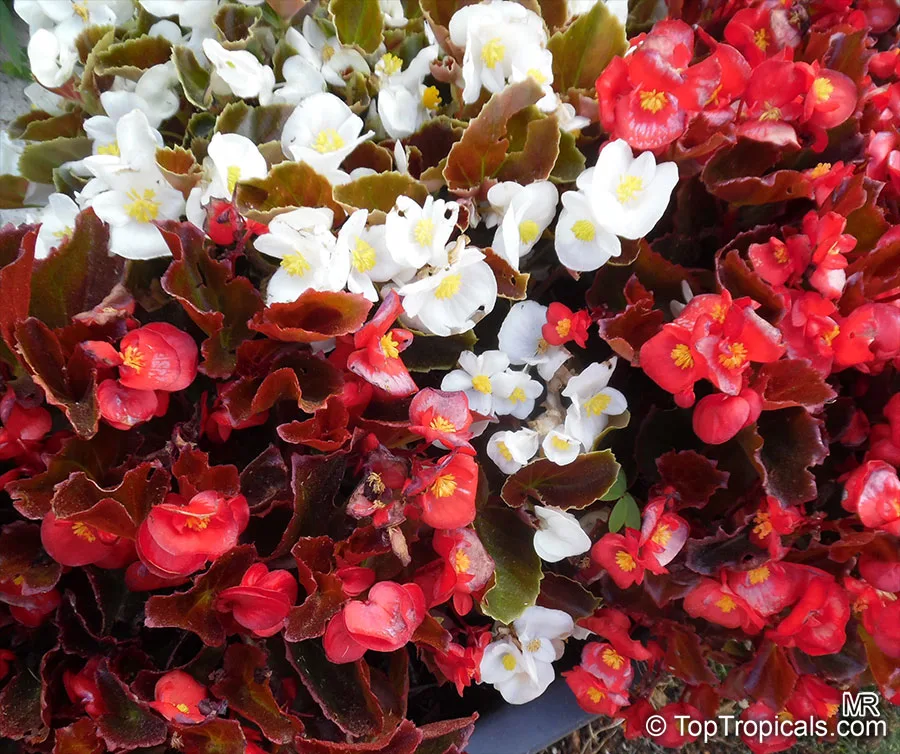
Semperflorens Cultorum Group are fibrous-rooted, tender perennials grown as annuals, with fleshy, rounded, green or bronze leaves, and sprays of single or double, red, pink or white flowers from mid-summer into autumn
Scientific classification
- Species
- wax plant (Begonia (Semperflorens Cultorum Group))
- Genus
- Begonia
- Family
- Begoniaceae
- Order
- Cucurbitales
- Class
- Magnoliopsida
- Phylum
- Magnoliophyta
- Ornamental bulbs - not to be eaten. Wear gloves and other protective equipment when handling
- Toxicity
- Bedding
- Plant type
- 0.1-0.5 metres
- Height
- 0.1-0.5 metres
- Spread
- Deciduous
- Foliage
- Bushy
- Habit
- Summer · Autumn
- Season of interest
- Full shade · Partial shade
- Sunlight
- Information to be completed
- Ideal temperature









wax plant pictures
Toxicity
Ornamental bulbs - not to be eaten. Wear gloves and other protective equipment when handling
wax plant care guide
- Consistently damp potting mix, avoid fully drying small fibrous root ball
- Watering
- Full shade · Partial shade
- Sunlight

Watering
Consistently damp potting mix, avoid fully drying small fibrous root ball
Fertilizing
 Fertilizing
Diluted wax begonia feed biweekly all warm spring and summer months
Pruning
 Pruning
No pruning required
Propagation
 Propagation
Propagate by seed, stem, tip or leaf cuttings
Growing
 Growing
Grows best in fertile, moist but well-drained, neutral to slightly acid soil in partial shade. See Begonias: outdoors for further advice.
Common pests and diseases
Diseases
May be susceptible to grey moulds, powdery mildews, stem rot and rhizome rot
Pests
May be susceptible to caterpillars, mealy bugs, mites, glasshouse thrips, vine weevil and aphids
Explore the plant health library →




