
St John's lily
Also known as: Information to be completed
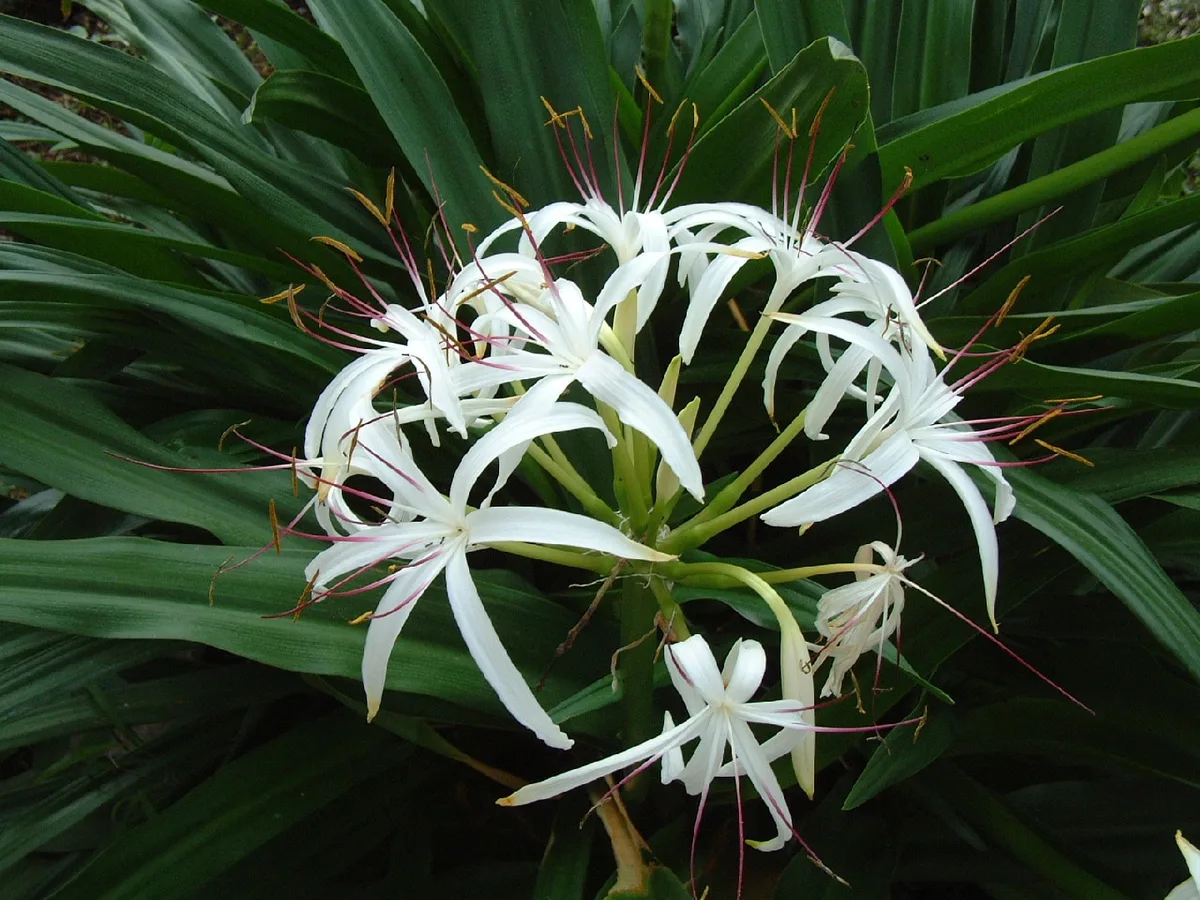
A deciduous, tender, bulbous perennial, with broad, glossy, semi-erect leaves to 1m long. In summer it produces umbels of fragrant, spidery white flowers with slender petals
Scientific classification
- Species
- St John's lily (Crinum asiaticum var. sinicum)
- Genus
- Crinum
- Family
- Amaryllidaceae
- Order
- Asparagales
- Class
- Liliopsida
- Phylum
- Tracheophyta
- Ornamental bulbs - not to be eaten. Wear gloves and other protective equipment when handling
- Toxicity
- Bulbs · Conservatory Greenhouse
- Plant type
- 0.5-1 metres
- Height
- 0.5-1 metres
- Spread
- Deciduous
- Foliage
- Clump forming
- Habit
- Spring · Summer · Autumn
- Season of interest
- Full sun
- Sunlight
- Information to be completed
- Ideal temperature









St John's lily pictures
Distribution of St John's lily
Distribution map
- Native
- Introduced
- Cultivated
Source:WCVP v16 · Royal Botanic Gardens, Kew · CC BY 3.0 · Boundaries:WGSRPD / TDWG
Toxicity
Ornamental bulbs - not to be eaten. Wear gloves and other protective equipment when handling
St John's lily care guide
- Moderate regular watering, avoid prolonged drought or waterlogging
- Watering
- Full sun
- Sunlight

Watering
Moderate regular watering, avoid prolonged drought or waterlogging
Fertilizing
 Fertilizing
Balanced feed in spring and light repeat in growth season
Pruning
 Pruning
No pruning required
Propagation
 Propagation
Propagate by seed sown as soon as ripe, or remove offsets in spring
Growing
 Growing
Plant under glass in spring, with the neck of the bulb just below soil level. Use loam-based potting compost with added sharp sand and well-rotted manure and position in full or bright filtered light. Water freely when in growth; keep moist after flowering. Pot on only when absolutely necessary, in early spring
Common pests and diseases
Diseases
Generally disease-free
Pests
Generally pest-free but young growth may be susceptible to
Explore the plant health library →




