
Primula wilsonii var. anisodora
Also known as: Information to be completed
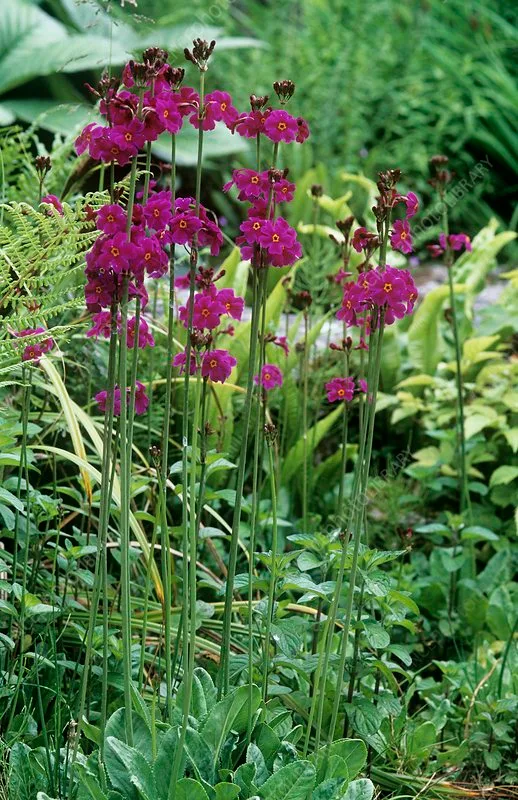
A clump-forming evergreen perennial with dark green, crinkly leaves with an aniseed fragrance. Tall, strong stems produce whorls of dark maroon-red, dropping, bell-shaped flowers in late spring to summer. Prefers moist or boggy areas so ideal for the edge of a stream or pond
Scientific classification
- Species
- Primula wilsonii var. anisodora (Primula wilsonii var. anisodora)
- Genus
- Primula
- Family
- Primulaceae
- Order
- Ericales
- Class
- Magnoliopsida
- Phylum
- Magnoliophyta
- Information to be completed
- Toxicity
- Bogs · Herbaceous Perennial
- Plant type
- Information to be completed
- Height
- Information to be completed
- Spread
- Evergreen
- Foliage
- Columnar upright
- Habit
- Spring · Summer · Autumn · Winter
- Season of interest
- Partial shade
- Sunlight
- Information to be completed
- Ideal temperature









Primula wilsonii var. anisodora pictures
Distribution of Primula wilsonii var. anisodora
Distribution map
- Native
- Introduced
- Cultivated
Source:WCVP v16 · Royal Botanic Gardens, Kew · CC BY 3.0 · Boundaries:WGSRPD / TDWG
Primula wilsonii var. anisodora care guide
- Moderate regular watering, allowing brief slight drying between soakings
- Watering
- Partial shade
- Sunlight

Watering
Moderate regular watering, allowing brief slight drying between soakings
Fertilizing
 Fertilizing
Balanced perennial feed every four weeks from spring through summer
Pruning
 Pruning
No pruning required
Propagation
 Propagation
Propagate by division in autumn or after flowering
Growing
 Growing
Grow in partial shade, in deep, humus-rich, moist, neutral to acid loam soil, or peaty soil. Tolerates full sun if soil remains moist at all times
Common pests and diseases
Diseases
May be susceptible to primula leaf spot, primula brown core and grey moulds
Pests
May be susceptible to aphids, vine weevil, slugs, leaf and bud eelworms, leaf-mining flies and glasshouse red spider mite
Explore the plant health library →




