
Primula chionantha subsp. sinopurpurea
Also known as: Information to be completed
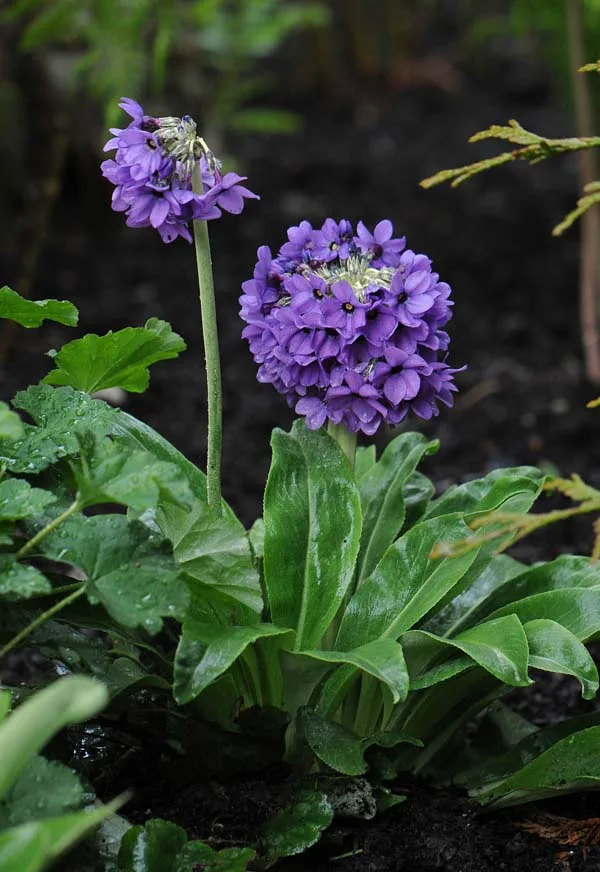
A very hardy, clump-forming, deciduous perennial to 60cm high, with rosettes of mid-green leaves up to 25cm long, dusted with white meal. In late spring to early summer, flowering stems bear one to four clusters of small, pendent, bright purple flowers with a paler eye. Will tolerate consistently moist soils
Scientific classification
- Species
- Primula chionantha subsp. sinopurpurea (Primula chionantha subsp. sinopurpurea)
- Genus
- Primula
- Family
- Primulaceae
- Information to be completed
- Toxicity
- Alpine Rockery · Bogs · Herbaceous Perennial
- Plant type
- Information to be completed
- Height
- Information to be completed
- Spread
- Deciduous
- Foliage
- Clump forming
- Habit
- Information to be completed
- Season of interest
- Partial shade
- Sunlight
- Information to be completed
- Ideal temperature









Primula chionantha subsp. sinopurpurea pictures
Distribution of Primula chionantha subsp. sinopurpurea
Distribution map
Information to be completed
Information to be completed
Culture
Information to be completed
Toxicity
Information to be completed
Quick identification of Primula chionantha subsp. sinopurpurea
Information to be completed
Primula chionantha subsp. sinopurpurea care guide
- Cool consistently damp soil, never let root ball fully dry out
- Watering
- Partial shade
- Sunlight
- Information to be completed
- Ideal temperature

Watering
Cool consistently damp soil, never let root ball fully dry out
Fertilizing
 Fertilizing
Weak acid-loving plant feed biweekly during spring growth spurts
Pruning
 Pruning
Cut back flower stems when flowers have faded
Propagation
 Propagation
Propagate by seed sown in containers in a cold frame as soon as ripe, or divide established clumps in early spring
Growing
 Growing
Grow in partial shade in deep, humus-rich, moist, neutral to acid soil. Will tolerate sun if soil is kept moist
People also ask
Information to be completed
Common pests and diseases
Diseases
May be susceptible to primula brown core, grey moulds and virus diseases
Pests
May be susceptible to aphids, red spider mites, leafhoppers, slugs and vine weevil
Explore the plant health library →




