
thyme 'Fragrantissimus'
Also known as: orange-scented thyme; lemon thyme 'Fragrantissimus'
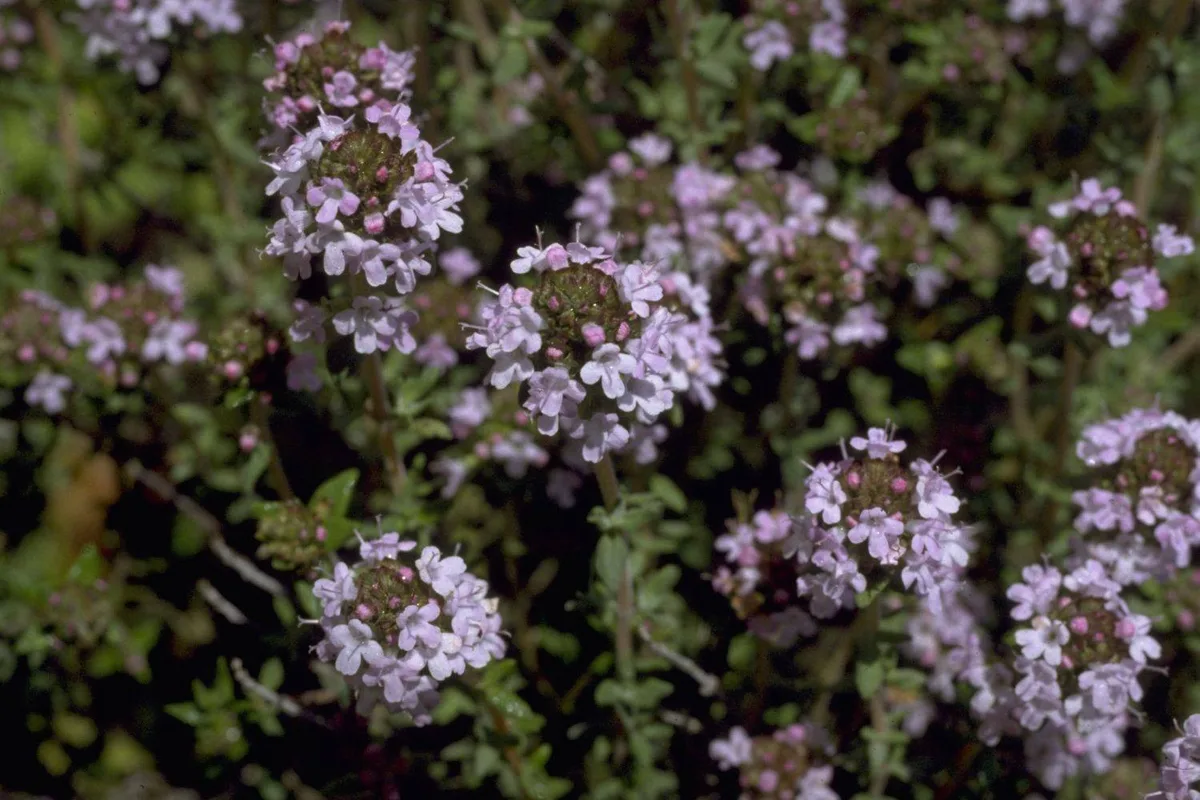
A low-growing, bushy perennial with orange scented grey-green leaves. Pale pink-white flowers appear in the spring and summer
Scientific classification
- Species
- thyme 'Fragrantissimus' (Thymus 'Fragrantissimus')
- Genus
- Thymus
- Family
- Lamiaceae
- Information to be completed
- Toxicity
- Alpine Rockery · Herbs - Culinary
- Plant type
- 0.1-0.5 metres
- Height
- 0.1-0.5 metres
- Spread
- Evergreen
- Foliage
- Bushy · Matforming
- Habit
- Spring · Summer · Autumn · Winter
- Season of interest
- Full sun
- Sunlight
- Information to be completed
- Ideal temperature









thyme 'Fragrantissimus' pictures
Distribution of thyme 'Fragrantissimus'
Distribution map
Information to be completed
Information to be completed
Culture
Information to be completed
Toxicity
Information to be completed
Quick identification of thyme 'Fragrantissimus'
Information to be completed
thyme 'Fragrantissimus' care guide
- Water deeply after top soil fully dries out to half substrate depth
- Watering
- Full sun
- Sunlight
- Information to be completed
- Ideal temperature

Watering
Water deeply after top soil fully dries out to half substrate depth
Fertilizing
 Fertilizing
Low-strength low-nitrogen feed monthly active growing season
Pruning
 Pruning
Shorten flowered shoots to about 1.5–2.5 cm from the previous year's growth. If flowering is on last year's growth, prune after flowering; if on current-year growth, prune the following early to mid-spring.
Propagation
 Propagation
Sow seeds in containers in cold frame in spring. Semi ripe cuttings in mid to late summer. Seperate rooted stem sections in spring or summer, pot on until established
Growing
 Growing
Grow in a well-drained neutral to alkaline soil in full sun
People also ask
Information to be completed
Common pests and diseases
Diseases
Generally disease-free
Pests
Generally pest-free
Explore the plant health library →




