
Persicaria wallichii var. pubescens
Also known as: Information to be completed
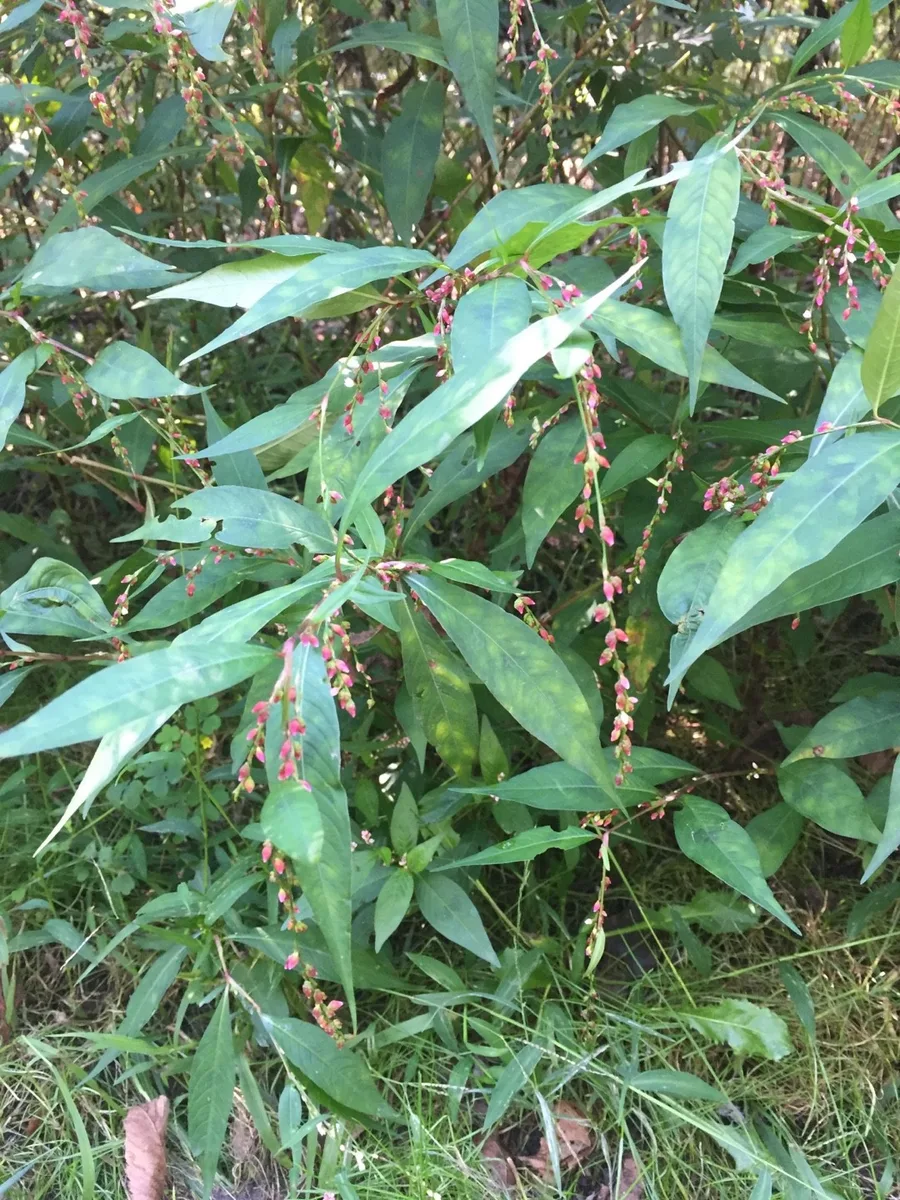
A vigorous, herbaceous perennial to 1.5m or more tall, producing dense clumps of stems clothed with pointed, lance-shaped leaves. Produces branched sprays of small, creamy-white, strongly scented flowers in late summer and early autumn. This plant is considered invasive in the Republic of Ireland, and legal requirements apply to its control
Scientific classification
- Species
- Persicaria wallichii var. pubescens (Persicaria wallichii var. pubescens)
- Genus
- Persicaria
- Family
- Polygonaceae
- Order
- Caryophyllales
- Class
- Magnoliopsida
- Phylum
- Magnoliophyta
- Information to be completed
- Toxicity
- Herbaceous Perennial
- Plant type
- 1-1.5 metres
- Height
- 1-1.5 metres
- Spread
- Deciduous
- Foliage
- Clump forming
- Habit
- Spring · Summer · Autumn
- Season of interest
- Full sun · Partial shade
- Sunlight
- Information to be completed
- Ideal temperature









Persicaria wallichii var. pubescens pictures
Distribution of Persicaria wallichii var. pubescens
Distribution map
- Native
- Introduced
- Cultivated
Source:WCVP v16 · Royal Botanic Gardens, Kew · CC BY 3.0 · Boundaries:WGSRPD / TDWG
Persicaria wallichii var. pubescens care guide
- Moderate regular watering, slight soil dryness safe between deep soakings
- Watering
- Full sun · Partial shade
- Sunlight

Watering
Moderate regular watering, slight soil dryness safe between deep soakings
Fertilizing
 Fertilizing
Weak balanced perennial feed once monthly spring and summer growing months
Pruning
 Pruning
Cut stems to the ground at the end of the season. Retain all plant material within the garden to prevent escape into the wild
Propagation
 Propagation
Reproduces primarily by division; plants can reproduce from tiny fragments of rhizome
Growing
 Growing
This plant is listed on Schedule 9 of the UK Wildlife & Countryside Act (in the Republic of Ireland) as an invasive, non-native species. While this does not prevent it from being sold in the UK, or from being grown in gardens, the RHS encourages those that do grow it to take great care with managing it and with disposing of unwanted material. The RHS also encourages gardeners to find alternative plants to grow to those listed on Schedule 9. For suggested alternative plants see the Plantlife/RHS guide: Gardening without harmful invasive plants.
Common pests and diseases
Diseases
Generally disease-free
Pests
Generally pest-free
Explore the plant health library →




