
konjaku
Also known as: konnyaku; devil's tongue; snake palm; umbrella arum
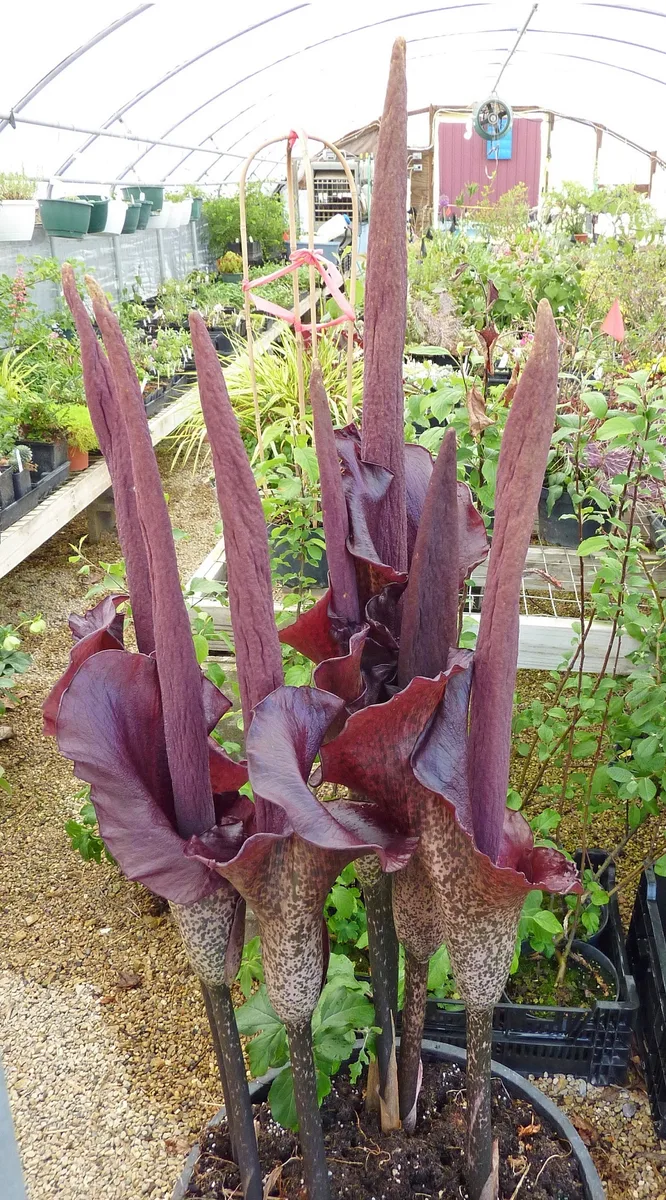
A tuberous perennial producing a single flower in summer consisting of a shiny, red-purple spathe and tall, paddle-like, brown spadix. It has an unpleasant smell to attract pollinating flies.After the flower has faded a single, highly divided leaf appears with bright green leaflets and a stout, olive-green stem with white markings
Scientific classification
- Species
- konjaku (Amorphophallus konjac)
- Genus
- Amorphophallus
- Family
- Araceae
- Harmful if eaten, skin/eye irritant. Wear gloves and other protective equipment when handling]
- Toxicity
- Conservatory Greenhouse · Bulbs
- Plant type
- 1-1.5 metres
- Height
- 1-1.5 metres
- Spread
- Deciduous
- Foliage
- Columnar upright
- Habit
- Summer · Autumn
- Season of interest
- Partial shade
- Sunlight
- Information to be completed
- Ideal temperature









konjaku pictures
Distribution of konjaku
Distribution map
Indonesia to Japan
Information to be completed
Culture
Information to be completed
Toxicity
Harmful if eaten, skin/eye irritant. Wear gloves and other protective equipment when handling]
Quick identification of konjaku
Information to be completed
konjaku care guide
- Moderate regular watering, allowing brief slight drying between soakings
- Watering
- Partial shade
- Sunlight
- Information to be completed
- Ideal temperature

Watering
Moderate regular watering, allowing brief slight drying between soakings
Fertilizing
 Fertilizing
Balanced perennial feed every four weeks from spring through summer
Pruning
 Pruning
No pruning required
Propagation
 Propagation
Separate offsets when dormant, or propagate by seed sown in heat in autumn or early spring
Growing
 Growing
Plant dormant tubers 10cm deep in late winter or early spring in a large container of loam-based potting compost. Grow in filtered light, water and feed while in active growth, and overwinter in warm, barely moist conditions
People also ask
Information to be completed
Common pests and diseases
Diseases
Generally disease-free
Pests
Generally pest-free
Explore the plant health library →




