
potato 'Lady Christl'
Also known as: Information to be completed
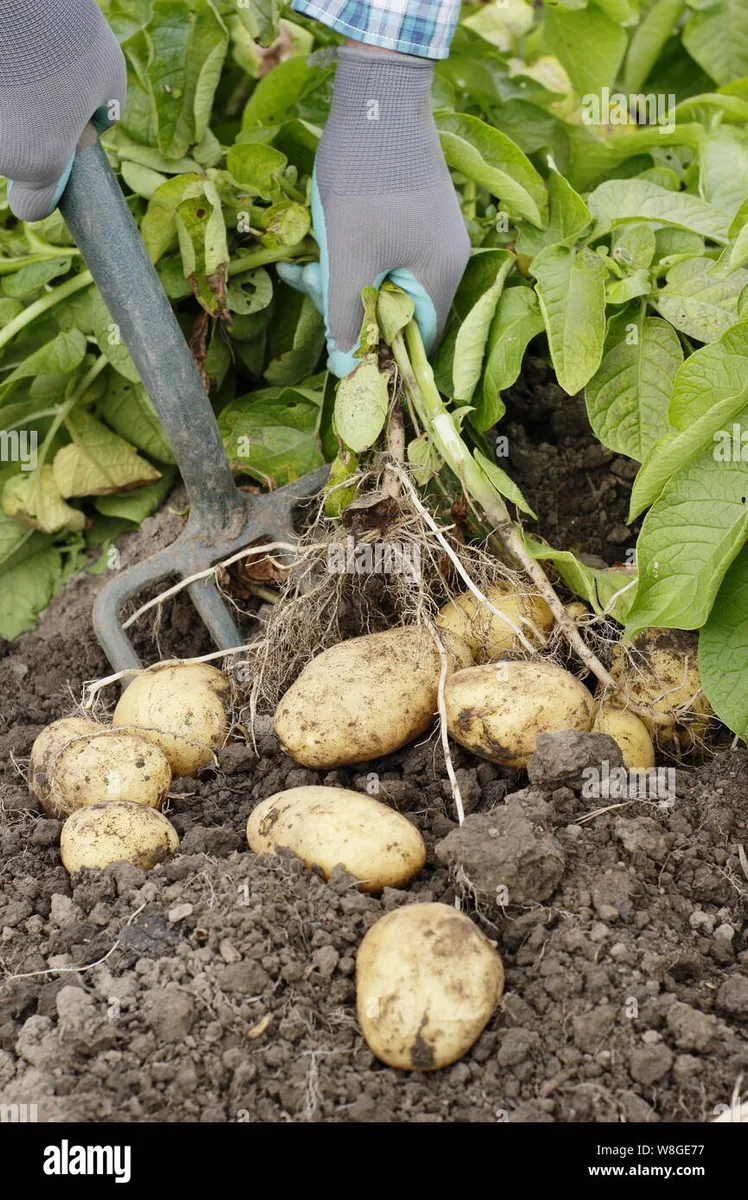
Perennial of branching stems with compound leaves, white flowers and green berries that forms swollen, waxy, edible tubers harvested in summer. Second early potato with pale yellow skin, firm flesh and fantastic flavour. Good eelworm resistance.
Scientific classification
- Species
- potato 'Lady Christl' (Solanum tuberosum 'Lady Christl')
- Genus
- Solanum
- Family
- Solanaceae
- Order
- Solanales
- Class
- Magnoliopsida
- Phylum
- Magnoliophyta
- Harmful if eaten, except potato crop. Wear gloves and other protective equipment when handling]
- Toxicity
- Annual Biennial
- Plant type
- 0.1-0.5 metres
- Height
- 0.1-0.5 metres
- Spread
- Deciduous · Semi evergreen
- Foliage
- Clump forming
- Habit
- Spring · Summer · Autumn
- Season of interest
- Full sun · Partial shade
- Sunlight
- Information to be completed
- Ideal temperature









potato 'Lady Christl' pictures
Distribution of potato 'Lady Christl'
Distribution map
- Native
- Introduced
- Cultivated
Source:WCVP v16 · Royal Botanic Gardens, Kew · CC BY 3.0 · Boundaries:WGSRPD / TDWG
Toxicity
Harmful if eaten, except potato crop. Wear gloves and other protective equipment when handling]
potato 'Lady Christl' care guide
- Moderate regular watering, avoid prolonged drought and stagnant waterlogging
- Watering
- Full sun · Partial shade
- Sunlight

Watering
Moderate regular watering, avoid prolonged drought and stagnant waterlogging
Fertilizing
 Fertilizing
Balanced perennial feed every four weeks spring through summer growth
Pruning
 Pruning
No pruning required
Propagation
 Propagation
Grow from tubers known as 'seed potatoes' which are sprouted or 'chitted' prior to planting. Tubers can be chitted from January and planted between March and May, when the risk of frost has passed.
Growing
 Growing
Will grow well in a prepared and well manured bed not previously used to grow potatoes for the last two years. Avoid waterlogged ground. Begin planting early spring and earth up as the plant grows, tubers push up towards the surface and can become green and toxic if exposed to sunlight. Also grows well in deep 8-10 ltr planters placing tubers 12 inches deep from the top.
Common pests and diseases
Diseases
May be susceptible to honey fungus (rarely) and potato blight
Pests
Good eelworm resistance. May be susceptible to potato slug, wireworm, aphids.
Explore the plant health library →




