
sweet pepper 'Ariane'
Also known as: Information to be completed
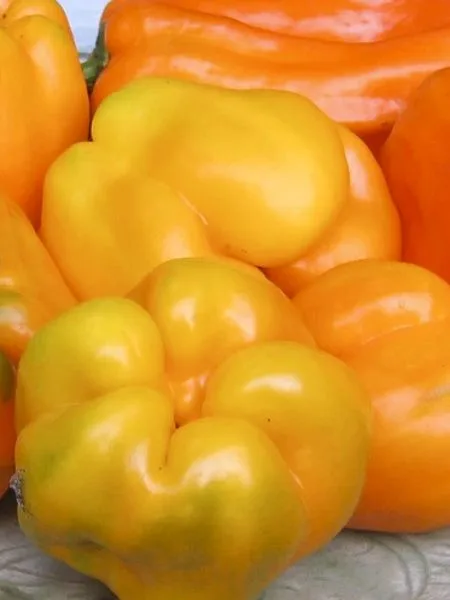
A vigorous, fast-growing, early-cropping F1 hybrid, up to 60cm high, with an open habit, with thick-walled, very sweet fruits up to 10cm long, which ripen to deep orange, sometimes with green streaks. Sweet bell peppers, Capsicum annuum var. annuum (Grossum Group), are bushy annuals with ovate to lanceolate green leaves up to 12cm long, and white starry flowers in summer followed by bell-shaped, glossy fruits which turn from green to yellow, orange, or red.
Scientific classification
- Species
- sweet pepper 'Ariane' (Capsicum annuum 'Ariane')
- Genus
- Capsicum
- Family
- Solanaceae
- Irritant if eaten, skin/eye irritant. Wear gloves and other protective equipment when handling]
- Toxicity
- Annual Biennial
- Plant type
- 0.1-0.5 metres
- Height
- 0.1-0.5 metres
- Spread
- Deciduous
- Foliage
- Bushy
- Habit
- Spring · Summer · Autumn
- Season of interest
- Full sun
- Sunlight
- Information to be completed
- Ideal temperature









sweet pepper 'Ariane' pictures
Distribution of sweet pepper 'Ariane'
Distribution map
Information to be completed
Information to be completed
Culture
Information to be completed
Toxicity
Irritant if eaten, skin/eye irritant. Wear gloves and other protective equipment when handling]
Quick identification of sweet pepper 'Ariane'
Information to be completed
sweet pepper 'Ariane' care guide
- Even moisture throughout flowering and fruit set, avoid sharp drought swings
- Watering
- Full sun
- Sunlight
- Information to be completed
- Ideal temperature

Watering
Even moisture throughout flowering and fruit set, avoid sharp drought swings
Fertilizing
 Fertilizing
Tomato or pepper feed every one to two weeks fruiting season
Pruning
 Pruning
No pruning required
Propagation
 Propagation
Propagate by seed. See sowing vegetable seeds or sowing seeds indoors for further advice
Growing
 Growing
Grow under glass in free-draining compost, with good light and humidity, and keep temperature above 15ºC, and water little and often to keep compost moisture even; peppers will do best under glass, but can also be grown outside from early summer after all danger of frost has passed, in fertile, well-drained but moisture-retentive, slightly acidic soil, in a warm, sunny, sheltered position; once the first fruit has set, feed plants once a week with a high-potassium liquid fertilizer; harvest fruits from late summer to early autumn; for more advice, see pepper cultivation
People also ask
Information to be completed
Common pests and diseases
Diseases
May be susceptible to grey moulds, Verticillium wilt and Sclerotinia
Pests
May be susceptible to aphids, red spider mites, and whitefly
Explore the plant health library →




