
Jerusalem artichoke 'Fuseau'
Also known as: Information to be completed
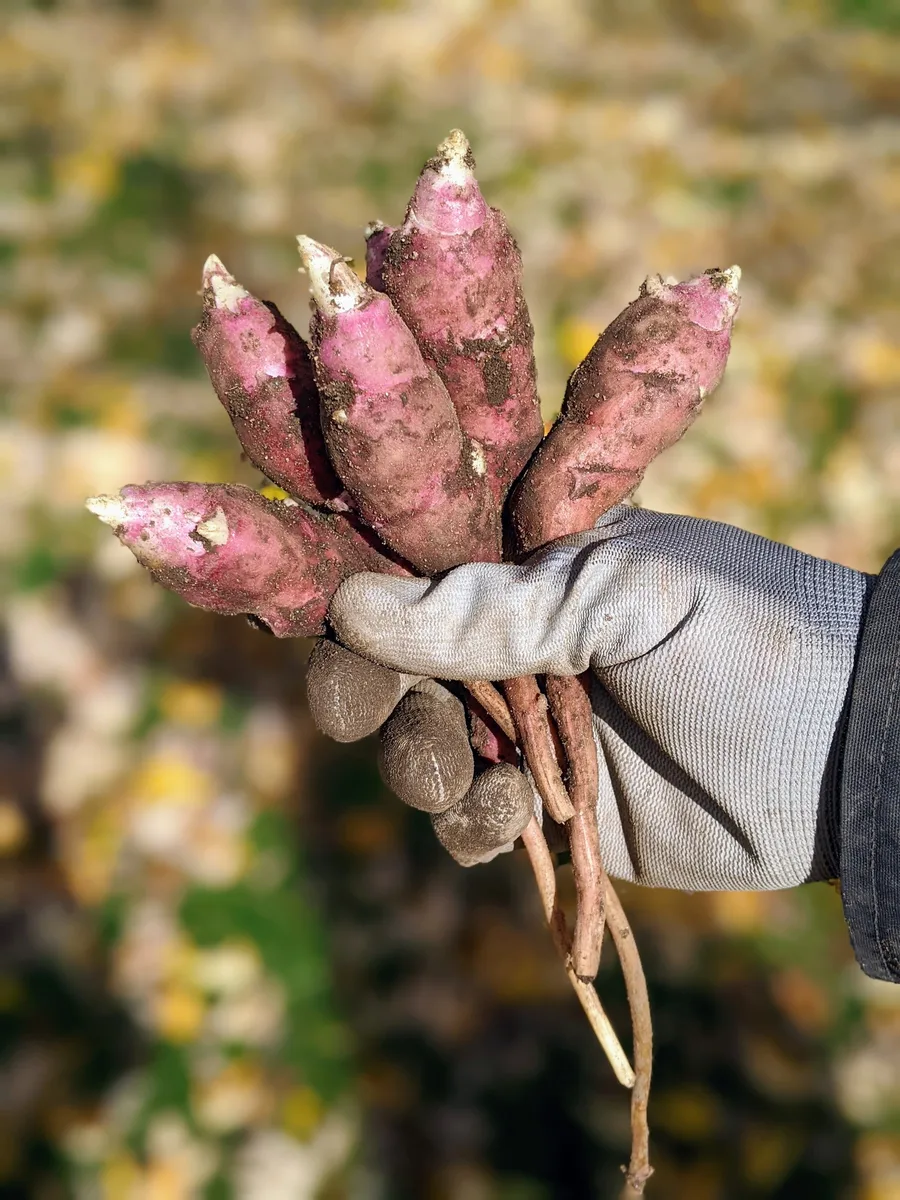
A tall, herbaceous perennial to 2m or more, with green leaves and small, yellow sunflowers in late summer-autumn. It is grown for its edible roots which are smoother and thin-skinned compared to the species type
Scientific classification
- Species
- Jerusalem artichoke 'Fuseau' (Helianthus tuberosus 'Fuseau')
- Genus
- Helianthus
- Family
- Asteraceae
- Order
- Asterales
- Class
- Magnoliopsida
- Phylum
- Magnoliophyta
- Information to be completed
- Toxicity
- Herbaceous Perennial
- Plant type
- 1.5-2.5 metres
- Height
- 0.5-1 metres
- Spread
- Deciduous
- Foliage
- Clump forming · Columnar upright
- Habit
- Spring · Summer · Autumn
- Season of interest
- Full sun · Partial shade
- Sunlight
- Information to be completed
- Ideal temperature









Jerusalem artichoke 'Fuseau' pictures
Distribution of Jerusalem artichoke 'Fuseau'
Distribution map
- Native
- Introduced
- Cultivated
Source:WCVP v16 · Royal Botanic Gardens, Kew · CC BY 3.0 · Boundaries:WGSRPD / TDWG
Jerusalem artichoke 'Fuseau' care guide
- Deep regular watering during tuber growth, dry soil fully in winter dormancy
- Watering
- Full sun · Partial shade
- Sunlight

Watering
Deep regular watering during tuber growth, dry soil fully in winter dormancy
Fertilizing
 Fertilizing
Balanced vegetable liquid feed every two weeks spring through autumn
Pruning
 Pruning
No pruning required
Propagation
 Propagation
Propagate from division of tubers
Growing
 Growing
Grow in any water-retentive soil with good drainage. Flowering will be better in full sun, but for maximum harvest, flowering should be avoided so some shade is good. Choose a sheltered spot as the tall plants can blow over in the wind. May have the potential to become a nuisance if not managed well. For more advice see Jerusalem-artichoke cultivation
Common pests and diseases
Diseases
Generally disease-free
Pests
May be susceptible to damage from slugs and snails
Explore the plant health library →




