
Lindera sericea
Also known as: Information to be completed
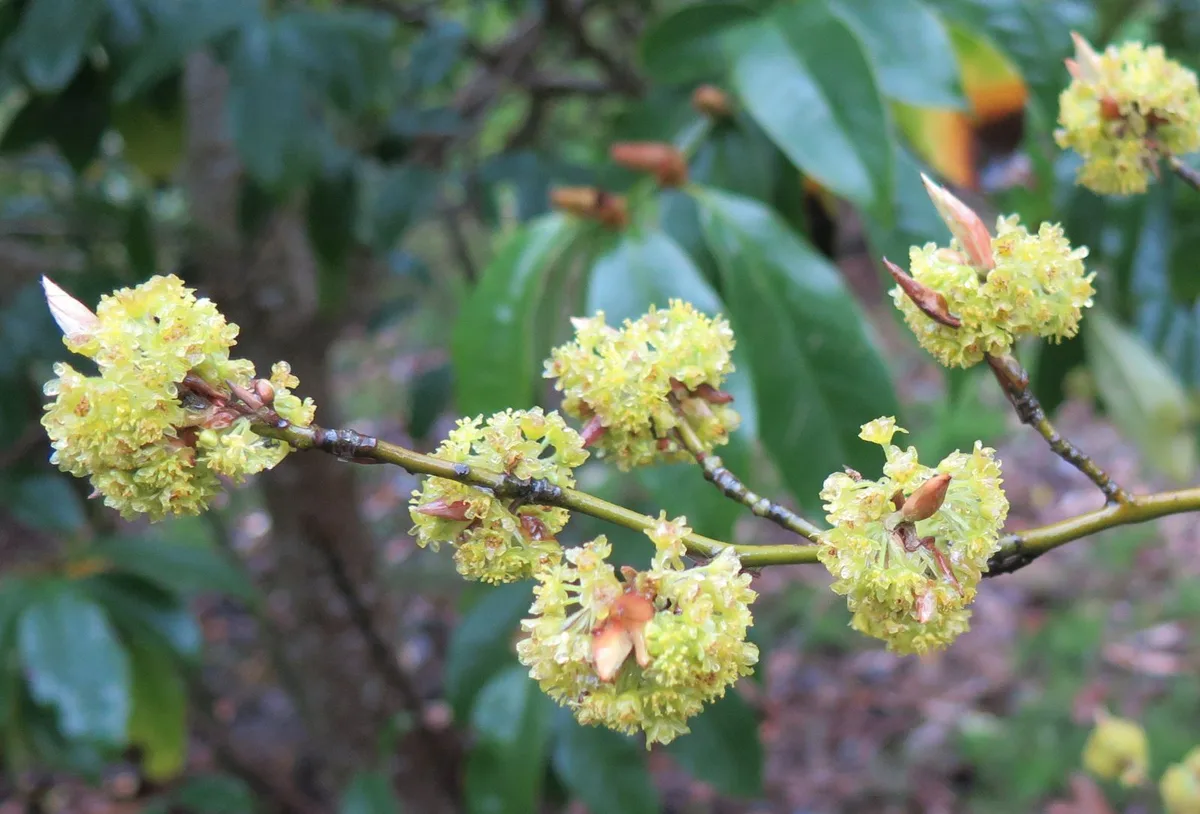
Shrub or small tree about 4m tall, with yellowish-green young branchlets becoming reddish-brown with age and softly-hairy, narrow dark green leaves to 20cm long turn yellow in autumn. Small umbels of 4-7 yellow flowers appear just before the leaves in spring, and black berries follow on female plants if pollinated by a male plant
Scientific classification
- Species
- Lindera sericea (Lindera sericea)
- Genus
- Lindera
- Family
- Lauraceae
- Information to be completed
- Toxicity
- Shrubs · Trees
- Plant type
- 2.5-4 metres
- Height
- 1.5-2.5 metres
- Spread
- Deciduous
- Foliage
- Information to be completed
- Habit
- Autumn · Spring · Summer
- Season of interest
- Partial shade
- Sunlight
- Information to be completed
- Ideal temperature









Lindera sericea pictures
Distribution of Lindera sericea
Distribution map
Information to be completed
Information to be completed
Culture
Information to be completed
Toxicity
Information to be completed
Quick identification of Lindera sericea
Information to be completed
Lindera sericea care guide
- Moderate regular watering, allowing brief slight drying between soakings
- Watering
- Partial shade
- Sunlight
- Information to be completed
- Ideal temperature

Watering
Moderate regular watering, allowing brief slight drying between soakings
Fertilizing
 Fertilizing
Balanced perennial feed every four weeks from spring through summer
Pruning
 Pruning
Little pruning is needed. Remove diseased, damaged, crowded or crossing shoots and unwanted growth. Timing depends on the plant: generally late winter or early spring; plants prone to bleeding and deciduous magnolias need different timing, and deciduous azaleas and lilacs are pruned after flowering.
Propagation
 Propagation
Propagate by greenwood cuttings in early summer
Growing
 Growing
Needs sub-tropical conditions and acid soil, so only suitable for frost-free areas. Best grown in a container in ericaceous potting compost and overwintered in a conservatory or frost-free greenhouse
People also ask
Information to be completed
Common pests and diseases
Diseases
Generally disease-free
Pests
Generally pest-free
Explore the plant health library →




