
borecole 'Nero di Toscana'
Also known as: curly kale 'Nero di Toscana'
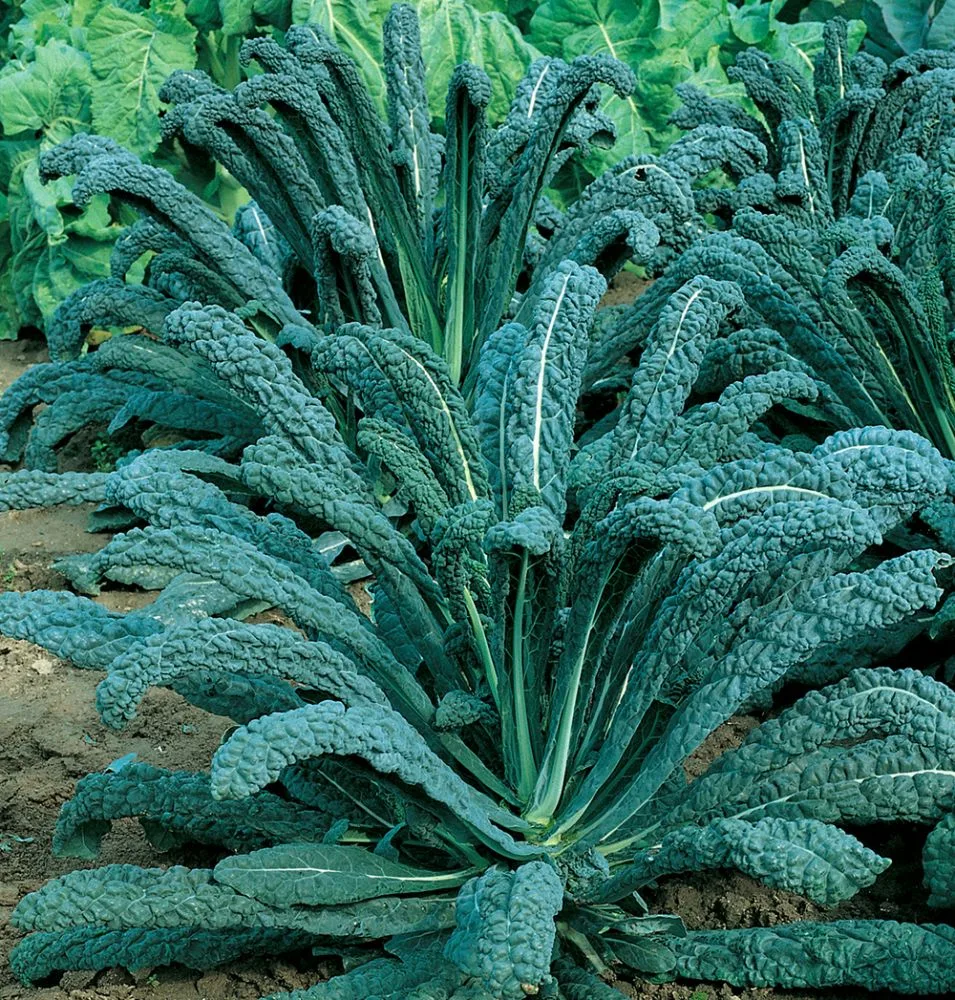
A robust and easy to grow variety of kale with dark green to black wrinkly leaves which provide architectural interest in the vegetable patch or even flower borders. A strong but pleasant flavour with pickings available through to March/April if sown early enough in the spring. Flowers can be left as an early source of nectar for bees
Scientific classification
- Species
- borecole 'Nero di Toscana' (Brassica oleracea 'Nero di Toscana')
- Genus
- Brassica
- Family
- Brassicaceae
- Order
- Brassicales
- Class
- Magnoliopsida
- Phylum
- Tracheophyta
- Information to be completed
- Toxicity
- Annual Biennial
- Plant type
- 0.5-1 metres
- Height
- 0.5-1 metres
- Spread
- Deciduous
- Foliage
- Bushy · Clump forming
- Habit
- Spring · Summer · Autumn · Winter
- Season of interest
- Full sun
- Sunlight
- Information to be completed
- Ideal temperature









borecole 'Nero di Toscana' pictures
Distribution of borecole 'Nero di Toscana'
Distribution map
- Native
- Introduced
- Cultivated
Source:WCVP v16 · Royal Botanic Gardens, Kew · CC BY 3.0 · Boundaries:WGSRPD / TDWG
borecole 'Nero di Toscana' care guide
- Moderate regular watering, allowing slight drying between waterings
- Watering
- Full sun
- Sunlight

Watering
Moderate regular watering, allowing slight drying between waterings
Fertilizing
 Fertilizing
Balanced feed monthly during active growth season
Pruning
 Pruning
No pruning required
Propagation
 Propagation
Propagate by seed. See sowing vegetable seeds
Growing
 Growing
Prefers well drained, loamy, alkaline soil. Water regularly in dry periods and add plenty of organic matter before planting. Harvest once they reach the size you want and formed a firm head. See kale cultivation for further advice
Common pests and diseases
Diseases
May be susceptible to black rot, downy mildew, foot and root rot, grey mould, leaf spot and white blister
Pests
May be susceptible to cabbage caterpillars, cabbage whitefly, aphids, flea beetles and slugs and snails
Explore the plant health library →




