
Hemerocallis 'Elizabeth Salter'
Also known as: Information to be completed
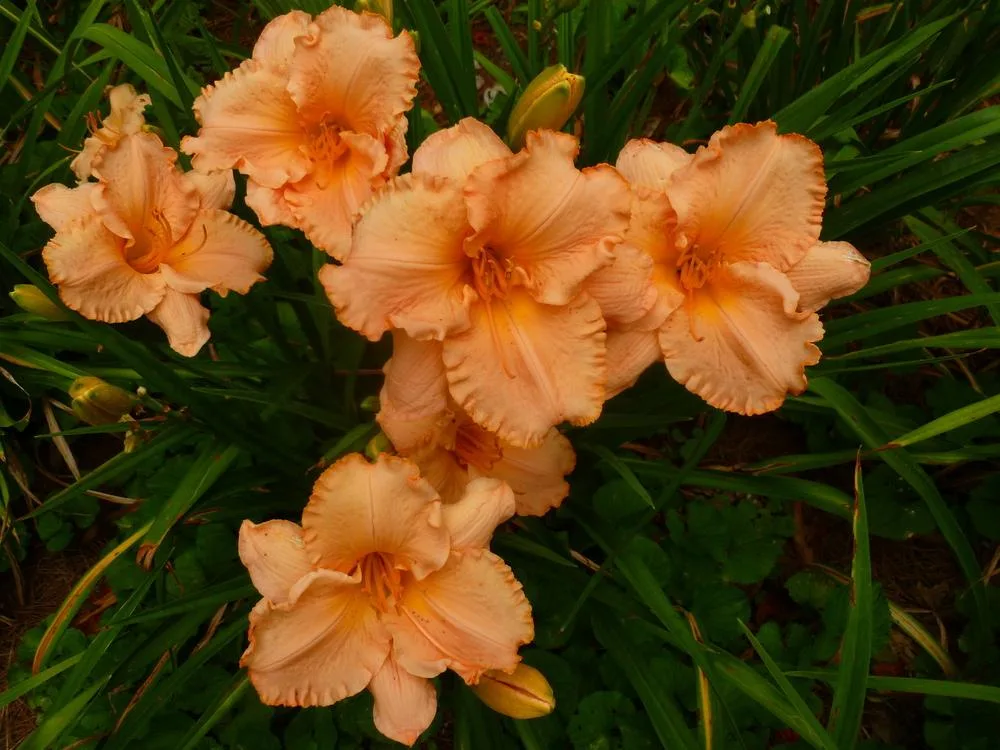
A semi-evergreen, herbaceous perennial that reaches approximately 56cm in height. It forms clumps of arching strap-shaped leaves and apricot-pink flowers with a green throat to 14cm across in summer
Scientific classification
- Species
- Hemerocallis 'Elizabeth Salter' (Hemerocallis 'Elizabeth Salter')
- Genus
- Hemerocallis
- Family
- Hemerocallidaceae
- Order
- Asparagales
- Class
- Liliopsida
- Phylum
- Magnoliophyta
- Information to be completed
- Toxicity
- Herbaceous Perennial
- Plant type
- 0.5-1 metres
- Height
- 0.1-0.5 metres
- Spread
- Semi evergreen
- Foliage
- Clump forming
- Habit
- Spring · Summer · Autumn · Winter
- Season of interest
- Full sun · Partial shade
- Sunlight
- Information to be completed
- Ideal temperature









Hemerocallis 'Elizabeth Salter' pictures
Hemerocallis 'Elizabeth Salter' care guide
- Deep water when top soil dries, maintain steady root moisture in heat
- Watering
- Full sun · Partial shade
- Sunlight

Watering
Deep water when top soil dries, maintain steady root moisture in heat
Fertilizing
 Fertilizing
Perennial flowering liquid feed every four weeks before autumn dormancy
Pruning
 Pruning
Cut back flower stems after flowering has finished. Remove dead foliage as required
Propagation
 Propagation
Propagate by division in early spring or early autumn
Growing
 Growing
Grow in fertile, moist but well-drained soil preferably in full sun. Flowering is likely to be poor in shadier situations. Tolerant of heavy clay and poorer soils. May need watering in spring to early summer in dry conditions to ensure flowering. See Hemerocallis cultivation or daylily cultivation for details
Common pests and diseases
Diseases
May be susceptible to fungal leaf spot and rust diseases or bacterial leaf and stem rot
Pests
May be susceptible to aphids, slugs, snails, hemerocallis gall midge, glasshouse red spider mite and Thrips
Explore the plant health library →




