
George fir
Also known as: Information to be completed
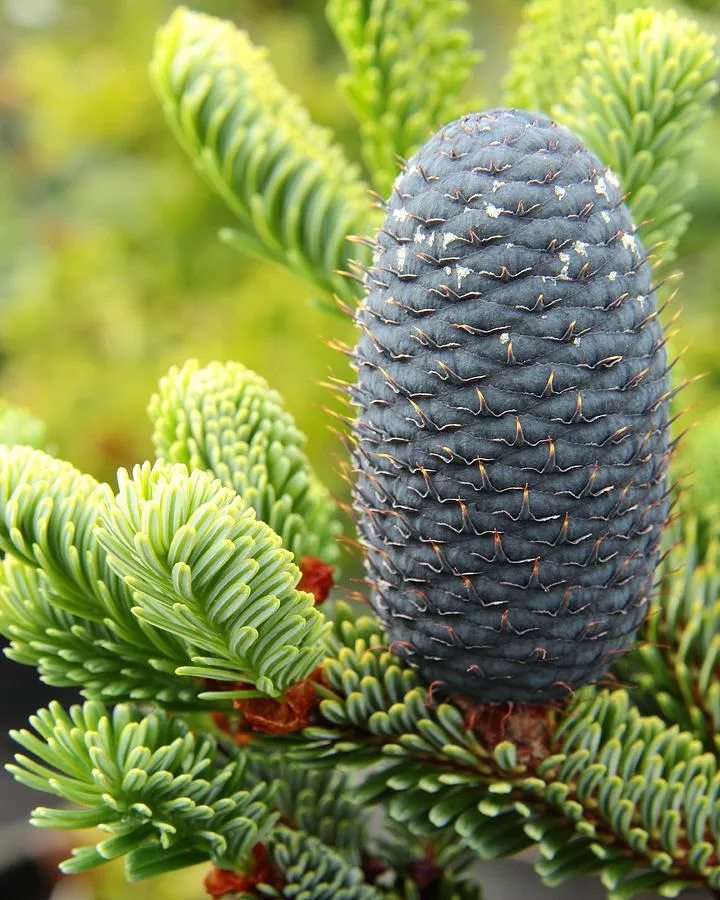
An upright evergreen conifer to 40m tall, with stout, densly hairy shoots and dark green, shiny needles 1.5 - 3 cm long, and greenish-white underneath. Produces upright cyclindrical, purplish blue cones, with protruding blue bracts, 7-12 x 3.5-6cm tall, in late spring which mature to dark purplish brown in late summer
Scientific classification
- Species
- George fir (Abies forrestii var. georgei)
- Genus
- Abies
- Family
- Pinaceae
- Order
- Pinales
- Class
- Pinopsida
- Phylum
- Coniferophyta
- Information to be completed
- Toxicity
- Conifers · Trees
- Plant type
- Higher than 12 metres
- Height
- 4-8 metres
- Spread
- Evergreen
- Foliage
- Columnar upright
- Habit
- Spring · Summer · Autumn · Winter
- Season of interest
- Full sun
- Sunlight
- Information to be completed
- Ideal temperature









George fir pictures
Distribution of George fir
Distribution map
- Native
- Introduced
- Cultivated
Source:WCVP v16 · Royal Botanic Gardens, Kew · CC BY 3.0 · Boundaries:WGSRPD / TDWG
George fir care guide
- Deep occasional watering, let soil drain freely
- Watering
- Full sun
- Sunlight

Watering
Deep occasional watering, let soil drain freely
Fertilizing
 Fertilizing
Light slow release conifer feed in spring
Pruning
 Pruning
No pruning required
Propagation
 Propagation
Propagate by grafting in winter
Growing
 Growing
Grow in deep, neutral to slightly acidic, moist but well-drained soil, in full sun, with some shelter from cold winds. See conifer cultivation
Common pests and diseases
Diseases
Generally disease-free, but may be susceptible to honey fungus
Pests
May be susceptible to adelgids and aphids
Explore the plant health library →




