
clematis 'New Love'
Also known as: Information to be completed
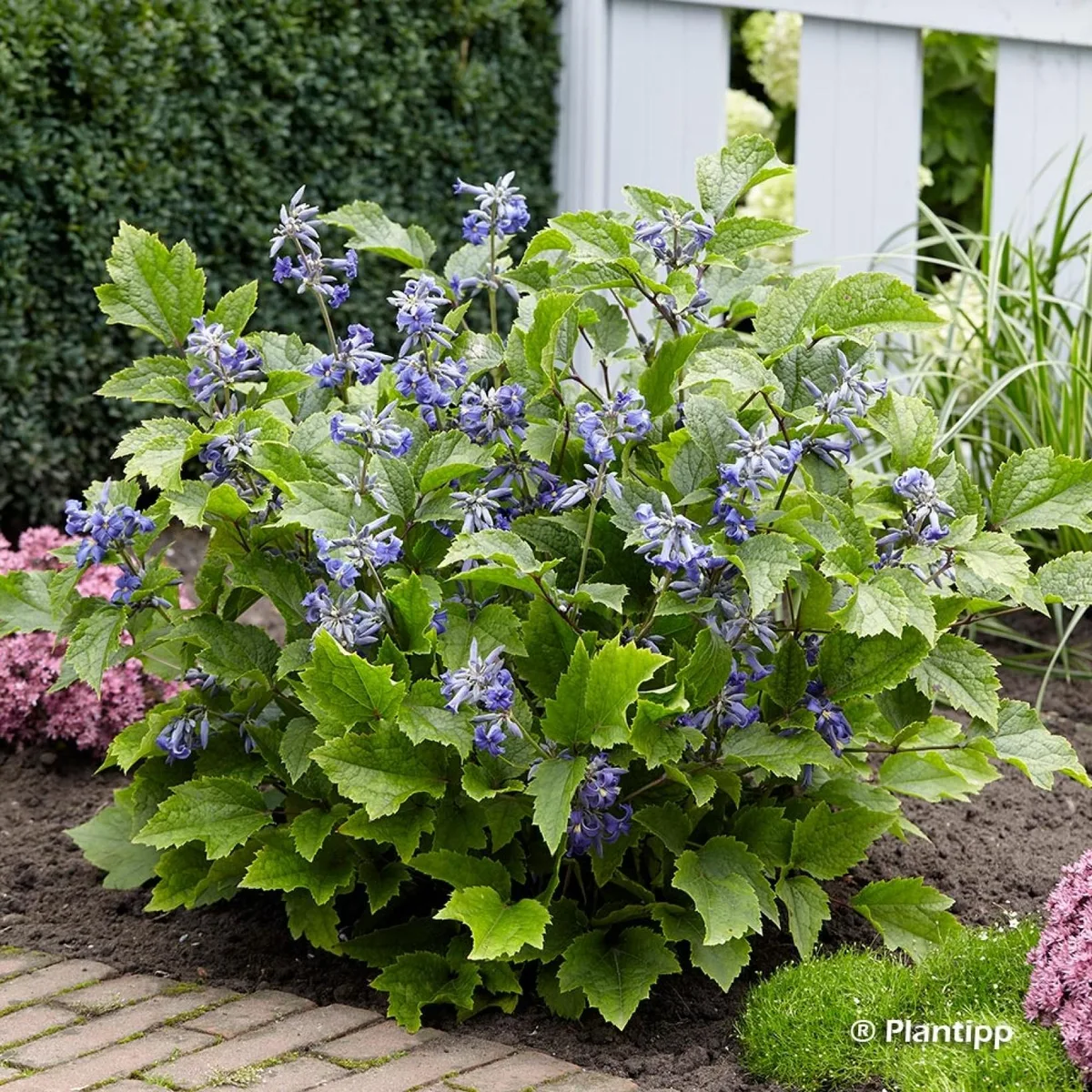
A bushy, deciduous sub-shrub forming a lax clump to about 1m with large, mid-green leaves. Fragrant, purple-blue, tubular flowers are produced in small clusters along the stems from mid-summer to early autumn
Scientific classification
- Species
- clematis 'New Love' (Clematis 'New Love')
- Genus
- Clematis
- Family
- Ranunculaceae
- Order
- Ranunculales
- Class
- Magnoliopsida
- Phylum
- Tracheophyta
- Skin irritant. Wear gloves and other protective equipment when handling
- Toxicity
- Herbaceous Perennial
- Plant type
- 0.5-1 metres
- Height
- 0.1-0.5 metres
- Spread
- Deciduous
- Foliage
- Bushy
- Habit
- Spring · Summer · Autumn
- Season of interest
- Full sun
- Sunlight
- Information to be completed
- Ideal temperature









clematis 'New Love' pictures
Toxicity
Skin irritant. Wear gloves and other protective equipment when handling
clematis 'New Love' care guide
- Deep watering with cool roots, avoid soggy crown
- Watering
- Full sun
- Sunlight

Watering
Deep watering with cool roots, avoid soggy crown
Fertilizing
 Fertilizing
Low nitrogen feed in spring, higher potash before flowering
Pruning
 Pruning
 (clematis) group 3
Propagation
 Propagation
Propagate by division in spring
Growing
 Growing
Plant in a moisture-retentive, well-drained soil. Keep the base of the plant and roots cool and shaded by other plants or a layer of pebbles or flat stones at the base. Plant with the crown of the clematis at soil level. Mulch in late winter with garden compost or well-rotted manure, avoiding the immediate crown. Ideal for a border where it can be supported by other plants. See clematis cultivation
Common pests and diseases
Diseases
May be susceptible to honey fungus (rarely), clematis wilt and clematis slime flux
Pests
May be susceptible to aphids, snails and caterpillars; petals may be eaten by earwigs
Explore the plant health library →




