
Eucryphia wilkiei
Also known as: Information to be completed
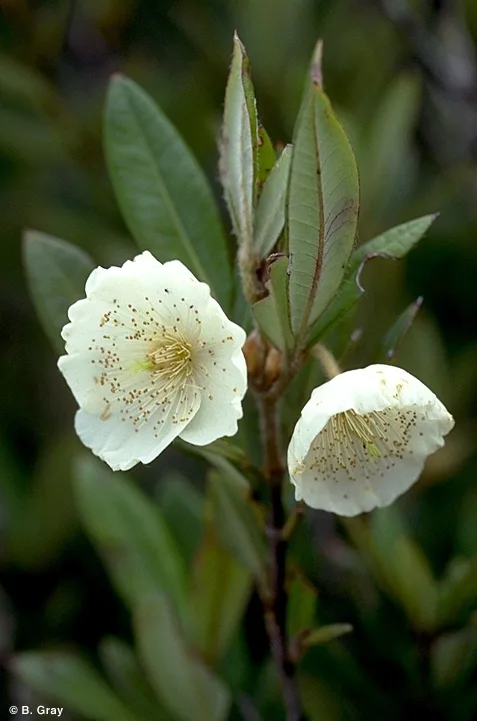
Small evergreen shrub, rare in cultivation, about 4m tall in the wild, producing dark green leaves, grey-green beneath with a brown covering of hairs known as 'indumentum', and white, cup-shaped flowers to 4cm across, from late summer to early autumn
Scientific classification
- Species
- Eucryphia wilkiei (Eucryphia wilkiei)
- Genus
- Eucryphia
- Family
- Cunoniaceae
- Information to be completed
- Toxicity
- Shrubs · Trees
- Plant type
- 2.5-4 metres
- Height
- 2.5-4 metres
- Spread
- Evergreen
- Foliage
- Bushy
- Habit
- Spring · Summer · Autumn · Winter
- Season of interest
- Full sun · Partial shade
- Sunlight
- Information to be completed
- Ideal temperature









Eucryphia wilkiei pictures
Distribution of Eucryphia wilkiei
Distribution map
Information to be completed
Information to be completed
Culture
Information to be completed
Toxicity
Information to be completed
Quick identification of Eucryphia wilkiei
Information to be completed
Eucryphia wilkiei care guide
- Moderate regular watering, allowing brief slight drying between soakings
- Watering
- Full sun · Partial shade
- Sunlight
- Information to be completed
- Ideal temperature

Watering
Moderate regular watering, allowing brief slight drying between soakings
Fertilizing
 Fertilizing
Balanced perennial feed every four weeks from spring through summer
Pruning
 Pruning
Usually little pruning is needed. Lightly shape if necessary, removing dead, damaged or diseased shoots. Prune after flowering.
Propagation
 Propagation
Propagate by semi-ripe cuttings in summer, and overwinter young plants in a cool greenhouse
Growing
 Growing
Suitable for the mildest counties only, especially those with little frost. Grow in a sheltered position in full sun, but with the roots in shade in fertile, humus-rich, nutral to acid, moist but well-drained soil. Ideal for container cultivation in ericaceous potting compost and overwintered in a conservatory or frost-free greenhouse
People also ask
Information to be completed
Common pests and diseases
Diseases
May be susceptible to honey fungus
Pests
Generally pest-free
Explore the plant health library →




