
chrysanthemum 'Mancetta Jupiter'
Also known as: Information to be completed
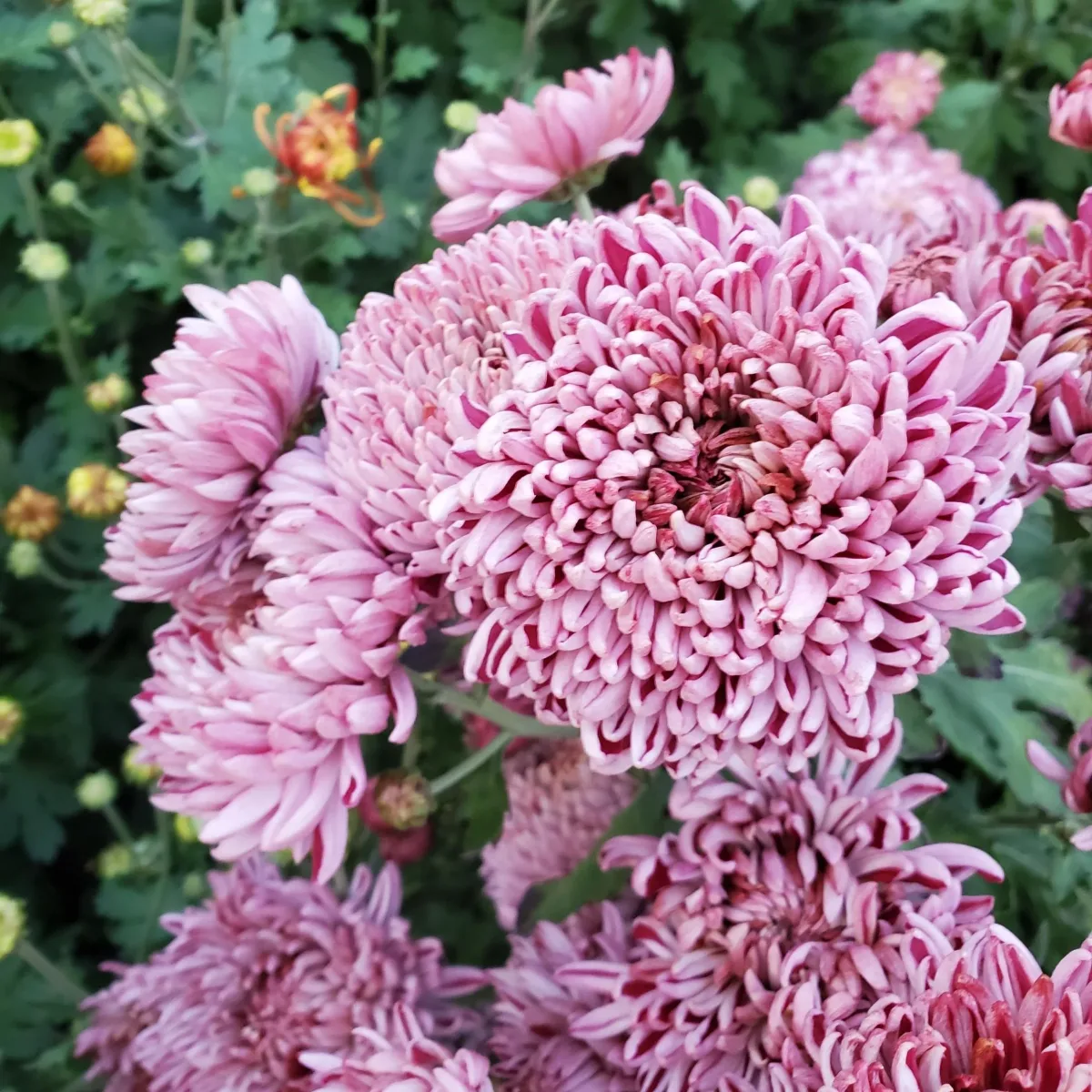
Mancetta Jupiter' is a half-hardy perennial with sprays of rich purple, anemone-centred flowers to 10cm across
Scientific classification
- Species
- chrysanthemum 'Mancetta Jupiter' (Chrysanthemum 'Mancetta Jupiter')
- Genus
- Chrysanthemum
- Family
- Asteraceae
- Order
- Asterales
- Class
- Magnoliopsida
- Phylum
- Tracheophyta
- Skin allergen. Wear gloves and other protective equipment when handling
- Toxicity
- Herbaceous Perennial · Bedding
- Plant type
- 0.5-1 metres
- Height
- 0.1-0.5 metres
- Spread
- Deciduous
- Foliage
- Bushy
- Habit
- Spring · Summer · Autumn
- Season of interest
- Full sun
- Sunlight
- Information to be completed
- Ideal temperature









chrysanthemum 'Mancetta Jupiter' pictures
Toxicity
Skin allergen. Wear gloves and other protective equipment when handling
chrysanthemum 'Mancetta Jupiter' care guide
- Moderate regular watering, allowing brief slight drying between soakings
- Watering
- Full sun
- Sunlight

Watering
Moderate regular watering, allowing brief slight drying between soakings
Fertilizing
 Fertilizing
Balanced perennial feed every four weeks from spring through summer
Pruning
 Pruning
Cut back to near ground level in the autumn, before lifting and storing for the winter
Propagation
 Propagation
Propagate by softwood cuttings taken in spring from shoots from stored stools
Growing
 Growing
Grow in a sheltered site in full sun in fertile well-drained soil, enriched with organic matter and general purpose fertiliser. Water freely in dry weather. Pinching out the growing tip when the plants are 15-20cm tall to encourage free flowering bushy plants. Staking is usually required. There is no need to deadhead. In mild areas leave in the ground protected by a thick mulch. Elsewhere lift the crowns and store in a greenhouse, raising fresh plants from these each year
Common pests and diseases
Diseases
May be susceptible to glasshouse grey mould, powdery mildews and chrysanthemum white rust
Pests
May be susceptible to aphids and leaf miners which are common pests. Leaf and bud eelworms can damage stock that has not been heat-treated. Earwigs sometimes damage blooms. Capsid bug and glasshouse red spider mite are occasional pests
Explore the plant health library →




